Demoted with a $13,873 pay cut, but not 'dismissed'
NSW Trains v Mr Todd James [2022] FWCFB 55
- Decided by
- Fair Work Commission (Full Bench)
- Date
- 8 April 2022
- Outcome
- Claim dismissed: demotion was not a dismissal
- Result
- Employer succeeded
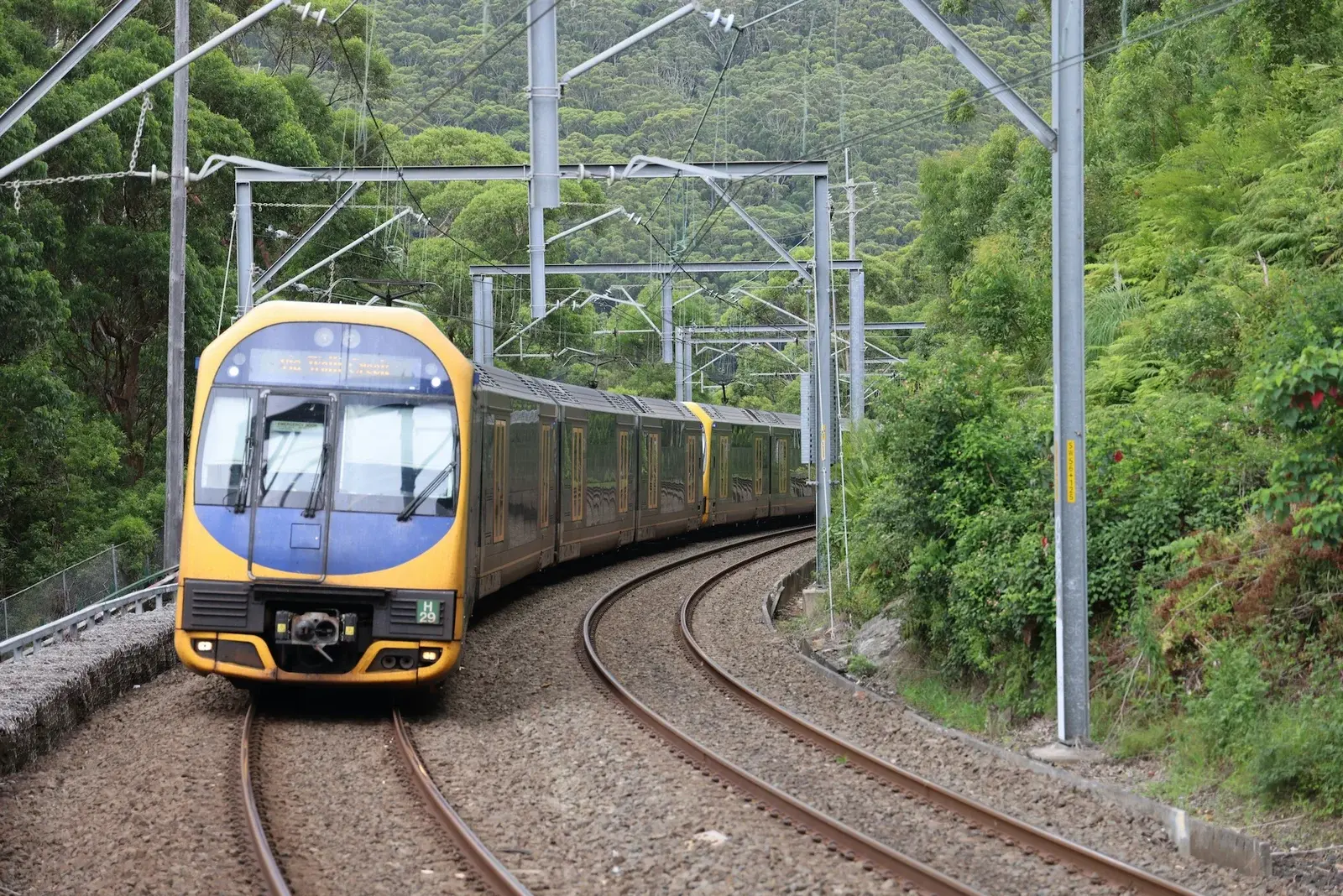
After a misconduct investigation, NSW Trains decided to dismiss a long-serving shift manager, then reduced the penalty to a demotion that cut his pay by $13,873 a year. He kept his job and brought an unfair dismissal claim. A five-member Full Bench of the Fair Work Commission held that a demotion made under, and in line with, an enterprise agreement and regulation that treat demotion as separate from termination is not a dismissal, so his claim was dismissed.
Key points
- You can only bring an unfair dismissal claim if you have been 'dismissed', and s 386(1) of the Fair Work Act 2009 (Cth) sets out exclusively when that happens.
- A demotion with a significant pay cut can be a dismissal if it breaks the employment contract and the employee accepts that, even if they keep working for the same employer.
- But a demotion made under an enterprise agreement or statute that allows it, and treats it as separate from termination, is not a dismissal, provided the employer follows the instrument's steps.
- Asking an employer for a lesser penalty than dismissal is not the same as agreeing to a demotion.
What happened
Todd James had worked for NSW Trains and the rail bodies before it for more than 30 years. He was a shift manager based at Taree, on the New South Wales mid-north coast.
After an investigation into allegations of misconduct, NSW Trains proposed to dismiss him. Through his solicitors he argued for an outcome short of dismissal; he says the options he put forward were a caution or reprimand, or a fine of no more than $100. He also used the review process in the rail disciplinary system to challenge the dismissal decision.
The review succeeded in part. NSW Trains did not dismiss him; it demoted him instead. In April 2021 his classification dropped from Rail Classification 6 Level E to RC6 Level A, and his gross pay fell from $141,442 to $127,569 a year. He kept the same job title, the same duties and the same workplace.
The claim
Mr James did not agree to the demotion and applied to the Fair Work Commission for an unfair dismissal remedy. NSW Trains objected that he had not been dismissed at all, because he was still employed.
At first instance, Deputy President Saunders rejected that objection on 3 August 2021. He found the $13,873 cut, 9.8% of Mr James's gross pay, was significant, and held that a demotion with a significant pay cut is a dismissal even when the employee stays on. NSW Trains appealed. Because the issues were important, the President referred the appeal to a five-member Full Bench. The Australian Council of Trade Unions (ACTU) also intervened.
Why: the legal test
Section 386 of the Fair Work Act 2009 (Cth) defines when a person has been dismissed. Under s 386(1), it happens if the employment is terminated on the employer's initiative, or if the employee resigns because the employer forced them to. Section 386(2)(c) adds that a demoted employee is not dismissed if the demotion does not involve a significant reduction in pay or duties and they stay with the same employer.
The Full Bench held that s 386(1) is the only gateway. Section 386(2)(c) narrows it; it does not create a separate kind of dismissal. So a demoted employee who stays on must still show their employment was terminated on the employer's initiative.
That can still happen. The majority held that 'employment has been terminated' covers the end of the employment contract, not just the end of the working relationship. If an employer demotes someone without the right to do so, that can be a repudiation, meaning conduct showing the employer no longer intends to be bound by the contract. If the employee accepts it, the old contract ends. As a general rule, an employee who makes their objection clear is not taken to have affirmed the old contract (chosen to keep it on foot) just by continuing to work in the demoted role while challenging it. Deputy President Easton dissented on one point only: he read 'terminated' as meaning the end of the employment relationship, not just the contract. He agreed with the outcome.
What the Full Bench decided
Mr James's problem was that NSW Trains had the right to demote him. Clause 32.14 of the enterprise agreement and reg 20(1) of the Transport Administration (Staff) Regulation 2012 (NSW) both list 'reduction in position, rank or grade and pay' as a disciplinary outcome, separate from dismissal. His employment was highly regulated by the agreement, which prevailed over his short written contract.
Because the demotion was authorised by those instruments and made in line with them, it was not a repudiation of his contract, and there was no termination at law. The Full Bench recognised that this deprived Mr James of access to the unfair dismissal provisions. It allowed the appeal and dismissed his application on 8 April 2022.
Two points went Mr James's way. The Full Bench did not disturb the finding that his pay cut was significant. And it rejected the argument that he had consented to the demotion: seeking an outcome short of dismissal did not mean he agreed to any alternative penalty the employer chose.
What this means for you
The Full Bench stressed limits on this rule. The critical question is whether the instrument, properly read, provides that a demotion under it is not a termination, and the employer must have followed its terms. Parties cannot contract out of the unfair dismissal laws, and a bare clause in a standard contract saying the employee may be demoted, without protections such as a review, might be treated as a device to avoid them.
If you are demoted with a real cut to your pay or duties, it is worth checking what your contract and any enterprise agreement or award say about demotion, and putting any objection in writing if you do not accept the change. The answer depends on the documents, so it is worth getting advice early. A Fair Work unfair dismissal claim must be lodged within 21 days of the dismissal taking effect.
The takeaway
A demotion that an enterprise agreement or statute permits, and treats as separate from termination, is usually not a dismissal, however much it costs you. Where there is no such power, a demotion with a significant pay cut can be a dismissal even if you keep working.
Note: Rewritten 21 October 2026 from the judgment. The Full Bench decision ([2022] FWCFB 55, reported (2022) 316 IR 1) has not been overturned, and its reading of s 386 was still being cited by a Full Bench in Humeniuk v Sculpture by the Sea Inc [2025] FWCFB 212. The Full Bench left open whether different rules apply where a demoted employee resigns and claims a forced resignation under s 386(1)(b). Employees in the WA state system, including most WA public sector and local government employees, bring unfair dismissal claims under the Industrial Relations Act 1979 (WA), not s 386, and the time limit there is 28 days.
Fair Work Commission (Full Bench) · 8 April 2022
NSW Trains v Mr Todd James [2022] FWCFB 55, Justice Ross, President; Vice President Catanzariti; Deputy President Asbury; Deputy President Easton; Commissioner Ryan. Read the full decision
This is a plain-English summary of the published decision, for general information. It is not legal advice, and every case turns on its own facts.
Does this sound like your situation?
More case studies
Industrial Relations Commission of New South Wales · 31 March 2022
A senior prison officer's private-life assaults cost him his job
Sparkes v Industrial Relations Secretary in respect of the Department of Communities and Justice (Corrective Services NSW)
A senior correctional officer in New South Wales was found guilty of assaulting a junior co-worker with whom he had an affair. His employer terminated his employment, giving him the chance to resign first. He argued the conduct was private and never affected his work, but the NSW Industrial Relations Commission upheld the decision.
Appeal dismissed; termination upheldTermination#misconduct#public sector#procedural fairness
Read the case study
Fair Work Commission · 11 April 2022
Mine technician sacked over harassment at camp loses his claim
Dean Dunlop v BHP Billiton WAIO Pty Ltd T/A BHP
A 58-year-old service technician at BHP's Yandi iron ore mine was stood down, investigated and summarily dismissed after two young contract cleaners complained of sexual harassment at the mine's accommodation village. He denied everything. The Fair Work Commission heard all three, preferred the cleaners' evidence, and found his dismissal was not unfair.
Claim dismissedTermination#unfair dismissal#misconduct#sexual harassment
Read the case study
Fair Work Commission · 24 March 2022
Escorted off site by police, but not dismissed until the letter came
Callum J Reynolds v Concrete Sleepers Victoria Pty Ltd
After a confrontation with the company's chief executive, Callum Reynolds was escorted off the site by police and told not to return. Three days later the company emailed him a letter terminating his employment "effective immediately". The Fair Work Commission held he was dismissed when that letter was sent, not on the day of the confrontation, so his general protections application was lodged in time.
Application in time; claim can proceedTermination#general protections#time limits
Read the case study