Escorted off site by police, but not dismissed until the letter came
Callum J Reynolds v Concrete Sleepers Victoria Pty Ltd [2022] FWC 631
- Decided by
- Fair Work Commission
- Date
- 24 March 2022
- Outcome
- Application in time; claim can proceed
- Result
- Employee succeeded

After a confrontation with the company's chief executive, Callum Reynolds was escorted off the site by police and told not to return. Three days later the company emailed him a letter terminating his employment "effective immediately". The Fair Work Commission held he was dismissed when that letter was sent, not on the day of the confrontation, so his general protections application was lodged in time.
Key points
- A dismissal takes effect when it is communicated to the employee, not when the employer privately decides it.
- The Commission would not accept that an employer can hand the job of telling a worker he is dismissed to the police.
- A termination letter that says the employment ends "now" and "effective immediately" is strong evidence of the dismissal date.
- The decision was only about time: whether the employer had acted unlawfully was left for later.
What happened
Callum Reynolds started work with Concrete Sleepers Victoria Pty Ltd, a concrete products company, on 21 August 2020. By late 2021 his relationships with co-workers and management had become, in the Commission's word, turbulent. There was evidence that from 3 November 2021 he took three weeks of annual leave because of these issues.
On 5 November 2021, two days into that leave, he came to the worksite. The company's chief executive arrived and told him he needed to stay for a drug test. Mr Reynolds tried to leave in his car, and the chief executive moved his own vehicle across the driveway to block him. What followed was a collision between the two vehicles and a physical confrontation, which a co-worker broke up.
Police were called. According to the evidence, an officer told Mr Reynolds his boss had asked him to collect his belongings, leave immediately and not return, and police escorted him off the premises. On his way out he said to two co-workers words to the effect of "Well that's that isn't it. There's no coming back from that!"
The letter
On the morning of 8 November 2021 Mr Reynolds came back to the workplace in plain clothes, with his wife, and handed over a certificate of capacity. That evening the company emailed him a notice of termination.
The letter listed 14 matters the company said justified ending his employment, ranging from timesheet fraud to refusing a drug test. These were the company's allegations: the Commission did not decide whether any of them was true. The letter ended by describing his "disruptive menace" and telling him he was "now officially terminated ... effective immediately".
The claim
On 29 November 2021 Mr Reynolds lodged a general protections application under s 365 of the Fair Work Act 2009 (Cth). A general protections claim is one where a worker says they were dismissed for an unlawful reason, such as having exercised a workplace right. Under s 366(1) it must be made within 21 days after the dismissal took effect, unless the Commission allows more time.
Counted from 8 November, the application was in time. The company argued that he had really been summarily dismissed on 5 November, and that the letter merely confirmed a decision already made. On that view the application was three days late, and he would have to persuade the Commission to extend time.
Why: the legal test
Deputy President Cross started from a settled principle: a notice of termination is effective only once it is received. A decision to dismiss someone does nothing until it is communicated to them. He relied on the Full Bench decision in Ayub v NSW Trains [2016] FWCFB 5500, which held, for the 21-day limit on unfair dismissal applications, that the clock should not start before a dismissed employee knew, or at least had a reasonable chance to know, that they had been dismissed. Otherwise an employer could backdate a dismissal and shrink, or wipe out, the short time a worker has to act.
The company pointed to the police instruction, the collected belongings and Mr Reynolds' own comment that there was "no coming back". The Deputy President rejected the argument that Mr Reynolds should have "divined" his dismissal from those events. The letter itself showed the employment had seen volatile events before that had not ended in dismissal. An escalation on 5 November did not mean he would understand he had been sacked.
He also did not accept that an employer can delegate the task of telling an employee he is dismissed to the police. A company manager stood by while police spoke to Mr Reynolds and said nothing to suggest he had been dismissed. Finally, the letter said the dismissal was official "now" and "effective immediately". There was no basis for reading it as confirmation of something that had happened three days earlier.
What the Commission decided
Mr Reynolds was dismissed on 8 November 2021, so his application, filed on 29 November, was not out of time. He did not need an extension. The decision did not consider whether the dismissal breached the general protections; it only cleared the way for his claim to continue.
What this means for you
If you are sent home, walked off site or told not to come back, it is not always clear whether you have been dismissed. The date that counts is generally when your employer clearly tells you the employment is over. Even so, the safest course is to count 21 days from the earliest date your employer might later say you were dismissed, and to lodge within that time.
For employers, the lesson is to tell the employee directly and in writing, with a clear end date. Leaving the message to the police, a security guard or the employee's own guesswork invites a dispute about dates.
The law has moved since this decision. For applications made from 7 July 2026, a general protections dismissal application needs only an alleged dismissal, and the 21 days run from the alleged dismissal. When a dismissal takes effect is still the question that starts the clock, and the 21-day time limit is short.
The takeaway
A dismissal takes effect when it is clearly communicated to the worker, and an employer cannot leave that job to the police. Still, count your 21 days from the earliest possible date.
Note: This decision dealt only with whether the application was lodged in time. Since 7 July 2026 (Fair Work Act amendments made by Act No. 62 of 2026), a general protections dismissal application needs only an alleged dismissal and time runs from that alleged dismissal; the 21-day limit is unchanged.
Fair Work Commission · 24 March 2022
Callum J Reynolds v Concrete Sleepers Victoria Pty Ltd [2022] FWC 631, Deputy President Cross. Read the full decision
This is a plain-English summary of the published decision, for general information. It is not legal advice, and every case turns on its own facts.
Does this sound like your situation?
More case studies

Fair Work Commission · 24 March 2022
Qantas trainer sacked over a first aid demonstration is reinstated
Daniel Matthews v Qantas Airways Limited
A Qantas safety trainer was dismissed after a course participant complained that, during a first aid demonstration, he stared at her chest and made comments that humiliated her. When the Fair Work Commission heard both of them give evidence, most of her account was not accepted. It found there was no valid reason for the dismissal and ordered Qantas to reinstate him with lost pay, and a Full Bench refused Qantas permission to appeal.
Reinstated with lost payTermination#unfair dismissal#investigations#sexual harassment
Read the case study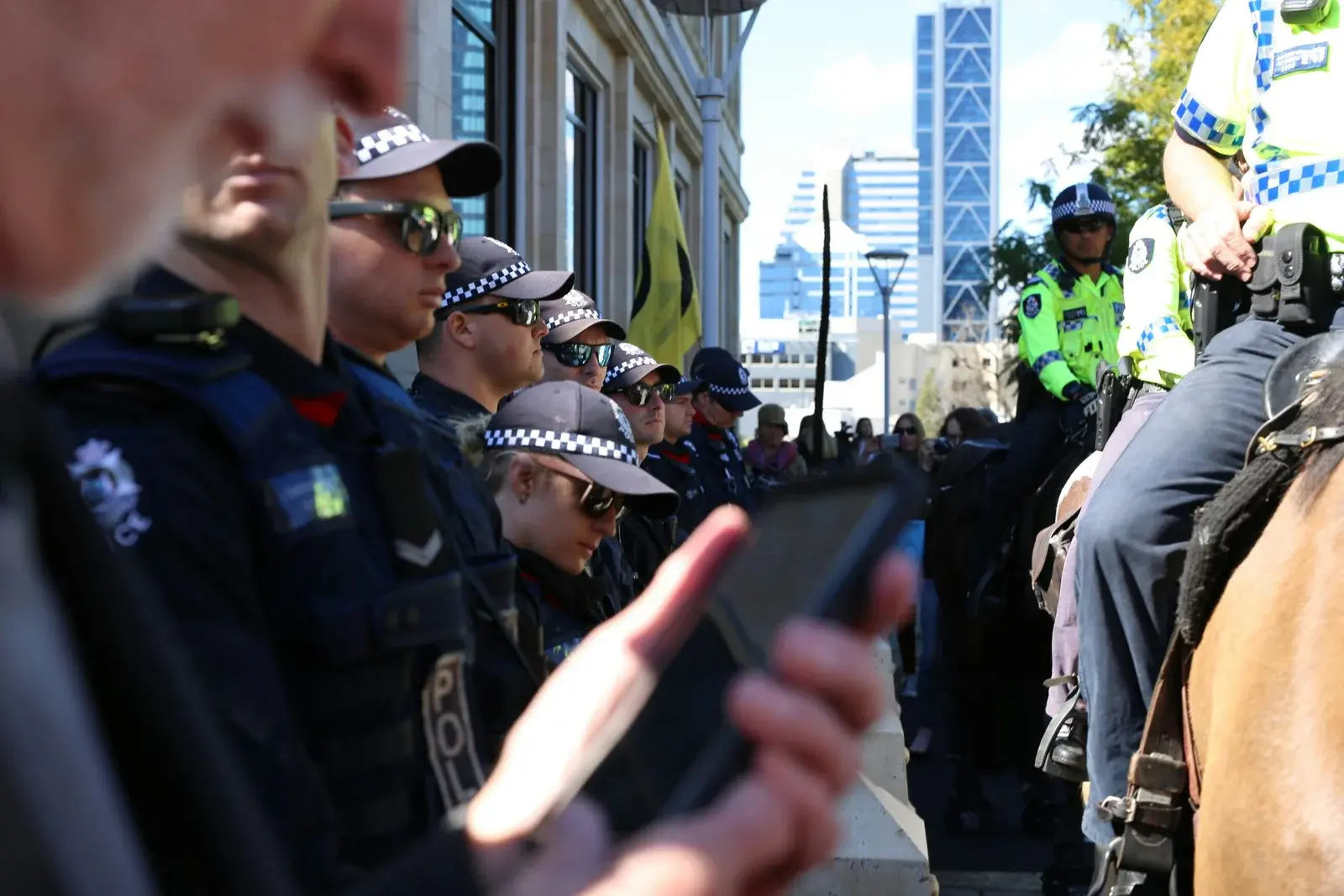
Industrial Relations Commission of New South Wales · 31 March 2022
A senior prison officer's private-life assaults cost him his job
Sparkes v Industrial Relations Secretary in respect of the Department of Communities and Justice (Corrective Services NSW)
A senior correctional officer in New South Wales was found guilty of assaulting a junior co-worker with whom he had an affair. His employer terminated his employment, giving him the chance to resign first. He argued the conduct was private and never affected his work, but the NSW Industrial Relations Commission upheld the decision.
Appeal dismissed; termination upheldTermination#misconduct#public sector#procedural fairness
Read the case study
Industrial Relations Commission of New South Wales · 10 March 2022
Sacked over a Hitler meme of the Premier, but still compensated
Lichi v Industrial Relations Secretary on behalf of Department of Communities and Justice
A NSW child protection caseworker was dismissed after attending an anti-lockdown rally in breach of a public health order and sharing a Facebook image of the Premier with a Hitler moustache. The Commission found a valid reason and a fair process, but held the dismissal harsh given her personal circumstances, and ordered 12 weeks’ pay.
12 weeks’ pay compensationTermination#unfair dismissal#social media#public sector
Read the case study