Sacked after complaining about a manager, he won his own case
Parsons v Serco Citizen Services Pty Limited [2024] FCA 754
- Decided by
- Federal Court of Australia
- Date
- 11 July 2024
- Outcome
- $130,000 compensation plus a $25,000 penalty
- Result
- Employee succeeded
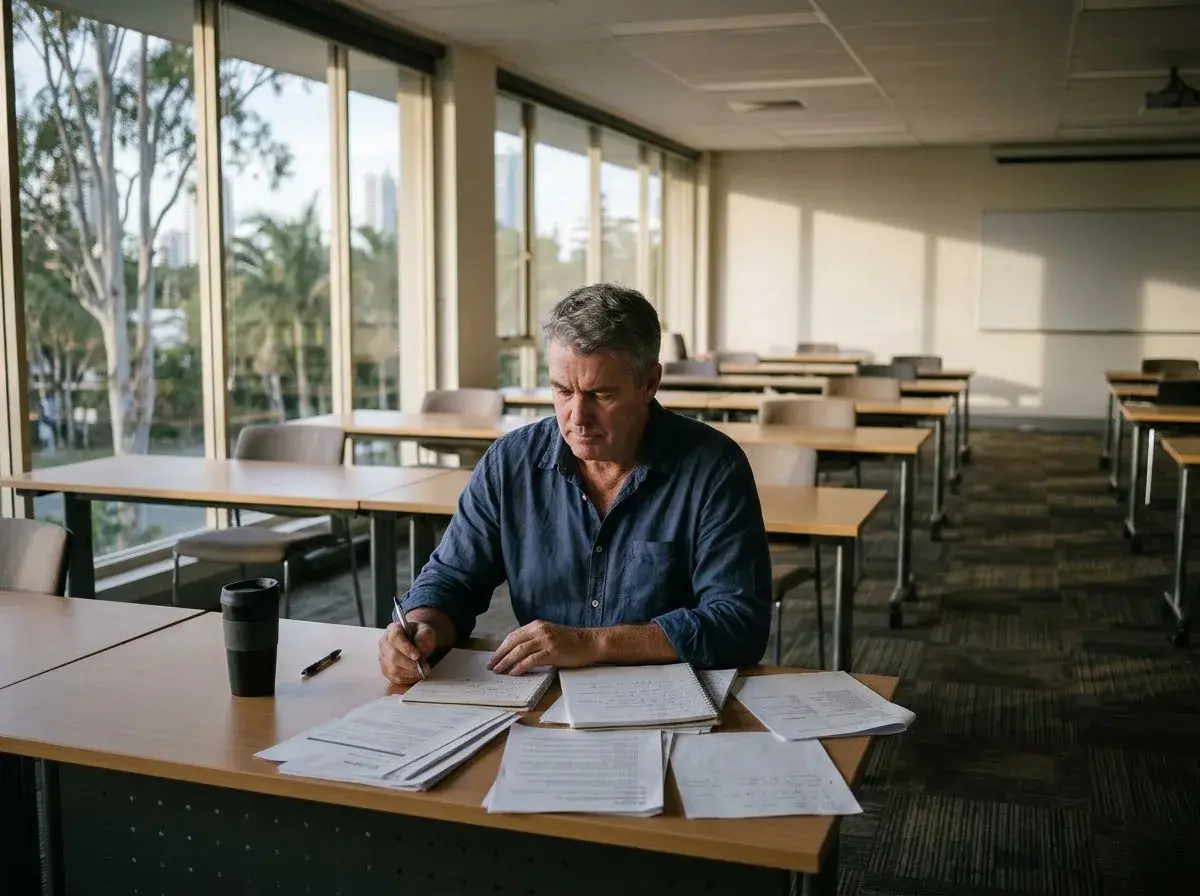
A Serco training manager of nearly 17 years complained about how a senior manager had handled a complaint against him. Months later the same manager found he had bullied a team member and dismissed him. Representing himself, he persuaded the Federal Court that Serco could not prove his complaint played no substantial part in the decision, and won $130,000 compensation and a $25,000 penalty.
Key points
- Making a complaint about your employment, including about how a manager ran an investigation, can be a workplace right protected by s 340 of the Fair Work Act 2009 (Cth).
- Once the worker proves the complaint and the dismissal, the employer must prove the complaint was not a substantial and operative reason for it.
- The Court tested the decision-maker's stated reasons against the evidence and found they were not her genuine reasons.
- An earlier written warning for inappropriate texts was upheld: complaining does not shield an employee from genuine discipline.
What happened
Christopher Parsons started with Serco in 2005. From 2016 he was its Learning and Development Lead at Varsity Lakes on the Gold Coast, overseeing the trainers who prepared staff for Serco's contract with the Australian Taxation Office.
In 2021 he made a run of complaints. In May he lodged a formal bullying complaint about his general manager, mostly about pressure to put more people in training rooms during the COVID-19 pandemic. Serco found it unsubstantiated. In August he took the same manager to the Fair Work Commission.
Then a trainer in his team complained about him. While she was on leave he had texted her calling her "my ray of sunshine" and asking if she was counting the days before she returned to "hell's kitchen". She also complained about a phone call and another message in which he drew her into his conflict with the general manager. Serco's Operations Director gave him a written warning in October 2021 and made him ineligible for any Serco vacancy for six months. Later that month Mr Parsons lodged a formal complaint about how the Operations Director had run that investigation, alleging a lack of procedural fairness and a conflict of interest. That complaint was also found unsubstantiated.
The second complaint and the dismissal
In November 2021 the trainer complained again, saying that since returning to work she had not been invited to catch-ups and felt kept in the dark. HR asked her for specific examples. She did not reply, nobody followed up, and she was never interviewed.
Mr Parsons denied the allegations at a meeting in February 2022 and produced emails and details of calls with her. In March the Operations Director found that he had victimised and bullied the trainer. On 6 May 2022 Serco dismissed him. He sued in the Federal Court, representing himself.
The legal test
Section 340(1) of the Fair Work Act 2009 (Cth) says an employer must not take adverse action against an employee because the employee has exercised a workplace right. Dismissal is adverse action. A workplace right includes being able to make a complaint or inquiry in relation to your employment (s 341(1)(c)(ii)). Serco accepted that each of Mr Parsons' complaints was a workplace right.
The worker must prove the complaint and the adverse action. Section 361 then reverses the usual burden of proof: the action is presumed to have been taken for the reason alleged unless the employer proves otherwise. The employer must show the complaint was not a "substantial and operative" reason. As the judge stressed, the question is not whether the dismissal was unfair or based on a correct view of the facts, but what the decision-maker's true reasons were.
What the Court decided
Justice Rangiah looked at the two decisions separately. The written warning was lawful: there was a clear basis for finding the texts inappropriate and unprofessional, and he accepted the Operations Director's evidence about why she gave it.
The dismissal was different. The judge compared the March 2022 findings with what was said at the February meeting. The findings said Mr Parsons had admitted not holding catch-ups, but the meeting notes did not bear that out, and he had described discussions with the trainer on 11 October, 24 November and 22 December 2021. They blamed him for not speaking to her in the week after her return, when the Operations Director had told him not to contact her while the first complaint was investigated. The judge called that finding "illogical".
The findings also faulted him for not telling the trainer that a colleague's contract had been extended, a finding made "without making the rudimentary check" that would have shown she already knew. Asked why the trainer was never interviewed, the Operations Director said "I didn't feel it was needed". The judge found her stated reasons were not genuinely her reasons, that Serco had not discharged its onus, and that Mr Parsons' complaint about her was a substantial and operative reason for the dismissal.
How much was awarded
Mr Parsons found work as an airline service agent in October 2022 on lower pay. Because the relationship was strained, the judge limited lost earnings to 24 months: $108,092, plus $11,350 superannuation, rounded up to $120,000, with interest. He added $10,000 for hurt and humiliation, the amount Mr Parsons had claimed, saying he would have been inclined to award more. In September 2024 the Court ordered Serco to pay a $25,000 penalty to Mr Parsons.
Serco appealed. In June 2025 the Full Federal Court dismissed the appeal as incompetent, because Serco needed leave to appeal and had not relied on its application for it. The Full Court added that leave would not have been granted and that it found no error in the judge's reasons.
What this means for you
A complaint about how a manager handled an investigation can be a protected workplace right, just like a bullying complaint or an application to the Commission. If you are dismissed after complaining, the employer must prove its real reasons, and a court will test those reasons against the evidence. Records helped Mr Parsons here: the emails he produced and his support person's notes of the February meeting.
Complaining does not protect you from genuine discipline, as the upheld warning shows. If you are disciplined or dismissed after raising a complaint, consider getting advice early. A general protections application about a dismissal must be lodged with the Fair Work Commission within 21 days.
The takeaway
When an employee is dismissed after complaining, the employer has to prove the complaint played no substantial part, and reasons that do not stand up to the evidence will not do that.
Note: Serco's appeal was dismissed in Serco Citizen Services Pty Limited v Parsons [2025] FCAFC 83 (24 June 2025). The $25,000 penalty is in Parsons v Serco Citizen Services Pty Limited (No 2) [2024] FCA 1103. Since 7 July 2026 a general protections dismissal application can be made to the Fair Work Commission on an alleged dismissal; that change does not affect this case, where the dismissal was not in dispute.
Federal Court of Australia · 11 July 2024
Parsons v Serco Citizen Services Pty Limited [2024] FCA 754, Justice Rangiah. Read the full decision
This is a plain-English summary of the published decision, for general information. It is not legal advice, and every case turns on its own facts.
Does this sound like your situation?
More case studies
Federal Circuit Court of Australia · 11 December 2015
She complained about her bosses, so they asked staff to criticise her
Storey v The Monitoring Centre Pty Ltd & Ors
A long-serving general manager at an alarm monitoring company sent the couple who ran it a formal complaint. Within days they asked staff to put complaints about her in writing, then dismissed her after a meeting called on less than a day's notice. The Federal Circuit Court found both steps were unlawful adverse action because of her complaint, and awarded compensation that included $10,000 for distress, hurt and humiliation.
$17,453 compensation and $10,500 penaltiesTermination#general protections#investigations#compensation
Read the case study
Federal Circuit and Family Court of Australia (Division 2) · 5 November 2021
Told to pay union dues or find a job where the wage "sucks"
Tyson v Heiko Constructions trading as Heiko Constructions Pty Ltd
A building patcher on a Gold Coast tower project quit the CFMEU over its handling of a safety accident. His foreman called him into the office and told him that if he did not pay the union he could find other work, for a wage that "sucks". The court found the employer had unlawfully coerced him, imposed a $60,000 penalty payable to him and awarded $7,000 for his distress, but his claim about his later dismissal failed.
$60,000 penalty ordered paid to him, plus $7,000 compensationTermination#general protections#penalties#compensation
Read the case study
Fair Work Commission (Full Bench) · 5 May 2022
Sexualised poster, years of silence: her resignation was a dismissal
Sydney Water Corporation v Reem Yelda
A Sydney Water customer liaison officer agreed to be photographed for a stretching campaign and later found her image on a poster with the caption 'Lubricate'. She never returned to work, and after years with almost no contact from her employer she resigned. The Fair Work Commission found she had been forced to resign, which counts as a dismissal, and a Full Bench refused Sydney Water permission to appeal.
Resignation found to be a dismissal; employer's appeal refusedTermination#forced resignation#general protections#sexual harassment
Read the case study