She reported harassment, then was expected to work beside him
Sewell v dnata Airport Services Pty Limited [2025] FWC 2823
- Decided by
- Fair Work Commission
- Date
- 22 September 2025
- Outcome
- $36,468.39 compensation
- Result
- Employee succeeded
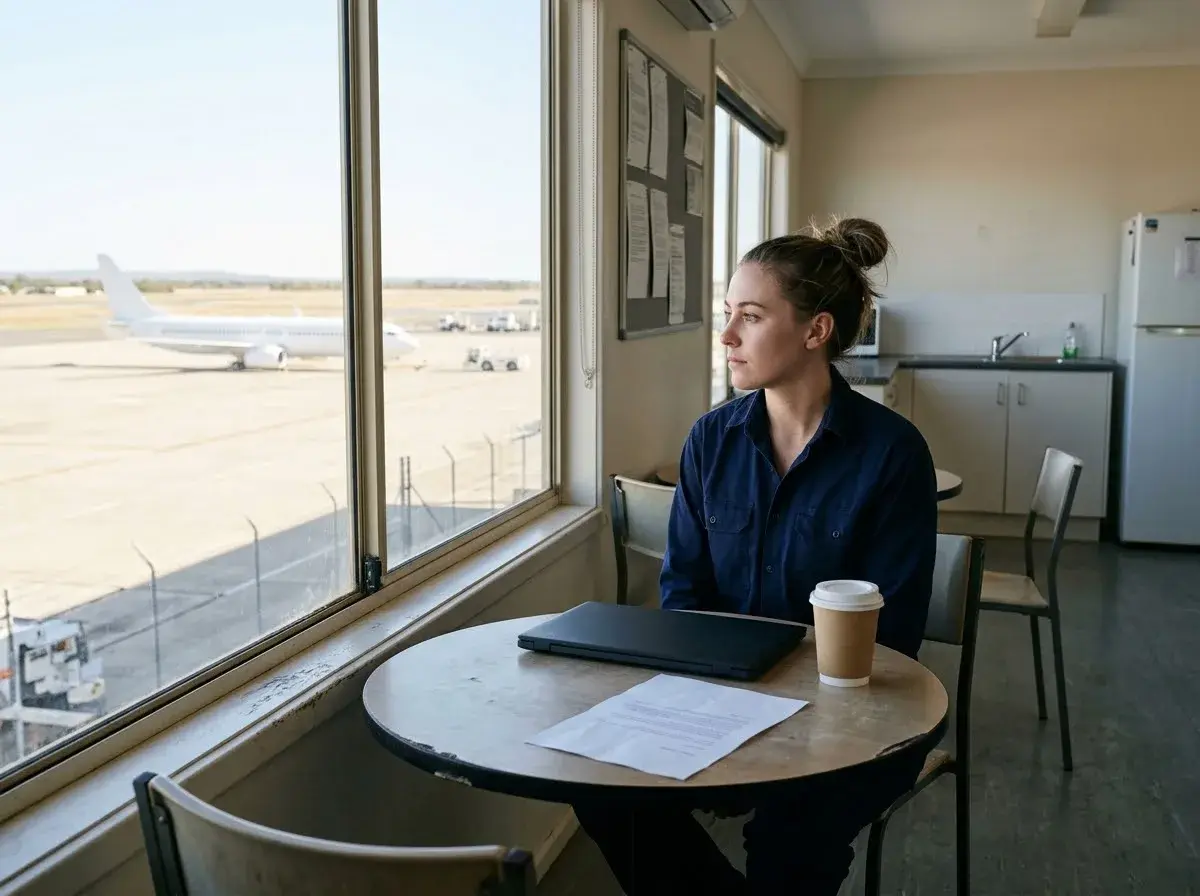
A part-time check-in agent at Perth Airport reported a male colleague for alleged sexual harassment. The employer's investigation could not substantiate it, told him the outcome in writing weeks before her, and offered to separate them only by moving her. She resigned, and the Fair Work Commission found she had been forced to, awarding her $36,468.39.
Key points
- A resignation can count as a dismissal if the employer's conduct left the worker no real choice but to resign (s 386(1)(b) of the Fair Work Act).
- An investigation should not treat a complaint as unsubstantiated just because the two accounts differ; the employer should look for other evidence, such as the people the complainant spoke to soon afterwards.
- Both sides of a complaint should be told the outcome in the same way, at about the same time, and clearly.
- If the complainant and the person complained about must be kept apart, the employer should not put the whole cost of that on the complainant without first looking at moving the other person.
What happened
The applicant started with dnata Airport Services at Perth Airport in January 2023 as a part-time passenger services agent, checking in and boarding passengers. The company had agreed to an informal arrangement so her roster fitted her university timetable. At times she also acted as a relief team leader.
In March 2025 she reported that a male colleague in her team had repeatedly pressed her, after he came into the office where she was working, about what she should wear to an upcoming social event with colleagues, and about how it would look on her. She said she kept saying no, then left the room. Later that afternoon, two colleagues who saw she was upset encouraged her to report it, and she did so that evening.
The investigation
The start was slow: her first report brought a kind reply but no explanation of what would happen next, and follow-up was slow. Once the operations manager had her follow-up email on 11 March, she spoke to the applicant, offered the Employee Assistance Program (free, confidential counselling), approved leave, and passed the complaint to a People and Culture business partner. The male employee was told not to attend work, given the allegations in writing and interviewed within days. The Commission found these steps reasonable and appropriate.
Things went wrong from 21 March 2025. That day the male employee was told in writing that the allegations could not be substantiated. The applicant was not told the outcome until a meeting on 10 April, where she learned he would be back at work on 14 April. She asked to be rostered on different days or shifts. By her account she was told that changing his roster would be discrimination against him; the manager did not recall that exact conversation, but said she would have explained a change was difficult.
The only options later put to her were to train on a different airline, move into load control, or take an administrative role. She had to chase a written outcome. When the letter came on 28 April, it said the company had been unable to make a finding on 'some' of the allegations, which did not match what she had been told. She resigned on 30 April 2025. She declined the company's invitation to reconsider.
The legal test: was it a dismissal?
An unfair dismissal claim needs a dismissal. Under s 386(1)(b) of the Fair Work Act 2009 (Cth), a worker who resigns has been dismissed if they were forced to resign because of conduct, or a course of conduct, by the employer.
The test, from the Full Bench in Bupa Aged Care Australia Pty Ltd v Tavassoli, is whether the employer meant to end the job, or whether ending it was the probable result of the employer's conduct, so that the worker had no effective or real choice but to resign.
The company was not blamed for everything. It could not have kept her identity from the male employee, its counselling and welfare checks could not be faulted, and her other complaints (about leave, fatigue and a promotion) played no part. But three things together forced her out: the slow written outcome, the confusing content of that letter, and making her give up her own role and airline to be safe at work. There was no direct evidence the company ever thought about moving him. The Deputy President found it was unreasonable to place 'the burden of compromise' on her.
The flawed investigation and the result
The Deputy President called the flaws in the investigation 'serious'. The company had treated any mismatch between the two accounts as meaning the allegation could not be substantiated. The Commission said that does not follow: a complaint about a conversation with no witnesses may still be substantiated by other evidence. Here the two colleagues she spoke to soon afterwards were never interviewed. The Commission made no finding on whether the conduct happened, as neither side called him or those colleagues.
Under s 387 the Commission then weighed the usual factors. Most were neutral, because there was no reason for the dismissal to examine. The deciding factors were "other matters" (s 387(h)): the flawed investigation, the unequal way the outcome was given, and the company's failure to show the roster could only change by moving her. The dismissal was unreasonable, and so unfair. She did not want her job back. The Commission found she would have stayed at least another six months, worth $40,452.91, took off $3,984.52 she earned in new casual work, and ordered $36,468.39 in compensation.
What this means for you
This was an unfair dismissal decision. It was not a ruling under s 47C of the Sex Discrimination Act 1984 (Cth), the positive duty on employers to take reasonable and proportionate measures to eliminate, as far as possible, sexual harassment and related conduct at work. That duty has applied since 13 December 2022, though the decision does not mention it. Still, it shows the kind of complaint handling that duty expects: look for all the evidence, treat both people even-handedly, explain the outcome clearly in writing, and think about who should carry the cost of keeping people apart.
If you feel pushed out by how your complaint was handled, keep notes and get advice before you resign. A forced resignation claim is hard to win and depends on the employer's conduct, not just on how unhappy you were. The time limit for an unfair dismissal application is 21 days from the dismissal.
The takeaway
Handling a harassment complaint does not end with the investigation. Telling both people the outcome equally and clearly, and not making the person who complained carry the cost of separation, can decide whether a resignation becomes a dismissal.
Note: This decision may be under appeal. The Commission decided the case under the unfair dismissal provisions of the Fair Work Act; it did not apply the positive duty in s 47C of the Sex Discrimination Act 1984 (Cth).
Fair Work Commission · 22 September 2025
Sewell v dnata Airport Services Pty Limited [2025] FWC 2823, Deputy President Beaumont. Read the full decision
This is a plain-English summary of the published decision, for general information. It is not legal advice, and every case turns on its own facts.
Does this sound like your situation?
More case studies

Fair Work Commission · 13 August 2025
Garlic, a breakfast platter and a 'scathing' email: bullying or not?
Gower v Figueroa, ROCOM Pty Ltd T/A Barbagallo Motoring Group
A worker at a luxury car dealership said his manager bullied him for over a year: a comment about garlic, criticism of a breakfast platter for a client and a scathing email. The Fair Work Commission found a strained relationship and one unprofessional email, but not bullying, and dismissed his stop-bullying application. It then refused the employer's application to make him pay its legal costs.
Stop-bullying order refused; employer's costs bid also refusedDiscrimination & bullying#bullying#health & safety
Read the case study
Fair Work Commission · 13 October 2025
A nurse's 12 bullying complaints, and why none were bullying in law
Kaur
A registered nurse at an aged care home in Melbourne's west said that after she raised concerns about staffing, her managers bullied her for well over a year, through performance meetings, text messages and shift decisions. The Fair Work Commission looked at all 12 incidents she relied on and found each was reasonable management action, even where managers had handled things poorly. Her application for a stop-bullying order was dismissed.
Stop-bullying order refusedDiscrimination & bullying#bullying#performance#health & safety
Read the case study
Federal Court of Australia · 1 August 2025
Harassed by the franchise owner, then threatened with defamation
Magar v Khan
A young shift supervisor at a Mad Mex franchise was sexually harassed by the business's owner and, when she complained, was sent defamation threats. She took her complaint to the Australian Human Rights Commission and then to the Federal Court, which found both sexual harassment and victimisation and ordered the owner to pay her $305,000. He has appealed, and the outcome of the appeal is not known.
$305,000 ordered, plus costsDiscrimination & bullying#sexual harassment#compensation
Read the case study