Harassed by the franchise owner, then threatened with defamation
Magar v Khan [2025] FCA 874
- Decided by
- Federal Court of Australia
- Date
- 1 August 2025
- Outcome
- $305,000 ordered, plus costs
- Result
- Employee succeeded
A young shift supervisor at a Mad Mex franchise was sexually harassed by the business's owner and, when she complained, was sent defamation threats. She took her complaint to the Australian Human Rights Commission and then to the Federal Court, which found both sexual harassment and victimisation and ordered the owner to pay her $305,000. He has appealed, and the outcome of the appeal is not known.
Key points
- A sexual harassment claim under the federal Sex Discrimination Act starts with a complaint to the Australian Human Rights Commission; if it is not resolved, the worker can go to court, where compensation has no cap.
- The harasser can be sued personally. Here the employer company went into liquidation, and the owner was ordered to pay her personally.
- Threatening someone with a defamation claim because they complained of sexual harassment can be unlawful victimisation.
- A case can be won on the worker's own believable account, even when no one else saw what happened.
What happened
Biplavi Jarga Magar, a Nepalese citizen on a student visa, was just under 21 when she started as a line worker at a Mad Mex restaurant at Norwest Marketown, in the Hills District of New South Wales, in September 2021. The restaurant was run by a franchisee, Mexicali Enterprises Pty Ltd, a company owned and controlled by Sher Khan, who also worked there as its most senior employee.
Six months later she was promoted to shift supervisor. Mr Khan supported her through a serious mental health episode in early 2022.
From 12 January 2023 things changed. Mr Khan asked her intrusive sexual questions and joked about her private life in front of other staff. On Sundays, when she was the only manager on and the other staff were mostly teenagers, he took her to his car on errands. There he made explicit sexual comments, showed her pornography and sexual items, and pressed her to go to a hotel with him.
On 17 February 2023 she caught the bus to work but could not make herself get off. She never went back.
The complaint, and the defamation threat
In April 2023 she complained to Mad Mex, the franchisor. It investigated and told her it had "substantiated some of the allegations". Her lawyers had also written to the business on 31 May 2023 alleging unlawful sexual harassment.
Mr Khan's lawyers replied with two defamation concerns notices (the formal first step before suing for defamation) in June and July 2023. They said her complaints were defamatory and asked her to pay him compensation and apologise.
In December 2023 she complained to the Australian Human Rights Commission. The court case was first brought against the company too, but it went into liquidation, so the case continued against Mr Khan alone.
Why: the legal test
Section 28B of the Sex Discrimination Act 1984 (Cth) makes sexual harassment at work unlawful. A worker first complains to the Australian Human Rights Commission, which tries conciliation. If that fails, the Commission terminates the complaint and issues a notice, and the worker then has 60 days from the date of that notice to take the claim to the Federal Court or the Federal Circuit and Family Court. Ms Magar's was terminated on 19 July 2024; she filed in court on 17 September 2024.
In court, compensation for all the harm proved has no cap set by the Act. A complaint under the Equal Opportunity Act 1984 (WA), which goes to WA's Equal Opportunity Commission and then the State Administrative Tribunal, can lead to damages of no more than $40,000.
Section 28A defines sexual harassment in three parts: conduct of a sexual nature (including statements made to or in front of the person), that was unwelcome, in circumstances where a reasonable person would have anticipated she might be offended, humiliated or intimidated. The harasser's intention does not matter, and a worker need not object at the time.
Victimisation, under s 47A, is a separate wrong: subjecting or threatening someone with a detriment because they alleged conduct unlawful under the Act. The court rejected Mr Khan's argument that it covered only complaints to the Commission.
What the court decided
Mr Khan denied everything, and it was her word against his. His lawyers suggested her account came from past mental illness. Justice Bromwich accepted a psychiatrist's evidence that her psychosis had been a single episode a year earlier, and found her account of what happened in the car "compelling and believable". That she kept going to work for a while did not count against her: people have many reasons to keep working, starting with earning a living.
The court found sexual harassment on 12 January 2023 and on at least four of the five Sundays in the car. Sexist talk among male staff about other women was proved, but was not harassment of her because it was not about her.
On victimisation, Mr Khan said he sent the notices to "put an end to everything". The judge found that was aimed at stopping her pursuing her complaints, and that the notices caused her real distress, which was a detriment. He warned that threatening defamation over such a complaint "is a dangerous course unless comfortably satisfied that the allegations are baseless".
How much was awarded
Mr Khan was ordered to pay $305,000: $160,000 general damages for the harassment, $10,000 for the victimisation, $5,000 aggravated damages, $90,000 for wages lost up to the hearing and $40,000 for future lost wages. She had sought $300,000 for the harassment alone; the judge found that excessive on the harm proved.
The aggravated damages were for the way the case was defended: arguments, never put to her in cross-examination, that her earlier friendly messages made the harassment less plausible, and that past exposure to pornography made her less likely to be offended. The judge called the pornography submission "scandalous".
What this means for you
If a boss or owner harasses you, they can be held personally liable, not just the business.
If you are threatened with legal action for complaining, the threat may itself be victimisation. Keep the letters.
In WA you may be able to choose between the state and federal Acts, and since 6 March 2023 the Fair Work Act 2009 (Cth) also prohibits sexual harassment in connection with work. The choice affects how much can be recovered, the costs risk and the time limits (the Commission may end a federal complaint lodged more than 24 months after the conduct), so it is worth getting advice early.
The takeaway
Complaining about sexual harassment is protected. An owner who harassed a young supervisor, then threatened her with defamation for complaining, was ordered to pay her $305,000 personally.
Note: The orders were made on 20 August 2025. Mr Khan lodged an appeal on 1 September 2025, and by February 2026 he had not paid the amounts ordered. On 4 February 2026, in Khan v Magar [2026] FCA 45, Justice Raper ordered him to pay $25,000 into court within 21 days as security for Ms Magar's costs of the appeal, stayed the appeal until he paid, and ordered that it be dismissed if he did not pay in that time. His lawyer had told the court he could not pay. Her Honour said the appeal grounds had "little, if any, merit". As at 26 October 2026 we have found no published decision on the appeal and no published record of whether the security was paid, so whether the appeal was dismissed, heard or is still pending is not known. Separately, the costs rules for these court cases changed for applications made to court from 2 October 2024 (s 46PSA of the Australian Human Rights Commission Act 1986 (Cth)): a successful applicant must now generally be awarded her costs, and an unsuccessful one generally cannot be ordered to pay the other side's. Ms Magar filed before then, so the earlier rules applied to her case.
Federal Court of Australia · 1 August 2025
Magar v Khan [2025] FCA 874, Justice Bromwich. Read the full decision
This is a plain-English summary of the published decision, for general information. It is not legal advice, and every case turns on its own facts.
Does this sound like your situation?
More case studies
Federal Circuit and Family Court of Australia (Division 2) · 8 November 2024
Her boss tied a request for sex to her job; his company was liable too
Trakimaite v Aubertin
An office administrator at a Sydney construction company was in a consensual relationship with the company's owner. One day in 2020, after she twice said no to sex, he told her she was "finished" and that he did not think they could "work together anymore". The court found that was sexual harassment, held the company liable for its director's conduct under s 106 of the Sex Discrimination Act, and awarded her $25,000, half the general damages she had asked for.
$25,000 damages, company jointly liableDiscrimination & bullying#sexual harassment#compensation#for employers
Read the case study
Fair Work Commission · 13 October 2025
A nurse's 12 bullying complaints, and why none were bullying in law
Mrs Prabhjot Kaur
A registered nurse at an aged care home in Melbourne's west said that after she raised concerns about staffing, her managers bullied her for well over a year, through performance meetings, text messages and shift decisions. The Fair Work Commission looked at all 12 incidents she relied on and found each was reasonable management action, even where managers had handled things poorly. Her application for a stop-bullying order was dismissed.
Stop-bullying order refusedDiscrimination & bullying#bullying#performance#health & safety
Read the case study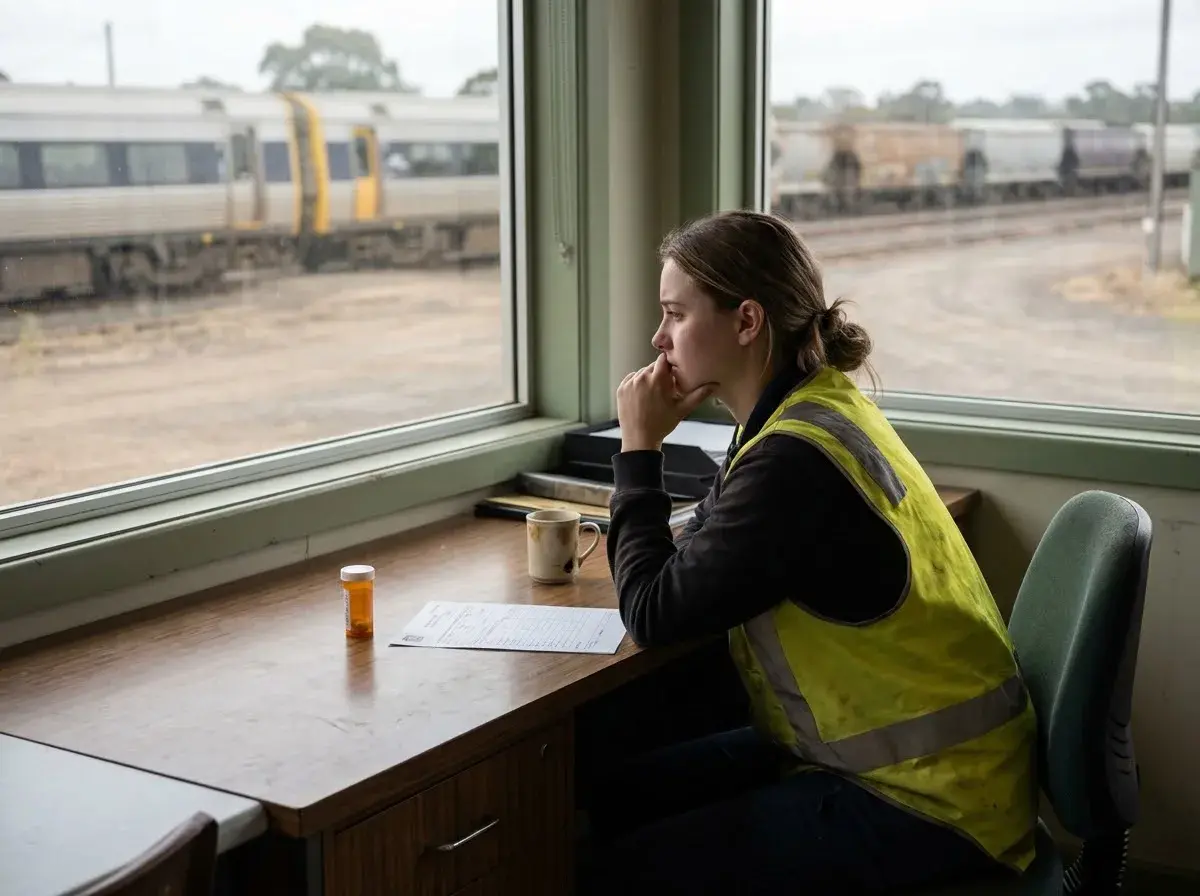
Full Court of the Federal Court of Australia · 12 September 2024
Trainee train driver with ADHD wins discrimination case, then loses it
State of New South Wales - Sydney Trains v Annovazzi
A trainee train driver with ADHD and Asperger’s Syndrome was dismissed on probation after her employer concluded she had not disclosed her conditions before she was hired. A judge found the dismissal was disability discrimination, but the Full Federal Court set that aside, and on the rehearing her claim was dismissed.
Trial win overturned; claim dismissed on rehearingDiscrimination & bullying#disability#discrimination#investigations
Read the case study