Garlic, a breakfast platter and a 'scathing' email: bullying or not?
Gower v Figueroa, ROCOM Pty Ltd T/A Barbagallo Motoring Group [2025] FWC 2369
- Decided by
- Fair Work Commission
- Date
- 13 August 2025
- Outcome
- Stop-bullying order refused; employer's costs bid also refused
- Result
- Mixed result

A worker at a luxury car dealership said his manager bullied him for over a year: a comment about garlic, criticism of a breakfast platter for a client and a scathing email. The Fair Work Commission found a strained relationship and one unprofessional email, but not bullying, and dismissed his stop-bullying application. It then refused the employer's application to make him pay its legal costs.
Key points
- Bullying under the Fair Work Act means repeated unreasonable behaviour that creates a risk to health and safety; one bad email is not enough.
- A manager raising concerns about the quality of work is usually reasonable management action, even if the worker finds the manager abrasive.
- A stop-bullying order looks to the future, so a worker who cannot return to work may not be at risk of further bullying.
- Losing a stop-bullying case does not usually mean paying the employer's costs: each side normally pays its own.
What happened
The worker was employed by ROCOM Pty Ltd, which trades as Barbagallo Motoring Group. According to the manager, the dealership sold luxury cars, some priced above $700,000, and treated the delivery of a new car as a special event, with a food platter and champagne for the client.
The worker said his manager bullied him from early 2023 until he went on personal leave in September 2024. He said the manager sent an impolite text while he was off sick with COVID, accused him of smelling of garlic, berated him over a breakfast platter and during the sale of a car, spread rumours about an alternative role, refused two days' leave requested six months ahead, and sent a 'scathing' email accusing him of going against instructions.
A medical report of 6 March 2025 recorded an adjustment disorder and depressed mood, which he put down to the manager. He was off work on a workers compensation claim. He said an internal investigation had not resolved things. He had declined the employer's offer to move him to another department away from the manager.
The claim and the legal test
On 20 December 2024 the worker applied to the Fair Work Commission under s 789FC of the Fair Work Act 2009 (Cth) for an order to stop bullying. He named the manager as the person bullying him and asked for orders that he be redeployed away from the manager and not be managed by him.
Under s 789FD, a worker is bullied at work if, while at work, an individual or group repeatedly behaves unreasonably towards the worker, and that behaviour creates a risk to health and safety. So the behaviour must be repeated, unreasonable and a risk to health and safety.
There is an exception: the definition does not apply to reasonable management action carried out in a reasonable manner. Managers may direct work and raise concerns about performance, provided they do it reasonably.
Even if bullying is proved, s 789FF allows an order only if there is a risk the worker will continue to be bullied by the same person. Orders aim to stop future bullying and cannot require anyone to pay money.
Two versions of events
The manager denied bullying. He said he never told the worker he stank: a customer had commented on a smell of garlic in a confined space, so he asked whether the worker had been eating garlic. With luxury cars and clients, he said, it was reasonable to raise concerns about a platter's quality. His text during the COVID absence was to check the worker had put in sick leave, as payroll had asked.
An external HR consultant engaged by the employer said the conduct was reasonable management action carried out reasonably, and many allegations, including the garlic comment, were not corroborated by other employees. She described the September 2024 email as direct and frustrated, but not abusive or threatening.
What the Commission decided
Commissioner Schneider preferred the manager's evidence. The Commissioner accepted that the relationship was strained, but said there is 'a significant difference between a strained relationship and workplace bullying'. The manager 'may at times come across too abrasive' for the worker, but that was a lack of personal compatibility, and several of the worker's complaints were 'either exaggerated or provided out of context'.
The email of 12 September 2024 was the exception. The Commissioner found its tone unprofessional and said the manager did not communicate his frustration appropriately. But there was no evidence of emails like it being sent regularly. Had there been, the Commissioner said, that 'could have constituted workplace bullying'. One email is not repeated behaviour.
The rest of the conduct either did not happen as described, was not bullying, or was reasonable management action done reasonably. As no bullying had occurred, he was not at risk of future bullying, and he could not attend work, with no timeframe for a return. The application was dismissed on 13 August 2025.
The costs bid
Two weeks later the employer applied for its costs. It relied on the worker's earlier statements that he would not return while the manager remained employed, and argued the claim was brought vexatiously.
Under s 611 each party bears its own costs in the Commission. Costs can be ordered only if an application was made vexatiously or without reasonable cause, or it should have been reasonably apparent it had no reasonable prospect of success. Failing is not enough.
In a decision of 18 June 2026 the Commissioner refused the costs application. The claim was not 'manifestly groundless': the worker was so aggrieved by the manager's behaviour that, he said, it had made him unfit for work. Nor was it vexatious. He had asked for an order that would let him return to work without being managed by the manager, and that was an order within the Commission's power.
What this means for you
If you are dealing with a difficult manager, the question is whether the behaviour is repeated, unreasonable and a risk to your health, not whether the manager is blunt. Reasonable criticism of your work is part of a manager's job. Keep notes and emails: private conversations nobody else saw are hard to prove.
A stop-bullying order is designed to make work safe to return to. If you cannot go back, consider getting advice early about whether a workers compensation or other claim suits you better. For employers, the Commissioner noted the offer to move the worker, but winning did not bring the employer's costs back.
The takeaway
An abrasive manager and one unprofessional email are not, on their own, bullying under the Fair Work Act. And a worker whose genuine claim fails will not usually be ordered to pay the employer's costs.
Note: The costs decision is Rocom Pty Ltd Trading AS Barbagallo Motoring Group v Gower [2026] FWC 2272 (18 June 2026). We found no appeal from either decision, but we cannot rule one out. This decision may be under appeal.
Fair Work Commission · 13 August 2025
Gower v Figueroa, ROCOM Pty Ltd T/A Barbagallo Motoring Group [2025] FWC 2369, Commissioner Schneider. Read the full decision
This is a plain-English summary of the published decision, for general information. It is not legal advice, and every case turns on its own facts.
Does this sound like your situation?
More case studies

Federal Court of Australia · 1 August 2025
Harassed by the franchise owner, then threatened with defamation
Magar v Khan
A young shift supervisor at a Mad Mex franchise was sexually harassed by the business's owner and, when she complained, was sent defamation threats. She took her complaint to the Australian Human Rights Commission and then to the Federal Court, which found both sexual harassment and victimisation and ordered the owner to pay her $305,000. He has appealed, and the outcome of the appeal is not known.
$305,000 ordered, plus costsDiscrimination & bullying#sexual harassment#compensation
Read the case study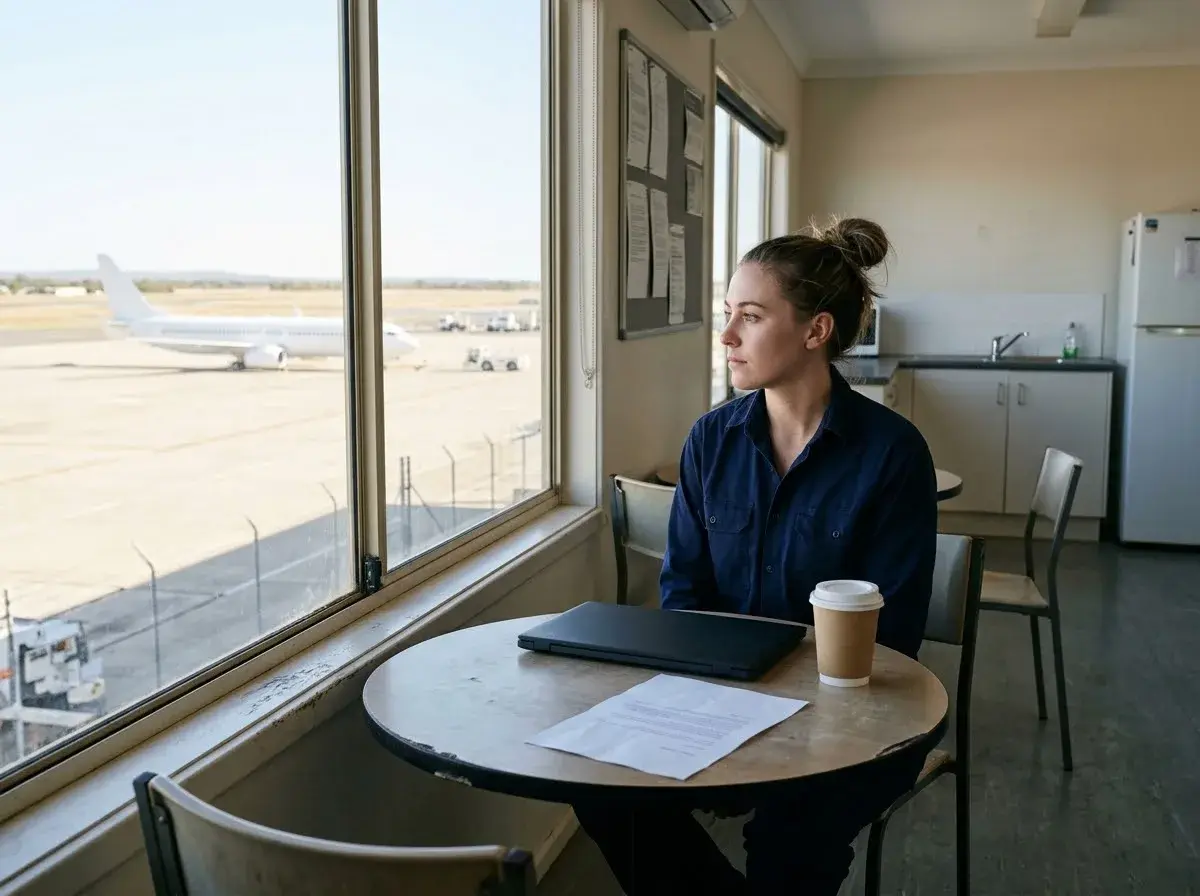
Fair Work Commission · 22 September 2025
She reported harassment, then was expected to work beside him
Sewell v dnata Airport Services Pty Limited
A part-time check-in agent at Perth Airport reported a male colleague for alleged sexual harassment. The employer's investigation could not substantiate it, told him the outcome in writing weeks before her, and offered to separate them only by moving her. She resigned, and the Fair Work Commission found she had been forced to, awarding her $36,468.39.
$36,468.39 compensationDiscrimination & bullying#forced resignation#sexual harassment#investigations
Read the case study
Federal Circuit and Family Court of Australia (Division 2) · 19 June 2025
CFO says a homophobia complaint cost him his job: why he lost
Manti v Michail Trust, Peter Newland Nominees Pty Ltd
A chief financial officer who left a Melbourne job to work in Adelaide was told in his sixth month of probation that his employment would end. He said the real reason was his complaints, including about homophobic comments about his 'inferred sexuality' and about his weight. The court accepted the chairman's evidence that he alone made the decision, for reasons that had nothing to do with any complaint.
Claim dismissedDiscrimination & bullying#general protections#discrimination#executives
Read the case study