Seven massage therapists underpaid almost $1 million
Fair Work Ombudsman v Foot & Thai Massage Pty Ltd (in liquidation) (No 8) [2024] FCA 483
- Decided by
- Federal Court of Australia
- Date
- 10 May 2024
- Outcome
- $971,092 compensation plus damages for distress
- Result
- Employee succeeded
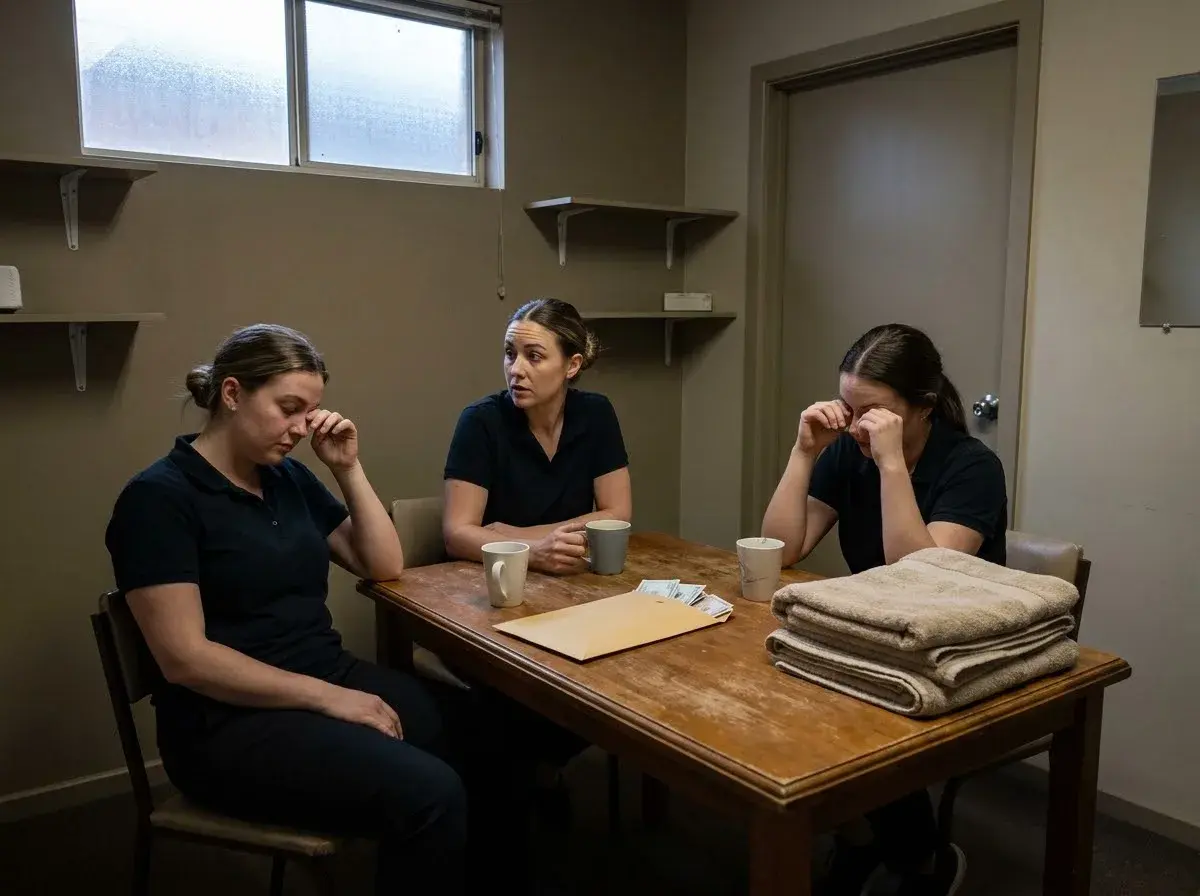
Seven massage therapists recruited from the Philippines on sponsored visas were underpaid $971,092.27 over almost four years, and six of them were told to hand back part of their wages in cash. The Federal Court ordered the company and its director to repay them, awarded damages for the fear they lived in, and imposed penalties on the company, the director and a supervisor. A 2026 appeal narrowed the findings against the director.
Key points
- A company's administration and deed of company arrangement did not stop the Court ordering it to compensate underpaid workers.
- A director involved in underpayments can be ordered personally to repay them and to pay penalties.
- The Court awarded $25,000 to $30,000 to each worker for distress, without any medical diagnosis.
- On appeal in 2026, some findings against the director were set aside because he had not been treated fairly as a self-represented litigant.
What happened
Foot & Thai Massage Pty Ltd ran a therapeutic massage business in Canberra, trading as “foot&thai”. It recruited seven massage therapists from the Philippines on temporary subclass 457 visas that it sponsored. Four started on 24 June 2012 and three on 15 April 2013. The sole director, Mr Elvin, hired them and set their wages. Another employee, Mr Puerto, supervised them.
Their contracts promised award penalty rates and an average of no more than 38 hours a week. In cross-examination Mr Elvin conceded the contracts were false, calling them “bodgie” and “sham”. The Court found he made “an economic decision not to comply with the Health Award”.
Six of the therapists were directed to hand back $800 a fortnight in cash for months at a time. Money was also deducted from their pay as “staff loans”. The trial judge also found that Mr Elvin threatened to send them back to the Philippines, and to have their families killed, if they complained to the authorities. On appeal, the finding of his personal involvement in the threats was set aside, without deciding whether they were made (see below).
The claims and the legal tests
The Fair Work Ombudsman sued the company, Mr Elvin and Mr Puerto under the Fair Work Act 2009 (Cth). Section 45 makes it a contravention to breach a modern award. The therapists were classified as Health Professional Level 1 under the Health Professionals and Support Services Award 2010, so they were owed its minimum, overtime and public holiday rates. Section 44 does the same for the National Employment Standards, the minimum conditions in the Act, including limits on unreasonable hours and payment of unused annual leave when a job ends.
Section 323 requires wages to be paid in full, and s 325 stops an employer unreasonably requiring a worker to spend or hand back wages for its benefit. Under s 550, a person “knowingly concerned” in a contravention is treated as having committed it. The general protections in ss 340, 343 and 351 forbid threats to stop workers complaining, coercion, and harmful treatment because of race or national extraction. In a 2021 judgment Justice Katzmann found the company had breached these protections, mostly with Mr Elvin's involvement. This 2024 judgment decided the remedies.
What the Court ordered
After small payments made during the company's administration, the shortfall was $971,092.27: between about $120,000 and $159,000 for each worker. The company argued that the deed its creditors accepted in administration had settled the workers' claims. Ms Amacio, for example, had recovered under it less than 15% of what she was owed.
The judge still ordered the company to pay. Its records were false and incomplete, so the administrators were very likely misled. The workers did not know what they were really owed, and as 457 visa holders they could not use the government's Fair Entitlements Guarantee scheme. The deed bound only claims against the company, so it could not protect Mr Elvin, and he was ordered to pay too.
Section 545 lets the Court order compensation for any loss caused by a contravention. There was no evidence of a psychiatric illness, but that was no bar. The judge accepted that each therapist suffered “significant emotional harm and distress” over three to four years, and awarded $30,000 to each of the four 2012 starters and $25,000 to each of the three 2013 starters, whose distress lasted less time.
Penalties
Civil penalties are meant to deter, so that breaking the law is not seen as “an acceptable cost of doing business”. The judge found the conduct “extremely serious” and mostly deliberate, and no respondent showed any contrition. She ordered penalties of $778,100 against the company, $150,140 against Mr Elvin and $38,650 against Mr Puerto. The company's liquidation was no reason for a lower penalty, because deterring others does not depend on whether a penalty is ever paid.
The appeal
Mr Elvin, who represented himself, appealed. On 21 July 2026 the Full Court allowed the appeal in part in Elvin v Fair Work Ombudsman [2026] FCAFC 92. Justices McDonald and Vandongen held he was denied procedural fairness: the trial judge drew an inference against him from his failure to call Mr Puerto as a witness without first warning him of that risk. Justice Collier would have dismissed the appeal.
Findings resting on his own admissions or the records survived: his involvement in the award underpayments, unpaid annual leave on termination, the missing Fair Work Information Statements, unauthorised deductions and record-keeping failures. The findings that he was involved in the cashbacks, the unreasonable hours, the false records, the threats and the discrimination were set aside, while the declarations against the company stand. The Court will hear the parties on whether his compensation and penalties change, and whether any claim should be retried.
What this means for you
If you are underpaid, the company may not be the only one responsible. A director or manager involved in an underpayment can be ordered to repay it personally, and a company's collapse does not protect them. Being made to hand wages back in cash can be unlawful, and a court can compensate the distress of threats without a medical diagnosis.
Workers on sponsored visas are covered by the same Fair Work pay rules as everyone else. Since 1 January 2025, intentionally underpaying an employee is also a crime under s 327A. Keep your own record of hours and pay, and consider getting advice early: an underpayment claim generally must be brought within six years.
The takeaway
Underpaid workers can recover from the people who ran the business, not just the company, and a company's administration or liquidation is not a shield. Threats that keep workers quiet can also attract compensation for distress.
Note: On 21 July 2026 the Full Court ([2026] FCAFC 92) narrowed the declaration of Mr Elvin's personal involvement and said it would hear the parties on whether his compensation, interest and penalty orders should be varied and whether any claims should be retried; the outcome of that further hearing is not covered here. The conduct here was dealt with as civil contraventions. Since 1 January 2025 intentional underpayment is a criminal offence under s 327A of the Fair Work Act 2009 (Cth), and the maximum civil penalties for underpayment have also increased since this case.
Federal Court of Australia · 10 May 2024
Fair Work Ombudsman v Foot & Thai Massage Pty Ltd (in liquidation) (No 8) [2024] FCA 483, Justice Katzmann. Read the full decision
This is a plain-English summary of the published decision, for general information. It is not legal advice, and every case turns on its own facts.
Does this sound like your situation?
More case studies

Full Court of the Federal Court of Australia · 10 May 2022
Milk tanker driver called 'casual' was really a permanent employee
Jess v Cooloola Milk Pty Ltd
A truck driver hauled milk for a dairy business for more than four years on a set wage, with paid leave and no casual loading, while his employer called him a casual. When he was dismissed soon after asking to be paid for extra hours, the trial judge rejected his claims. The Full Court of the Federal Court held he was not a casual employee, that his question about pay was a protected inquiry, and sent the case back for a new hearing.
Appeal won: not a casual, claims sent back for hearingPay & contracts#casual work#general protections#underpayment
Read the case study
Federal Circuit Court of Australia · 26 August 2020
Juice bars and their manager hit with almost $277,000 in penalties
Fair Work Ombudsman v Skypac Group Pty Ltd & Ors
Two companies running juice bars in Werribee and Geelong underpaid almost thirty workers under the Fast Food Industry Award, kept false pay and time records, and made one worker hand money back. After the companies and their general manager admitted the contraventions, the Federal Circuit Court ordered penalties totalling $276,929.75.
$276,929.75 in penaltiesPay & contracts#underpayment#penalties#for employers
Read the case study
South Australian Employment Court · 14 August 2020
Servo chain ordered to pay $64,800 over unpaid shift starts and breaks
Mathew v Shahin Enterprises Pty Ltd
A trainee console operator at an Adelaide petrol station had to start work before his rostered time every shift without pay, had pay docked for meal breaks he never took, and was paid no overtime loading. His underpayment came to $2,663.91. The South Australian Employment Court ordered his former employer to pay him $64,800 in civil penalties.
$64,800 in penalties, payable to the workerPay & contracts#underpayment#penalties
Read the case study