Crane operator sacked on the spot for joining a lockdown protest
Omar Chebbo v Major Crane Logistics Pty Ltd [2021] FWC 6693
- Decided by
- Fair Work Commission
- Date
- 24 December 2021
- Outcome
- Four weeks' pay in compensation
- Result
- Mixed result
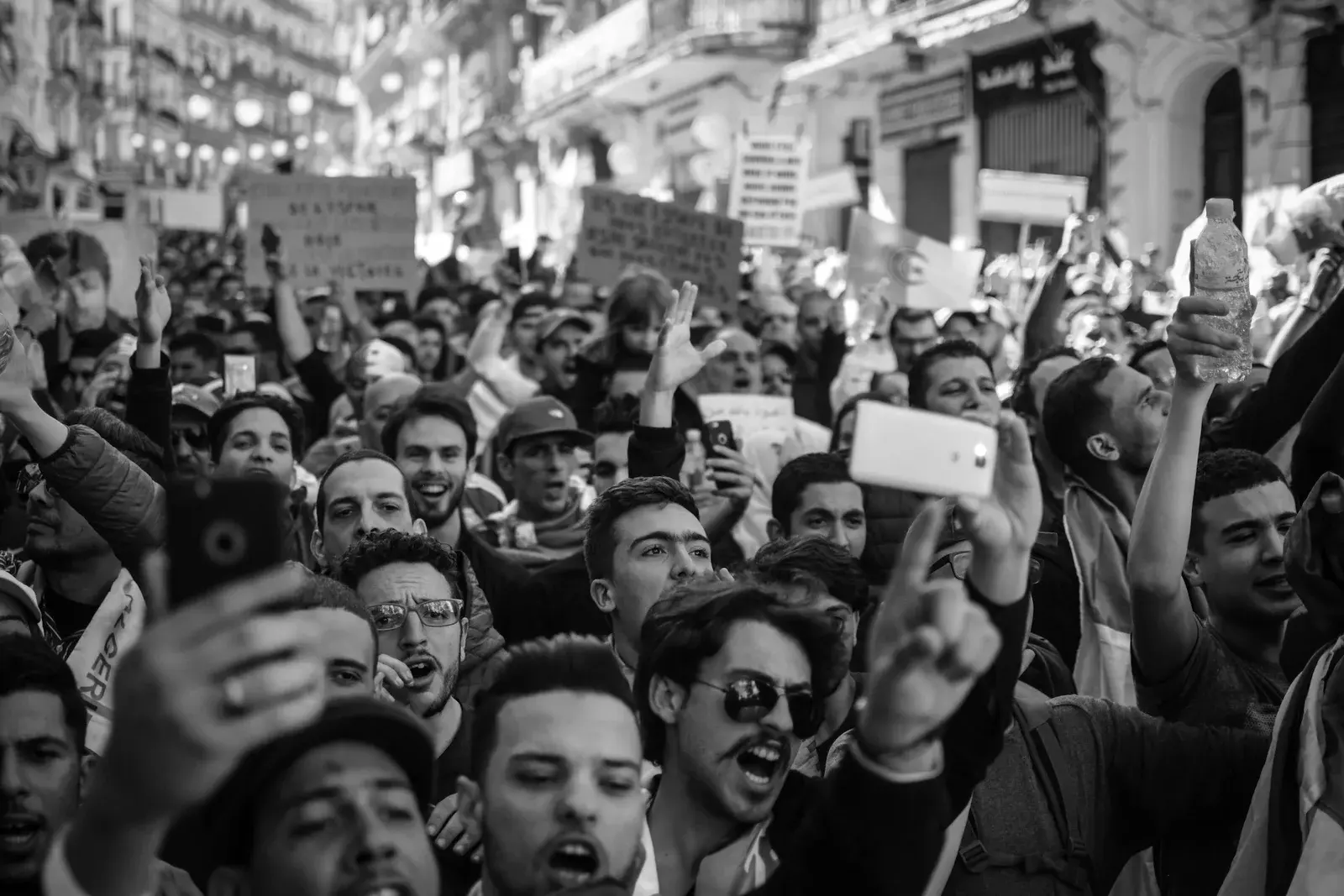
A Melbourne mobile crane operator was dismissed on the spot the day after he attended an unlawful protest outside a union office during the 2021 lockdown. The Fair Work Commission found his employer had a valid reason to dismiss him, but that sacking him without notice was harsh, and ordered compensation equal to four weeks' pay.
Key points
- Conduct outside the workplace can be a valid reason for dismissal when it is connected to the job, here because the protest was about industry conditions, happened on paid time and put the employer's reputation at risk.
- An employer does not have to prove it actually lost work: creating a real risk to its reputation was enough for a valid reason.
- A valid reason does not automatically justify summary dismissal. Conduct that warrants dismissal may still not be serious misconduct.
- Where the only unfairness was the lack of notice, the Commission ordered compensation equal to the notice period, not reinstatement.
What happened
Omar Chebbo drove a Franna mobile crane for Major Crane Logistics, a Melbourne company that supplied labour and equipment to construction sites. He had worked there for about three years and had been a member of the construction union, the CFMMEU, for some twenty years.
On the morning of Monday 20 September 2021 he drove the crane to the Metro Tunnel site in Parkville. A union delegate told him the site was closed because of a state government directive that all tea rooms on construction sites be shut. He took the crane back to the company's yard in Epping, where the managing director told him he could go home because there was no work. He was still paid for the day.
That afternoon Mr Chebbo travelled into the city and joined a protest outside the CFMMEU office. He said he learned on arrival that there had been violence earlier in the day. Melbourne was under stay-at-home orders that allowed only five reasons to leave home, and a protest was not one of them. The next morning, 21 September 2021, the managing director rang him and ended his employment with immediate effect. All four company employees who attended the protest were dismissed.
The claim
Mr Chebbo applied to the Fair Work Commission for an unfair dismissal remedy under s 394 of the Fair Work Act 2009 (Cth). He said he was within his rights to attend, took no part in the violence, was not anti-vaccination, and wore work clothes with no company logo. He said any breach of the stay-at-home orders was a matter between him and the authorities, not his employer. He also said the managing director had encouraged him to go, and that the company sacked him because of pressure from the union.
The company said that by attending an unlawful protest on a paid workday he had broken the law on its time, risked fines, and put its reputation and its relationship with the CFMMEU at risk.
The legal test
A dismissal is unfair if the Commission finds it was harsh, unjust or unreasonable (s 385). To decide that, it must weigh the factors in s 387. The first is whether there was a valid reason for the dismissal related to the worker's conduct or capacity. A valid reason must be both a good or sufficient reason and one that is proven on the evidence.
The Commission also considers whether the worker was told the reason and given a chance to respond, and any other relevant matter. One of those is proportionality: whether dismissal, and in particular dismissal on the spot, was a fair response to what the worker did. Summary dismissal (dismissal without notice) is generally reserved for serious misconduct, such as a serious breach of the employment contract.
What the Commission decided
Deputy President Colman rejected Mr Chebbo's account that he had been encouraged to protest. He found Mr Chebbo had been at the protest for well over an hour and went because on some level he supported it. He also found the managing director was not actually pressured by the union to sack him.
On valid reason, the Deputy President said Mr Chebbo had no right to attend the protest, because it was unlawful under the stay-at-home orders. It was also connected to his work in three ways. The protest concerned working conditions in his own industry, including the tea rooms and vaccination requirements. He attended on the company's time, while being paid. And because people in the industry knew him, his presence could suggest his employer endorsed or tolerated it, which put the company's reputation at risk with the union, other builders and its clients, including the Victorian government. There was no evidence of an actual lost contract, but creating that risk was serious enough to be a valid reason.
The company had told him only the essential reasons in a short phone call, so he could not respond fully. But a fuller process would not have changed the outcome, and the company did not believe he had been involved in the violence.
Why the sacking was still harsh
The Deputy President found Mr Chebbo had not defied a clear company policy. He had simply failed to think about the risk his attendance created for his employer. That was a valid reason for dismissal, and dismissal was proportionate, but it was not serious misconduct. He should have been dismissed on notice, and the decision to dismiss him summarily was harsh.
Reinstatement was refused because the unfairness was confined to the missing notice. The company was ordered to pay compensation equal to four weeks' pay, less tax. The Deputy President also noted that Mr Chebbo's efforts to find other work had been minimal, which would have cut any larger award substantially.
What this means for you
Conduct in your own time can cost you your job if it is closely connected to your work, particularly if it is unlawful, happens while you are being paid, or could link your employer to it. Not wearing a uniform does not end the connection if people know who you work for.
For employers, the case is a reminder that a good reason to dismiss is not the same as a reason to dismiss on the spot. Summary dismissal needs serious misconduct; otherwise notice should be given or paid. If you have been dismissed, consider getting advice early: an unfair dismissal application to the Fair Work Commission must be lodged within 21 days of the dismissal taking effect.
The takeaway
Off-duty conduct linked to your job and your employer's reputation can be a valid reason for dismissal. But unless it is serious misconduct, the employer still has to give notice, and a sacking on the spot can be found harsh.
Note: The Victorian stay-at-home orders in this case were COVID-era public health measures and are no longer in force. We found no appeal from this decision. The unfair dismissal provisions applied here (ss 385, 387, 390 and 392 of the Fair Work Act 2009 (Cth)) have not been amended since. For dismissals from 1 July 2026, compensation is capped at the lesser of 26 weeks' pay and $95,050, and workers earning above the high income threshold of $190,100 who are not covered by an award or enterprise agreement cannot bring an unfair dismissal claim. The original version of this article called the event an anti-vaccination protest and said five employees were dismissed; the decision describes a protest about tea rooms and vaccination requirements for construction workers, and records that four employees attended and were dismissed.
Fair Work Commission · 24 December 2021
Omar Chebbo v Major Crane Logistics Pty Ltd [2021] FWC 6693, Deputy President Colman. Read the full decision
This is a plain-English summary of the published decision, for general information. It is not legal advice, and every case turns on its own facts.
Does this sound like your situation?
More case studies

Fair Work Commission · 23 December 2021
Crossing supervisor of 12 years sacked over one exchange at the lights
Rolando Locastro v City of Darebin
A school crossing supervisor employed by a Melbourne council since 2009 was summarily dismissed after a young woman complained that he touched her hair, stared at her chest and made a sexual comment at his crossing. He denied it all and said the investigation was unfair. The Fair Work Commission believed her, found the council's process fair, and held that his age and clean record did not make the dismissal harsh.
Claim dismissedTermination#unfair dismissal#misconduct#sexual harassment
Read the case study
Fair Work Commission · 18 January 2022
Sacked on the spot after accidentally running over the boss's galah
Blake O'Keeffe v The Trustee for Dunshea Family Trust
A young labourer at a two-person family fencing business accidentally ran over the owner's pet galah while reversing a truck, after trying to move the bird to safety. He was dismissed for negligence in a meeting that lasted no more than six minutes. The Fair Work Commission found it was an accident, not misconduct, and ordered $8,287.78 in compensation.
$8,287.78 compensationTermination#unfair dismissal#small business#misconduct
Read the case study
Queensland Industrial Relations Commission · 6 December 2021
Prison officer dozed on duty because of sleep apnoea he didn't know about
Weaver v State of Queensland (Queensland Corrective Services)
A Queensland correctional officer was dismissed for misconduct after CCTV showed him briefly dozing on three long observation shifts. He had severe sleep apnoea that nobody, including him, knew about. The Queensland Industrial Relations Commission found that involuntary microsleeps were not misconduct, that the process was unfair, and ordered him reinstated with lost pay.
Reinstated with lost payTermination#unfair dismissal#misconduct#procedural fairness
Read the case study