Prison officer dozed on duty because of sleep apnoea he didn't know about
Weaver v State of Queensland (Queensland Corrective Services) [2021] QIRC 413
- Decided by
- Queensland Industrial Relations Commission
- Date
- 6 December 2021
- Outcome
- Reinstated with lost pay
- Result
- Employee succeeded
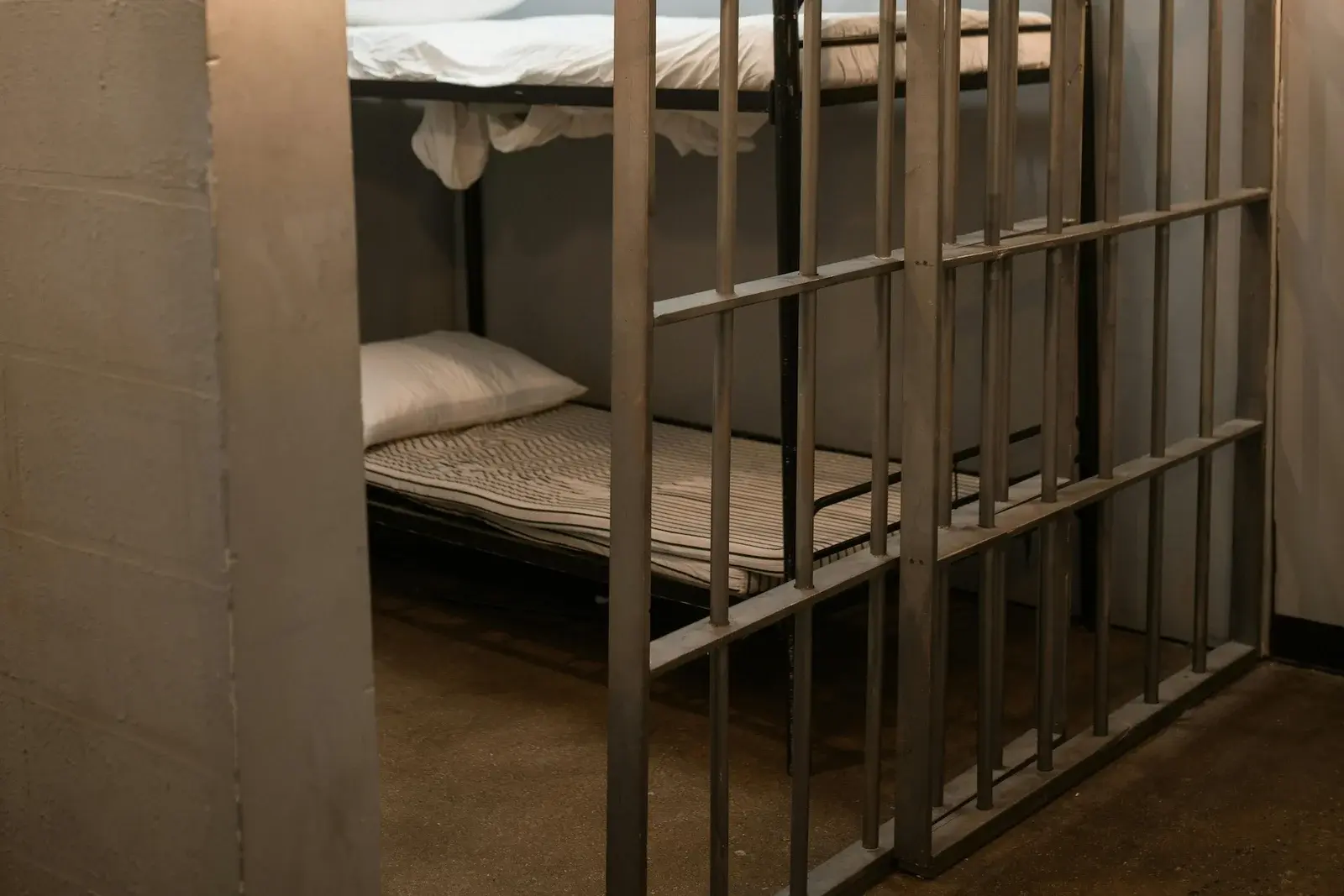
A Queensland correctional officer was dismissed for misconduct after CCTV showed him briefly dozing on three long observation shifts. He had severe sleep apnoea that nobody, including him, knew about. The Queensland Industrial Relations Commission found that involuntary microsleeps were not misconduct, that the process was unfair, and ordered him reinstated with lost pay.
Key points
- Misconduct needs something blameworthy: a deliberate departure from standards, serious negligence to the point of indifference, or an abuse of trust.
- A worker who fell asleep because of a medical condition he did not know he had was not guilty of misconduct.
- Relying on evidence never put to the worker for a response, and on a witness account no one checked against the full CCTV, made the process unfair.
- Another senior officer had already settled on a warning letter for the same conduct, which made dismissal look disproportionate.
What happened
Paul Weaver started with Queensland Corrective Services in March 2014 as a custodial correctional officer. Within a few years he was acting as a correctional supervisor, sat on the workplace health and safety committee and trained other officers. His general manager later described him as "an exceptional officer".
In October 2018 and January 2019 he worked three 12-hour overtime shifts doing constant observation of prisoners who had been self-harming, two at a hospital secure unit and one at a prison health centre. Colleagues reported that he appeared to be falling asleep in his chair. The CCTV footage, he accepted, showed he was "more than likely asleep or dozing for brief moments".
What nobody knew at the time, including Mr Weaver, was that he had severe obstructive sleep apnoea, a condition that interrupts breathing during sleep and leaves a person deprived of good-quality rest. It was diagnosed in July 2019. He then lost 12 kilograms, bought a CPAP machine for $1,850 and got a medical certificate saying he was fit for his normal duties. His general manager had already returned him to full prisoner-contact duties in June 2019, and he worked them for months without incident.
The investigation and the dismissal
An internal investigation found the three allegations substantiated. In February 2020, more than a year after the last shift, he was suspended on paid leave and asked to show cause. The department found he had been "derelict in the performance of your duties" and guilty of misconduct under s 187 of the Public Service Act 2008 (Qld). His employment was terminated on 5 August 2020, and he applied to the Queensland Industrial Relations Commission for reinstatement.
Why: the legal test
Under s 316 of the Industrial Relations Act 2016 (Qld), a dismissal is unfair if it is harsh, unjust or unreasonable, the same words used in the federal Fair Work Act 2009 (Cth). As the High Court has explained, a dismissal can be unjust because the worker did not do the misconduct alleged, unreasonable because it rests on inferences the evidence could not support, and harsh because its effect on the worker is out of proportion to what happened. Section 320 also asks whether the worker was told the reason and given a chance to respond.
The key question was what misconduct means. Earlier decisions described it as a deliberate departure from accepted standards, serious negligence to the point of indifference, or an abuse of the trust placed in a public servant. Mere incompetence, error or innocent mistake is not enough. "Dereliction of duty" likewise carries "notions of blameworthy conduct".
What the Commission decided
Industrial Commissioner McLennan accepted that Mr Weaver had brief microsleeps on all three shifts. But the Commissioner found he did not intend to sleep, did not know he had been asleep and did not know he was prone to it. The footage showed him reading, talking, drinking tea and standing up to stay alert, and on one shift he was the officer who raised the alarm when the prisoner fell. A sleep physician explained that his low score on a standard sleepiness questionnaire meant he would not have felt sleepy. Without blameworthy conduct, there was no misconduct and no dereliction of duty.
The process was also flawed. Evidence the decision-makers relied on, including a co-worker's account of a remark said to have been made by his wife, was not put to Mr Weaver in the show cause notice before the findings were made. That co-worker's report was accepted without the decision-makers checking it against the full footage, which contradicted it in several respects. His wife was never interviewed, and the investigation was long delayed.
The penalty itself raised questions. A Deputy Commissioner had reviewed the same file and decided on a formal warning letter. The file then went to an Assistant Commissioner who decided on dismissal. The Commissioner found no new information explained the change, and concluded that his view of Mr Weaver had been "infected" by an unrelated 2017 incident that had already been dealt with by a reprimand.
Finally, dismissing an older worker who supported three teenage stepdaughters, in the middle of the COVID-19 pandemic, for conduct that was involuntary was harsh. The Commission found the dismissal harsh, unjust and unreasonable.
How it ended
The department said it had lost trust in him. The Commission disagreed: he had worked full duties for months before his suspension, he was medically fit, and the officers who gave evidence said they would work with him again, provided his condition was managed. It ordered him reinstated to his former position with continuity of employment, and ordered the department to pay the wages he had lost since August 2020, less what he had earned elsewhere in the meantime and any notice pay he had received.
What this means for you
This case shows that when someone falls asleep at work, the question is why. Where an undiagnosed medical condition is the cause and the worker did not know about it, the conduct may not be misconduct at all.
If you are facing allegations, it is worth getting medical advice early if a health issue may explain what happened, and putting that evidence to your employer. This was a Queensland decision, but the Fair Work Act uses the same harsh, unjust or unreasonable test, and the WA state system asks whether a dismissal was harsh, oppressive or unfair. Time limits are short: 21 days for a Fair Work dismissal claim and 28 days in the WA state system.
The takeaway
Falling asleep at work is not automatically misconduct. Where an undiagnosed medical condition explains it, the worker did not know and has since had it treated, dismissal can be harsh, unjust and unreasonable.
Note: We found no appeal from this decision. It was decided under Queensland's state industrial law. The Fair Work Act 2009 (Cth) uses the same harsh, unjust or unreasonable test; the WA state system (Industrial Relations Act 1979 (WA)) asks whether a dismissal was harsh, oppressive or unfair. Each has its own procedure and remedies. The Public Service Act 2008 (Qld) applied here has since been replaced by the Public Sector Act 2022 (Qld), in force from 1 March 2023, which now holds the Queensland public sector discipline grounds. Under the Fair Work Act, compensation instead of reinstatement is capped at the lesser of 26 weeks' pay and half the high income threshold ($95,050 for dismissals from 1 July 2026).
Queensland Industrial Relations Commission · 6 December 2021
Weaver v State of Queensland (Queensland Corrective Services) [2021] QIRC 413, Industrial Commissioner McLennan. Read the full decision
This is a plain-English summary of the published decision, for general information. It is not legal advice, and every case turns on its own facts.
Does this sound like your situation?
More case studies

Fair Work Commission · 29 November 2021
Engineer's work was below par, but his sacking was still unfair
Rohieth Lakhan v Bustech Group Pty Ltd T/A BustechGroup
A senior engineer at a bus manufacturer was moved to simpler work, told he would be "performance managed", and then dismissed with immediate effect after one of his drawings halted production. The Fair Work Commission found there was a valid reason to dismiss him for poor performance, but the process was so poor that the dismissal was harsh and unjust. He was awarded eleven weeks' pay.
$21,471.15 compensation plus superTermination#unfair dismissal#performance#procedural fairness
Read the case study
Fair Work Commission · 23 December 2021
Crossing supervisor of 12 years sacked over one exchange at the lights
Rolando Locastro v City of Darebin
A school crossing supervisor employed by a Melbourne council since 2009 was summarily dismissed after a young woman complained that he touched her hair, stared at her chest and made a sexual comment at his crossing. He denied it all and said the investigation was unfair. The Fair Work Commission believed her, found the council's process fair, and held that his age and clean record did not make the dismissal harsh.
Claim dismissedTermination#unfair dismissal#misconduct#sexual harassment
Read the case study
Fair Work Commission · 25 November 2021
Tram driver's late claim allowed after his employer gave him wrong advice
Deraine Rodrigo v KDR Victoria Pty Ltd
A Melbourne tram driver of 34 years was dismissed because a medical condition stopped him working. His termination letter wrongly told him he could appeal internally, and the company only corrected that the day after his 21 days to claim unfair dismissal ran out. The Fair Work Commission found exceptional circumstances and let his late claim proceed, despite doubts about its merits.
Extension of time grantedTermination#unfair dismissal#time limits#disability
Read the case study