Sacked over harassment claims the Commission found were not proved
Wilson v Anglo Coal (Moranbah North Management) Pty Ltd [2017] FWC 4386
- Decided by
- Fair Work Commission
- Date
- 6 December 2017
- Outcome
- Reinstated
- Result
- Employee succeeded
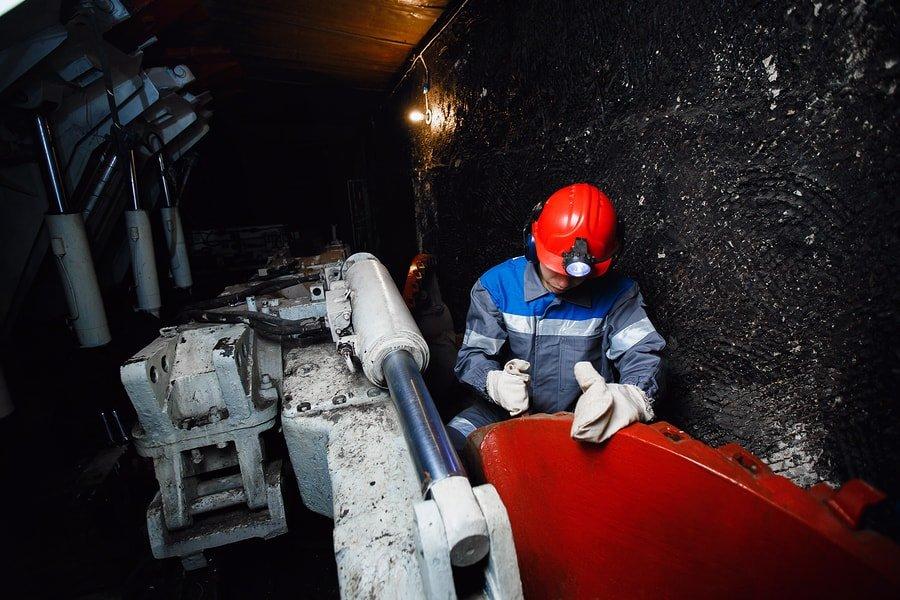
A mine technician with nearly seven years' service was dismissed after a former trainee alleged, in her exit interview, that he had touched her and made a sexual comment months earlier. The Fair Work Commission found the employer had not proved the conduct with clear and cogent evidence, held the dismissal unfair and ordered his reinstatement.
Key points
- In a misconduct dismissal, the Fair Work Commission decides for itself whether the conduct happened; it is not enough that the employer believed it did.
- The employer carries the burden of proof, and serious allegations such as sexual harassment need clear and cogent evidence.
- The Commission criticised the investigation for treating the worker's hesitation as proof and for showing roster records to the complainant but not to him.
- Mr Wilson was reinstated with continuity of service; the Commission stressed that nothing in its decision condoned sexual harassment.
What happened
Vincent Wilson, known as Jimmy, started work at Anglo American's Moranbah North underground coal mine in Central Queensland on 14 September 2010. By 2017 he was a mine technician with almost seven years' service.
On 25 January 2017 a young female trainee, who had resigned at the end of December 2016, attended an exit interview. There had been rumours at the mine about how she had been treated. In the interview she made four allegations against Mr Wilson about events said to have happened between 26 and 29 August 2016. The decision calls her Person A, and orders protected her name.
Two allegations were pursued. The first was that, while the two worked together in a man basket (a large cage with a platform, attached to a loader so it can be raised to work at heights), he deliberately patted or slapped her on the backside. The second was that, in the crib room, he made a sexual remark inviting her to live at his house rent-free.
The investigation and the dismissal
The mine's human resources superintendent, an experienced investigator, looked into them. Mr Wilson was first told of the allegations at a meeting on 20 March 2017, about seven months after the events. He denied them throughout, and pointed out that his memory of shifts that long ago was limited.
The investigator found both allegations substantiated. On the crib room comment, she relied on the way Mr Wilson froze and paused when the allegation was first put to him. After a show cause letter and his written reply, the mine dismissed him on 16 May 2017 for breaching its sexual harassment policy and values, paying him in lieu of notice.
The claim
Mr Wilson, represented by his union, applied to the Commission under s 394 of the Fair Work Act 2009 (Cth) for an unfair dismissal remedy. Both sides agreed that the case turned on one question: was there a valid reason for the dismissal? Mr Wilson's representative conceded that if the Commission found the conduct proved, the claim should fail.
Why: the legal test
Under s 387, the Commission must consider whether there was a valid reason for the dismissal related to the worker's conduct. A valid reason is one that is "sound, defensible or well founded".
Where the reason is misconduct, the Commission must decide on the evidence before it whether the conduct actually took place. The question is not whether the employer believed, on reasonable grounds, that it did. The employer bears the onus of proving it.
The standard is the balance of probabilities, meaning more likely than not. But under the long-standing rule in Briginshaw v Briginshaw, the more serious the allegation and its consequences, the stronger the evidence must be. Satisfaction should not come from inexact proofs, indefinite testimony or indirect inferences.
What the Commission decided
Commissioner Spencer heard evidence from Person A, Mr Wilson and others. On the man basket allegation, Person A agreed in cross-examination that she had not seen his hand and accepted that the two were working in close quarters. Mr Wilson described lifting mesh and cables overhead in the confined basket, where body contact was unavoidable. The Commission found that inadvertent contact probably occurred, but it could not be satisfied the contact was deliberate.
On the crib room comment, only the two of them were party to the conversation. The Commission said that the investigator's reliance on Mr Wilson freezing was "an inexact proof" and preferred his evidence. It accepted that Person A had told several co-workers about the man basket incident, which rebutted any suggestion she had recently made it up, but said this did not make the conduct itself more probable.
The Commission also criticised the process. The investigator had given Person A a roster report to help her fix the dates, but never gave it to Mr Wilson. It also found the mine had not followed up earlier concerns about the trainee's progress, saying management has a heightened duty of care to trainees.
With no clear and cogent proof, there was no valid reason, and the dismissal was harsh, unjust and unreasonable. The Commission ordered Mr Wilson's reinstatement with continuity of employment and service. It made no order for lost pay, because he had received income equal to his ordinary earnings in the meantime. It added that nothing in the decision condoned sexual harassment at work.
What this means for you
If you are accused of misconduct and dismissed, the Commission will look at the evidence itself, not just the employer's conclusion. A delayed complaint, an investigation that relies on your demeanour, or material you were never shown can all count. If you are a manager, the lesson is to investigate promptly, share the evidence with the accused worker and support trainees who are struggling.
The law on sexual harassment has moved since 2017. Employers now have a positive duty to take steps to prevent it, and the Fair Work Act has prohibited it directly since March 2023. The regulations also list sexual harassment as an example of serious misconduct. None of this changes the employer's need to prove disputed conduct. Time limits are short: a Fair Work unfair dismissal application must be lodged within 21 days of the dismissal.
The takeaway
An employer that dismisses for misconduct must be able to prove the conduct happened. For serious allegations that means clear and cogent evidence, not hesitation in an interview or an untested account.
Note: No appeal from this decision was found. Since it was decided, the Sex Discrimination Act 1984 (Cth) has imposed a positive duty on employers to eliminate sexual harassment (s 47C), the Fair Work Act 2009 (Cth) has prohibited sexual harassment in connection with work (Part 3-5A, from 6 March 2023), and reg 1.07 of the Fair Work Regulations 2009 lists sexual harassment as an example of serious misconduct. The unfair dismissal test in s 387, the Briginshaw approach to proof and the 21-day time limit are unchanged in 2026.
Fair Work Commission · 6 December 2017
Wilson v Anglo Coal (Moranbah North Management) Pty Ltd [2017] FWC 4386, Commissioner Spencer. Read the full decision
This is a plain-English summary of the published decision, for general information. It is not legal advice, and every case turns on its own facts.
Does this sound like your situation?
More case studies

Fair Work Commission · 9 August 2017
A pilot filed the wrong dismissal claim on advice, and got a second chance
Michael Edwards v Tiger Airways Australia Pty Ltd T/A Tigerair
Tigerair made pilot Michael Edwards redundant. The adviser he went to lodged an unfair dismissal claim on time, but it was the wrong kind of claim for a high earner who had already received a large termination payment. When he lodged the right claim, a general protections application, it was 29 days late. The Fair Work Commission found the delay was the adviser's error, not his, and gave him the extra time.
Extension of time granted; claim can proceedTermination#general protections#unfair dismissal#time limits
Read the case study
Federal Circuit Court of Australia · 22 March 2018
Sacked five months in after sick days: court lets her claim proceed
McCulloch v Transport Workers' Union of Australia Western Australian Branch
A Perth employee of the Transport Workers' Union was dismissed five months into the job after taking time off for her own illness and to care for her father. The Union asked the Federal Circuit Court to throw out her general protections claim before trial, arguing she had used far more personal leave than she had accrued. The Court refused: her claim was arguable and had to go to a hearing.
Union's bid to throw out her claim refusedTermination#general protections#leave
Read the case study
Guide · first published July 2017
What happens at a Fair Work Commission conciliation
Most unfair dismissal and general protections dismissal claims start with a conciliation: a confidential, informal conference run by the Fair Work Commission to see whether the dispute can be settled. This guide explains the rules, how the conference runs, what happens if it does not settle, and what a settlement usually contains.
GuideTermination#unfair dismissal#general protections#compensation
Read the guide