He said he worked 80-hour weeks, but kept no record of his hours
Dorsch v HEAD Oceania Pty Ltd [2024] FCA 162
- Decided by
- Federal Court of Australia
- Date
- 29 February 2024
- Outcome
- Hours claim dismissed; $10,000 for late leave pay
- Result
- Employer succeeded

A sales and marketing manager for a diving equipment business in Queensland claimed he had regularly worked 70 to 80 hours a week, in breach of the 38-hour rule in s 62 of the Fair Work Act. He had kept no record of his hours, and the Federal Court found he had proved neither the hours nor that his employer required them. His only win was $10,000 because his annual leave was paid late.
Key points
- Section 62 does not cap working hours: it bars an employer from requesting or requiring more than 38 hours a week unless the extra hours are reasonable.
- A worker making a s 62 claim must first prove the hours worked, with some precision as to when, and that the employer requested or required them.
- A requirement can be implied from a workload that cannot be done in ordinary hours, but a senior manager who sets his own hours will find it hard to show one.
- Accrued annual leave must be paid when employment ends; paying it months later breached s 90(2) and cost the employer $10,000 in damages.
What happened
The applicant spent most of his working life with the HEAD Group, a global sports equipment business. In 2010 he moved to Queensland to work for its Australian arm, which sells Mares scuba diving and snorkelling gear. From 2018 he was HEAD Oceania's sales and marketing manager, while also employed by a Hong Kong company in the group.
His contract set his hours as 8.30am to 4.30pm, Monday to Friday, with an hour for lunch, and said his pay included small amounts of daily overtime, up to 60 minutes a day.
In December 2021 he was summarily dismissed after several staff at the Yatala office complained about how he treated them. The Court later found his conduct towards his subordinates was serious misconduct justifying dismissal without notice.
The claims
He sued HEAD Oceania in the Federal Court. Most of his case was that he had been dismissed for complaining and asking about his pay, bonus and leave (a general protections claim), and in breach of contract. He also said the company breached s 62 of the Fair Work Act 2009 (Cth) by requiring unreasonable hours, and s 90(2) by not paying out his annual leave when his employment ended.
His pleaded hours case was that, between about June 2017 and December 2021, he regularly worked around 70 or 80 hours a week, sometimes as late as 1am or 4am, and his pay did not account for overtime.
The legal test: s 62 and reasonable additional hours
Section 62 is one of the National Employment Standards, the minimum entitlements in the Fair Work Act. An employer must not request or require a full-time employee to work more than 38 hours a week unless the additional hours are reasonable, and the employee may refuse unreasonable additional hours.
Justice Raper said the heading 'Maximum weekly hours' is 'a misnomer'. The Act sets no outer limit. It requires that hours beyond 38 be reasonable, judged case by case against a list of factors in s 62(3), among them the risk to health and safety, the employee's personal and family circumstances, the needs of the business, whether the pay reflects an expectation of extra hours, and the employee's role and level of responsibility.
The judge said such claims require 'a degree of precision'. In effect, a claim has three steps:
(a) the worker proves that he or she worked more than 38 hours a week, with some precision as to when;
(b) the worker proves that the employer requested or required those hours; and
(c) if the employer says the extra hours were reasonable, the court weighs them against the s 62(3) factors.
The employer argued that s 62 applies only when an employer communicates a request. The judge disagreed: a requirement can be shown by evidence of the tasks set and the impossibility of finishing them in ordinary hours. But seniority, freedom to set one's own hours and the contract all matter, and an employee who chooses extra hours without the employer's approval or knowledge cannot complain of a requirement.
Why the hours claim failed
The claim never reached the third step. No evidence of the dates or periods of the long weeks was ever filed. In cross-examination he conceded he had no record of his daily, weekly or monthly hours, and had given none to payroll.
The judge accepted that he attended evening online meetings, and his former partner's evidence that she often saw him working until 10pm. But the calendar invitations for 2020 showed 15 scheduled evening calls that year, none scheduled past 9.30pm. On his best case he started around 9am, and he accepted that he often left work before or around 4.30pm.
Nor was a requirement proved. He led no evidence of anyone with authority requiring the hours; his case was that the environment did. He was the company's most senior employee in Australia and a co-director, free to organise his work and hours as he saw fit, and the judge noted that self-authorised overtime by managers has not been recognised. He had established neither the excessive hours nor any request or requirement that he work them.
The one claim he won, and the appeal
HEAD Oceania admitted breaching s 90(2). He was dismissed at a meeting on 9 December 2021, but his accrued annual leave of $8,022.82 was not paid until 30 March 2022. He could not prove a financial loss from the delay, but the judge inferred some distress and awarded $10,000 in general damages. All his other claims failed.
On 18 October 2024 the Full Court of the Federal Court (Justices Snaden, Hatcher and Shariff) dismissed his appeal. It accepted that a requirement to work extra hours can be implied from the work an employer imposes, but he had not proved one. Nor could he switch to a case about any hours over 38: he had pleaded 70 to 80 hours a week, and that was the case to decide.
What this means for you
If you regularly work well beyond 38 hours, keep a record as you go: start and finish times, what kept you back and who asked. Timesheets, emails, calendar entries and a diary are what a court looks for; memory years later is rarely enough.
It is worth raising concerns about hours in writing with the person who sets your work. Senior staff face a harder task, because a court may find they chose their own hours. When a job ends, check that your accrued annual leave arrives with your final pay; if not, consider getting advice early.
The takeaway
Section 62 protects against unreasonable hours, but only for a worker who can prove the hours and who required them. Without records, even a claim of 80-hour weeks can fail before the court looks at reasonableness.
Note: The Full Court dismissed the appeal in Dorsch v HEAD Oceania Pty Ltd [2024] FCAFC 133 on 18 October 2024. Penalty for the annual leave contravention and the costs of the case were dealt with in separate judgments ([2024] FCA 484 and [2024] FCA 832), which are not covered here.
Federal Court of Australia · 29 February 2024
Dorsch v HEAD Oceania Pty Ltd [2024] FCA 162, Justice Raper. Read the full decision
This is a plain-English summary of the published decision, for general information. It is not legal advice, and every case turns on its own facts.
Does this sound like your situation?
More case studies

Federal Court of Australia · 15 February 2024
Bank's flexibility deals left staff worse off: $10.34 million penalties
Fair Work Ombudsman v Commonwealth Bank of Australia
The Commonwealth Bank and its share-trading arm CommSec put many staff on individual arrangements meant to leave them better off overall, but never properly checked that they did, and skipped the yearly top-up check their enterprise agreements required. More than 7,400 employees were underpaid about $16 million. The banks reported it themselves, paid everyone back and admitted it, yet the Federal Court still ordered penalties of $7.31 million and $3.03 million.
$10.34 million penalties against the employersPay & contracts#underpayment#for employers#penalties
Read the case study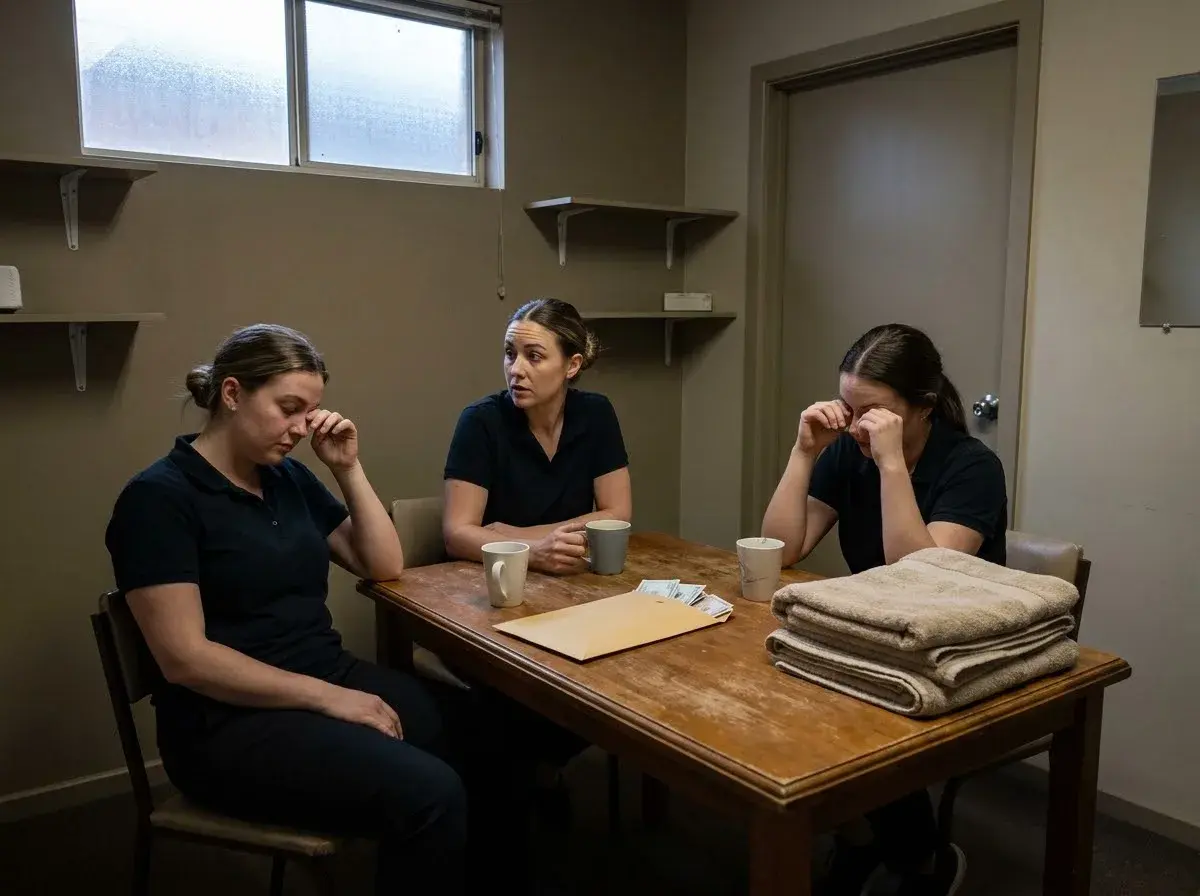
Federal Court of Australia · 10 May 2024
Seven massage therapists underpaid almost $1 million
Fair Work Ombudsman v Foot & Thai Massage Pty Ltd (in liquidation) (No 8)
Seven massage therapists recruited from the Philippines on sponsored visas were underpaid $971,092.27 over almost four years, and six of them were told to hand back part of their wages in cash. The Federal Court ordered the company and its director to repay them, awarded damages for the fear they lived in, and imposed penalties on the company, the director and a supervisor. A 2026 appeal narrowed the findings against the director.
$971,092 compensation plus damages for distressPay & contracts#underpayment#penalties#compensation
Read the case study
Fair Work Commission Full Bench · 14 December 2023
Made five staff redundant, then said it couldn't afford redundancy pay
RingIR Pty Ltd v Spiers, Linssen, Hebden, Filiti, Barry
A technology start-up made five employees redundant and then asked the Fair Work Commission to reduce their redundancy pay, $106,673.08 between them, to nothing, saying it could not afford it. The Commission looked at the whole financial picture, including a $110,000 pay rise for the new CEO, and refused. A Full Bench dismissed the employer's appeal.
$106,673 redundancy pay not reducedPay & contracts#redundancy#for employers
Read the case study