Told her job was redundant while her replacement was being lined up
Gayle Priscilla Tawha v Nullagine Community Resource Centre Incorporated [2023] WAIRC 00097
- Decided by
- Western Australian Industrial Relations Commission
- Date
- 17 February 2023
- Outcome
- $39,750.95 compensation
- Result
- Employee succeeded
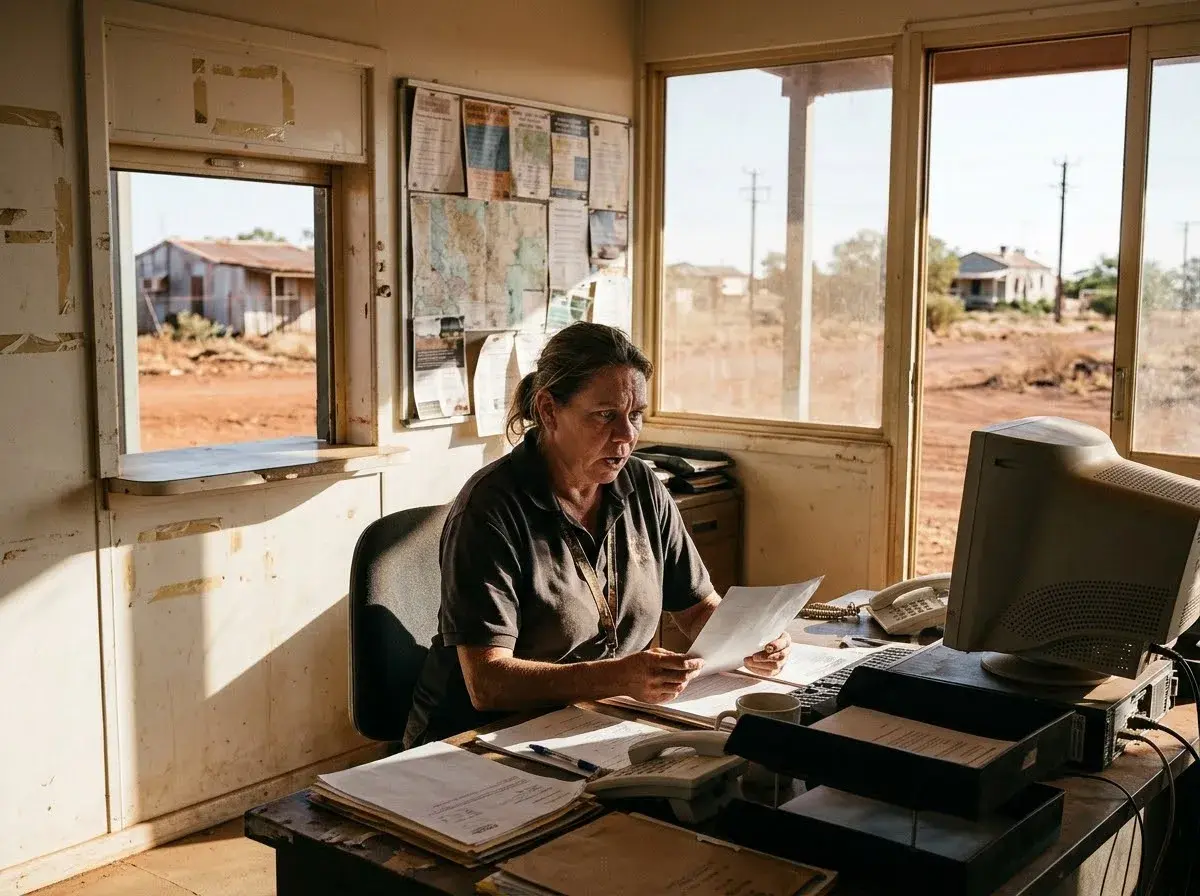
The coordinator of a community resource centre in Nullagine, in the Pilbara, was told her position was redundant and unfunded. The WAIRC found the centre had already started recruiting someone to do the same job once she was gone. Her dismissal was unfair, and she was awarded the maximum compensation the law allows.
Key points
- A redundancy is genuine only if the employer no longer needs the job done, or no longer needs as many people doing it; giving the same job to someone else is not a redundancy.
- In the WA state system the question is whether the dismissal was harsh, oppressive or unfair; whether the redundancy was genuine is a step towards answering it.
- The Commission said that even a genuine redundancy would have been unfair here, because of how it was done, including the failure to consult her as the Minimum Conditions of Employment Act 1993 (WA) requires.
- Compensation for unfair dismissal in the WA state system is capped at six months' pay, and she was awarded that full amount.
What happened
Mrs Gayle Tawha became the Coordinator of the Nullagine Community Resource Centre in March 2020. The centre is a small community organisation in the Pilbara run by a committee of management, and among other things it provided Centrelink services to the town. Mrs Tawha took over the Coordinator role from a man who had held it from 2018.
On 26 February 2021 she was told her employment was ending that same day. A letter from the centre said its operational requirements had changed "due to circumstances outside of our control" and that she had "become redundant". The minutes of a committee meeting earlier that month recorded that the centre could no longer support two employees and that her position was "redundant and unfunded". The centre said it had paid her one week's pay in place of notice.
The job that did not disappear
At the hearing, the previous Coordinator gave evidence for Mrs Tawha. He said that in December 2020, before she was dismissed, a member or members of the centre's committee told him the centre wanted to engage him again. He came back to the Coordinator role and said his duties were the same as hers.
He also told the Commission that after a week back he concluded he had been misled about Mrs Tawha's performance and the circumstances of her dismissal, and he resigned soon after. The centre's chair said the committee had decided it could not keep two employees because a source of funding had ended.
The claim and the legal test
Mrs Tawha, who represented herself, brought an unfair dismissal claim under s 29 of the Industrial Relations Act 1979 (WA). In the WA state system the ultimate question is whether a dismissal was "harsh, oppressive or unfair". Whether the job was genuinely redundant does not decide that question by itself, but when an employer relies on redundancy and the worker disputes it, the Commission will usually need to decide whether the redundancy was real.
Following the Full Bench in Sealanes (1985) Pty Ltd v Foley and Buktenica [2006] WAIRC 04110, Commissioner Walkington explained that a redundancy arises where an employer has more workers than the business needs, no longer wants a particular job done, or wants to combine jobs. The work does not have to vanish completely; it can be split among other people. The critical question is whether the person who held the job has any duties left to do after the reorganisation. The decision must also be genuine, not capricious or arbitrary.
Separately, s 41 of the Minimum Conditions of Employment Act 1993 (WA) requires an employer that has decided to make someone redundant to tell them as soon as reasonably practicable, and to discuss the likely effects and ways to avoid or reduce them. A failure to do this is a factor the Commission takes into account in deciding whether a dismissal was unfair.
What the Commission decided
The Commission found that the centre had started recruiting the former Coordinator to take on Mrs Tawha's position once her employment ended. It found the Coordinator role "continued to exist and had not been changed or modified in anyway", and that the centre did not abolish it but engaged another person to do it. The termination was not a genuine redundancy, so the dismissal was unfair.
That was enough to decide the case, but the Commissioner added that the process was also unfair and harsh. Mrs Tawha was given no chance to consider the reasons or any alternatives, she was not consulted as the Minimum Conditions of Employment Act requires, and the centre's representatives were "abrasive and harsh" when they told her. The Commissioner found the centre "contrived to use the rationale of a redundancy disingenuously", and said the dismissal would have been unfair even if the redundancy had been genuine.
How much was awarded
Going back to work at the centre was not practicable, so the Commission turned to compensation. Mrs Tawha had been earning $40.64 an hour for 37.5 hours a week on an ongoing contract, and there was no evidence her job would otherwise have ended. Compensation in the WAIRC is capped at six months' pay by s 23A(8) of the Act, and the Commission ordered the centre to pay her that maximum: $39,750.95, within 14 days.
In a separate decision given the same day, Tawha v Nullagine Community Resource Centre Association [2023] WAIRC 00098, the same Commissioner found that Mrs Tawha's son, who had worked at the centre as Assistant Coordinator, was also unfairly dismissed. He resigned after the centre cut his hours without his agreement, a change the Commission found breached his contract and went to its root.
What this means for you
If you are told your job is redundant, look at what happens to the work. If someone else is soon doing the same job, or your employer was already talking to a replacement, the redundancy may not be genuine. Messages, meeting minutes and evidence from the people involved, including whoever is now doing the job, can all matter, as they did here.
In the WA state system a genuine redundancy can still be unfair if you were not told and consulted as the law requires. WAIRC unfair dismissal claims must be lodged within 28 days after your employment ends, so it is worth getting advice early.
The takeaway
Calling a dismissal a redundancy does not make it one. If the job goes on and someone else is hired to do it, the redundancy is unlikely to be genuine, and the dismissal may well be unfair.
Note: The Industrial Relations Act 1979 (WA) has been amended since this claim was lodged in 2021: the unfair dismissal referral is now s 29(1)(c), and further amendments took effect from 31 January 2025. A WA state system unfair dismissal claim is still decided on whether the dismissal was harsh, oppressive or unfair, it must still be lodged within 28 days, and compensation is still capped at six months' pay under s 23A(8). Whether an employer is in the WA state system or the federal Fair Work system depends on what kind of employer it is; the decision did not discuss that question.
Western Australian Industrial Relations Commission · 17 February 2023
Gayle Priscilla Tawha v Nullagine Community Resource Centre Incorporated [2023] WAIRC 00097, Commissioner Walkington. Read the full decision
This is a plain-English summary of the published decision, for general information. It is not legal advice, and every case turns on its own facts.
Does this sound like your situation?
More case studies
Western Australian Industrial Relations Commission · 27 August 2026
A prison safety rep refused his orders. His dismissal stood
Rossiter v Minister for Corrective Services
A prison officer with more than 18 years' service, most recently at Wooroloo Prison Farm had just been elected as a health and safety representative. On a badly understaffed morning he twice refused orders to do a hospital escort, saying his safety duties came first. The WA Industrial Relations Commission found his dismissal was not unfair and dismissed his referral.
Referral dismissedWA state system#wa state system#public sector#misconduct
Read the case study
Full Bench of the Western Australian Industrial Relations Commission · 20 July 2026
He said yes to $30,000, but the Shire's offer had strings attached
Maurice Walsh v The Shire of Victoria Plains, Sean Fletcher
Dr Walsh, a shire's principal building surveyor, accepted a $30,000 offer at a pre-trial conference in his damaging action claim, then refused to sign the deed. The Industrial Magistrate held he was bound by an oral settlement. The Full Bench disagreed: the Shire's offer came with a non-disparagement condition he never agreed to, so there was no binding deal.
Appeal upheld: no binding settlementWA state system#wa state system#for employers
Read the case study
Public Service Appeal Board (Western Australian Industrial Relations Commission) · 7 November 2024
School IT officer forwarded a colleague's resignation email to herself
Karen Auzins v Department of Education
After about 17 years with the WA Department of Education, a school network support officer was dismissed for using her junior colleague's unlocked work phone to forward the colleague's confidential resignation email to herself. She denied it and produced a timesheet she said showed she had left early that day. The Public Service Appeal Board found she did forward the email, that the timesheet was fabricated, and that dismissal was not harsh, oppressive or unjust.
Dismissal upheldWA state system#wa state system#public sector#misconduct
Read the case study