He dropped his unfair dismissal claim to switch, and ran out of time
GHD Pty Ltd T/A GHD v Kevin Alan Black [2023] FWCFB 38
- Decided by
- Fair Work Commission Full Bench
- Date
- 15 February 2023
- Outcome
- Extension of time refused; claim cannot proceed
- Result
- Employer succeeded
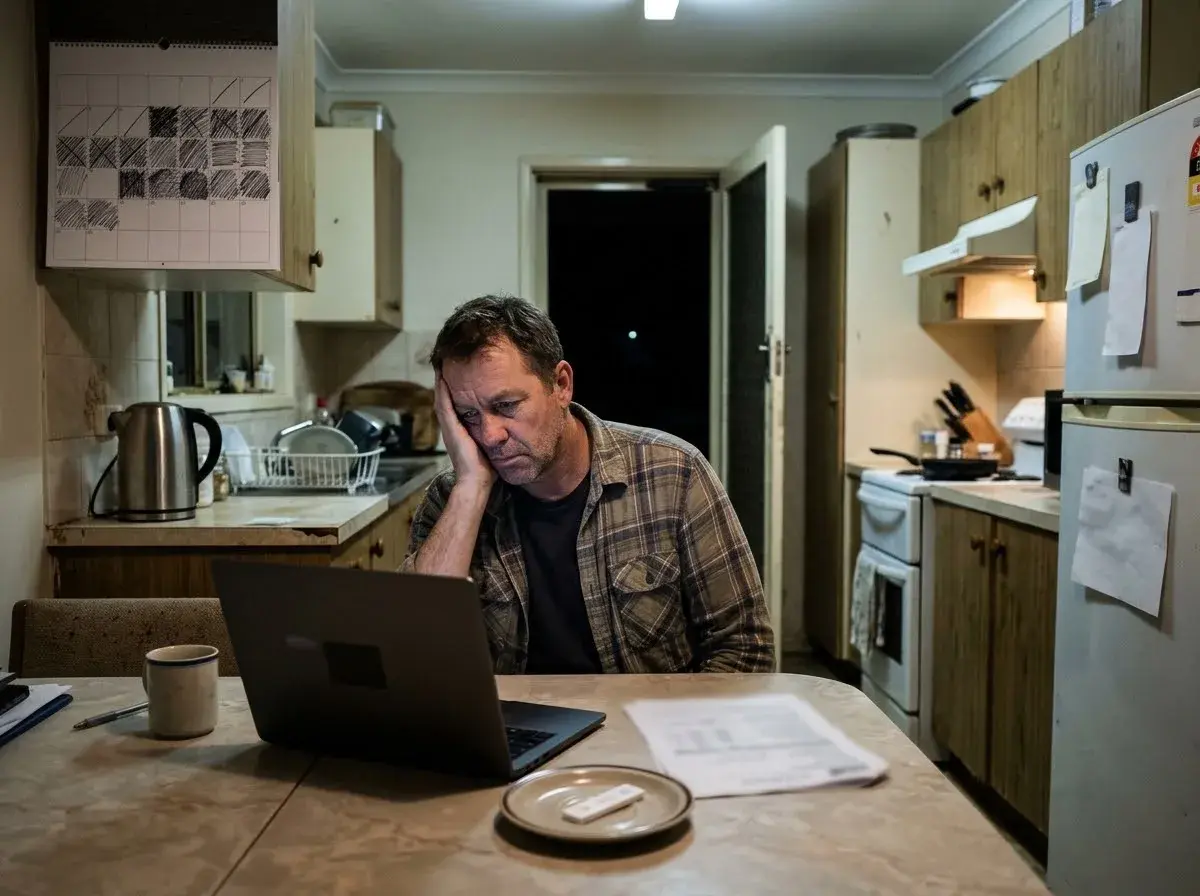
GHD dismissed Mr Black after its client, Main Roads Western Australia, ended his secondment. He filed an unfair dismissal claim on time, withdrew it after conciliation to file a general protections claim instead, and lodged that claim 168 days late. A Commissioner gave him more time, but a Full Bench of the Fair Work Commission overturned that decision and refused the extension.
Key points
- A general protections claim about a dismissal must be filed within 21 days, and the Commission can allow more time only in exceptional circumstances.
- Withdrawing an unfair dismissal claim to start a different claim does not stop the clock or reset it.
- The reason for delay is judged across the whole period of the delay, not split into an excused part and an unexcused part.
- Saying you were too unwell to file needs medical evidence; an undated photograph of a positive rapid antigen test was not enough.
What happened
Mr Black was employed by GHD from 9 November 2020 and worked on secondment to one of its clients, Main Roads Western Australia. A secondment is an arrangement where an employee works for another organisation while still employed by their own employer. His contract said it would end on 23 December 2022, or earlier if Main Roads told GHD it no longer needed him.
On 17 November 2021 GHD told Mr Black that Main Roads was ending his secondment. On 25 November GHD told him his employment would end the next day, 26 November 2021, with five weeks' pay in lieu of notice.
Mr Black's case was that he was dismissed because he had raised serious safety and construction concerns. GHD's case was that Main Roads had used its contractual right to end the secondment, partly because of concerns that he had missed pre-start meetings and required drug and alcohol tests, and that no other role could be found for him. GHD strongly denied that his safety complaints played any part.
Two claims and a long gap
A dismissed employee in the national system can bring an unfair dismissal claim (under s 394 of the Fair Work Act 2009 (Cth)) or a general protections claim (under s 365), which says the dismissal was for an unlawful reason such as making a complaint. Both must be filed within 21 days of the dismissal taking effect.
Mr Black filed an unfair dismissal claim on 17 December 2021, the last day. The conciliation conference, an informal meeting run by the Commission to try to settle the dispute, was held on 3 March 2022 after a short adjournment at GHD's request. It did not settle. Mr Black said that during the conference he came to realise he had filed the wrong form.
On 15 March 2022 he discontinued the unfair dismissal claim. On 3 June 2022 he filed a general protections claim instead. That was 168 days after the 21-day deadline had passed. He said he had been unwell with COVID-19 for much of the period after the conference, and produced a photograph of a positive rapid antigen test.
The legal test for filing late
Under s 366(2) the Commission may allow more time only if it is satisfied there are exceptional circumstances. It must take into account five things: the reason for the delay; any action the person took to dispute the dismissal; prejudice to the employer; the merits of the claim; and fairness compared with other people in a similar position. The Full Bench described this as a high hurdle.
At first instance, Commissioner Yilmaz granted the extension. She split the delay into two parts. She accepted the first 76 days, up to the conciliation conference, as exceptional, blaming "mismanagement" of the unfair dismissal claim. She found no valid reason for the remaining 92 days, but still granted the extension, partly because she thought he might have an arguable case. GHD appealed.
What the Full Bench decided
The Full Bench found several errors. It said the reason for the delay had to be considered across the whole 168 days as one factor, not weighed in two separate pieces. Having found no credible explanation for 92 days, more than four times the 21-day limit, the Commissioner should have treated that as weighing against an extension.
Nor was there anything exceptional about the first period. The Full Bench said there is nothing unusual about a worker filing an unfair dismissal claim, withdrawing it and filing a general protections claim, or about a conciliator privately sharing views. The conciliation had been handled in a routine way over the Christmas and New Year period.
It also found that the Commissioner had not dealt with GHD's arguments on prejudice, merits and fairness. It overturned the decision and decided the application again itself.
This time each factor was weighed. No acceptable reason was given for any part of the delay, and an undated test photograph, with no medical evidence, did not show that Mr Black could not have filed sooner. That weighed against him. So did prejudice: a long delay is presumed to harm the employer, and the Full Bench accepted that 168 days could affect the memory or availability of GHD's witnesses. GHD had not been warned another claim was coming, because his discontinuance notice said the matter was "wholly discontinued", so his earlier challenge counted neither for nor against him. The merits turned on disputed facts, and fairness compared with other applicants did not favour either side. With no factor in his favour, the Full Bench refused the extension, so his general protections claim could not go ahead.
What this means for you
Choose your claim carefully and early. Unfair dismissal and general protections claims test different things, and the time limit runs from the dismissal, not from when you realise you picked the wrong one. Withdrawing one claim to start another can leave you with no claim at all.
If you must ask for more time, explain every day of the delay and back it up with evidence, such as a doctor's certificate covering the period you say you could not act. If you think you might switch claims, consider getting advice before you discontinue anything. Both claims must normally be filed within 21 days of the dismissal taking effect.
The takeaway
The 21-day limit for dismissal claims is strict, and dropping one claim to start another does not buy extra time. Get the right claim on file early, and back any request for more time with evidence covering the whole delay.
Note: Since 7 July 2026 (Act No. 62 of 2026) a general protections claim at the Fair Work Commission needs only an alleged dismissal, and the 21 days run from when the alleged dismissal took effect. The 21-day limit and the exceptional circumstances test applied in this case have not changed.
Fair Work Commission Full Bench · 15 February 2023
GHD Pty Ltd T/A GHD v Kevin Alan Black [2023] FWCFB 38, Vice President Catanzariti, Deputy President Millhouse and Commissioner P Ryan. Read the full decision
This is a plain-English summary of the published decision, for general information. It is not legal advice, and every case turns on its own facts.
Does this sound like your situation?
More case studies

Fair Work Commission (Full Bench) · 30 May 2022
Professor's reinstatement overturned after encounter with student
Australian National University v Scott Morrison
An associate professor at the Australian National University was dismissed after a consensual, intimate encounter with an Honours student on a beach during a university retreat. The Fair Work Commission first ordered his reinstatement, but a Full Bench overturned that decision on appeal, finding the university had a valid reason to dismiss him.
Reinstatement overturned on appealTermination#unfair dismissal#misconduct#reinstatement
Read the case study
Fair Work Commission · 18 April 2023
Firefighter sacked over a private group chat gets his job back
Martin Pelly v Ventia Australia Pty Ltd T/A Ventia
A leading firefighter on a Defence base was dismissed after his employer found his posts in a private Facebook group chat made up mostly of workmates. The Fair Work Commission found the dismissal unfair and ordered him reinstated, and a Full Bench dismissed the employer's appeal. The firefighter who set up the group, who had shared pornography while on shift, lost his own claim.
Reinstated with back payTermination#unfair dismissal#social media#reinstatement
Read the case study
Fair Work Commission · 9 May 2022
Barista stayed past her shifts, then kept working once sacked
Mylie Kirsten Woodland v One4All Holdings Pty Ltd t/a Espresso Garage Southbank
A casual barista at a small Brisbane café, already upset about late pay, had her hours cut when a third barista was hired. She stayed at the café after her shifts, was dismissed by text, and then came back and worked two more mornings. The Fair Work Commission found the café had complied with the Small Business Fair Dismissal Code and dismissed her unfair dismissal claim.
Claim dismissedTermination#unfair dismissal#small business#misconduct
Read the case study