A 28-day COVID swing offshore, but no overcycle pay
Stewart v UGL Operations & Maintenance Pty Ltd [2023] WAIRC 00054
- Decided by
- Western Australian Industrial Relations Commission
- Date
- 1 February 2023
- Outcome
- Claim dismissed
- Result
- Employer succeeded
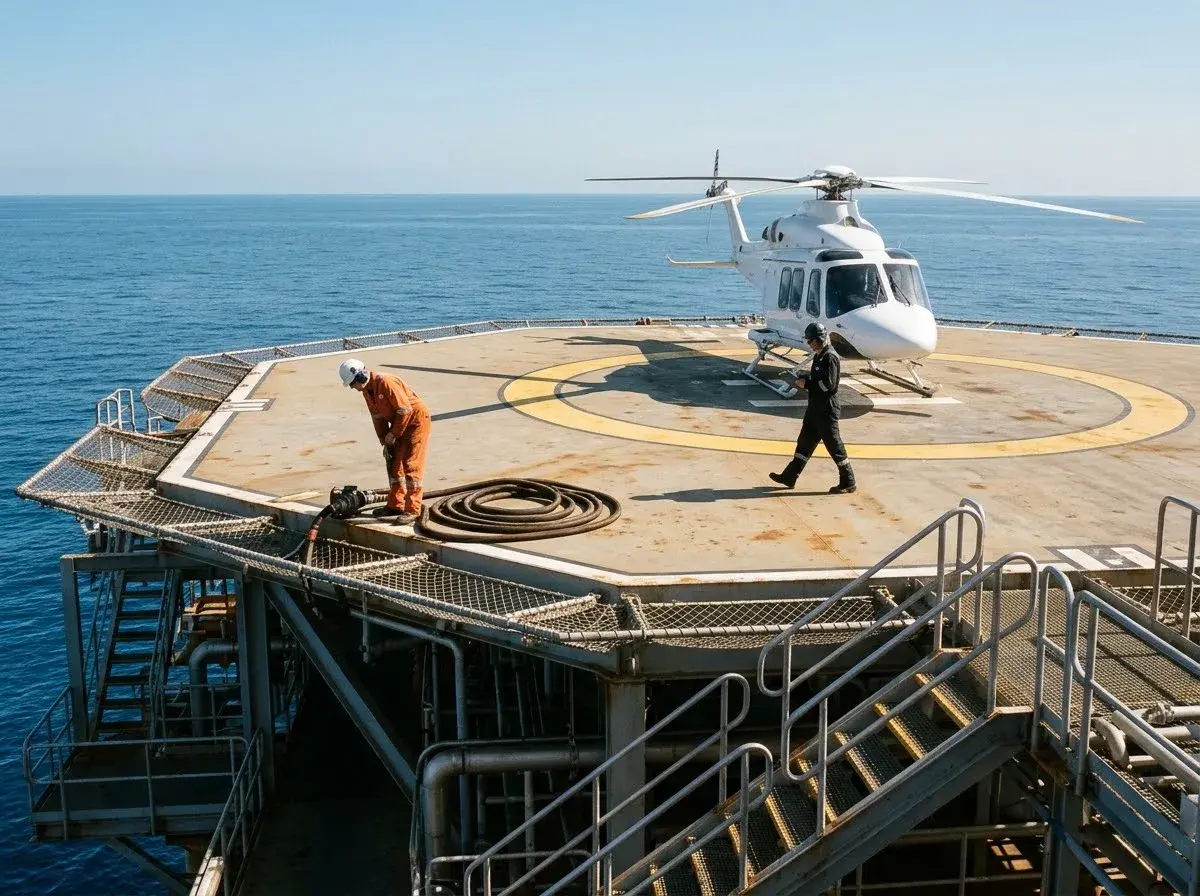
When COVID-19 cut flights to an offshore gas platform, a helideck operator on a 14 days on, 14 days off roster was kept on for 28 days. He claimed overcycle pay of $7,093.80 for the extra 14 days. The Western Australian Industrial Relations Commission (WAIRC) found his contract let the employer change the roster, he then had 28 days of paid rest, and he had not shown he was owed the overcycle rate.
Key points
- A denied contractual benefits claim in the WAIRC asks two things: what does the contract entitle you to as a matter of legal right, and did the employer deny it?
- The word 'initial' in 'your initial roster' was one of two reasons the Commission found the employer could change the roster.
- A flexibility clause that 'includes, but is not limited to' listed situations can stretch to events nobody foresaw, such as COVID-19 flight restrictions.
- The worker carries the onus of proving the entitlement; here the overcycle rate applied only if no rest and recreation was taken.
What happened
The employee was a helideck operator for UGL Operations & Maintenance on Chevron's offshore Wheatstone platform. He had worked for UGL since July 2017 on a written contract, and his usual roster was 14 days on the platform followed by 14 days of rest and recreation (R&R) at home.
In early April 2020, as COVID-19 took hold, he was asked to fly to the platform a day early. He arrived on the platform on 8 April 2020. He said that shortly after he landed, Chevron's offshore installation manager told him the swing would be at least four weeks, and that this was the first he heard of it.
UGL's evidence was that, because flights to and from the site were restricted, it had temporarily moved its crews to 28 days on and 28 days off. The helideck operator worked 12-hour days for the whole 28 days and flew out on 6 May 2020. He then had 28 days of paid R&R, until 2 June 2020. UGL said the four-and-four roster lasted only two cycles before flights returned to normal.
The claim
His contract had an overcycle clause. It said that once on site, he might be 'required to work additional days beyond your 14 day work cycle' to meet operational requirements, and that approved additional days would be paid at an overcycle day rate. By 2020 UGL was paying approved overcycle at $1,013.40 a day, double his normal rostered day rate of $506.70, although it said the contract rate was still $935.53.
He said every day after his usual 14 was an overcycle day. UGL had paid him the normal rate for the extra 14 days, so he claimed the difference: $506.70 a day, or $7,093.80. He said he raised it while still on the platform, and that the company's HR manager told him it was unwilling to pay.
He brought the claim in the Western Australian Industrial Relations Commission (WAIRC) under s 29(1)(d) of the Industrial Relations Act 1979 (WA). That provision lets an employee claim a benefit their contract of employment entitles them to but their employer has denied. Older decisions call it s 29(1)(b)(ii). Neither side disputed that the Commission could hear the claim, and the decision does not say whether UGL was in the WA state system or the national system.
The legal test
In this kind of claim the Commission is not deciding what would be fair. It is deciding existing legal rights: the employee must show that the benefit is one they are entitled to under their contract, as a matter of legal right, and that the employer denied it. The Commission also acts according to equity, good conscience and the substantial merits of the case.
Here only the last question was in dispute: did the contract entitle him to the overcycle rate for the days from 22 April to 5 May 2020? To answer it, Commissioner Tsang applied the ordinary rules for reading a contract. The words are read in their context and as a whole, by asking what a reasonable person would have understood them to mean, and each part should be given some work to do.
What the Commission decided
The helideck operator argued that the Hydrocarbons Industry (Upstream) Award 2020 required consultation and notice before a roster change, and that the contract should be read to match it. The Commission rejected that. Awards and employment contracts run side by side, and an award's terms are not part of a contract unless the contract expressly says so.
The Commission then found the contract did let UGL vary the roster. The hours clause said his 'initial roster' would be two weeks on and two weeks off, and a reasonable person would have understood 'initial' to mean the roster could change. A flexibility clause said he had to stay flexible to meet operational requirements, and that this 'includes, but is not limited to' a list of examples. That list was not exhaustive, so it covered the COVID-19 flight restrictions.
So, for that cycle, he was working a 28 days on, 28 days off roster, and the extra days were not 'over' the cycle. The contract's pay table also gave the overcycle rate only 'if NO R&R taken', and he had taken a matching 28 days of R&R straight afterwards.
The Commission found he had not discharged the onus of proving an entitlement to the overcycle rate, and dismissed the application. It did not need to decide UGL's other arguments, such as its argument that he never lodged an overcycle payment request form for those days.
What this means for you
For FIFO and other rostered workers, the exact words of your contract decide what extra pay you can claim. Small words such as 'initial' and 'not limited to' can give an employer room to change a roster without triggering a premium. If your contract has an overcycle or extra-day clause, read its conditions, including any approval step or paperwork, and follow them at the time, in writing.
For employers, it shows the value of clear, broad flexibility wording in a rostered contract.
The WAIRC's guidance is that a denied contractual benefits claim should be brought within 6 years of the benefit falling due. If you have also been dismissed, the unfair dismissal deadline is shorter: 28 days in the WAIRC for a state system employer, or 21 days in the Fair Work Commission for a national system one, so it is worth getting advice early.
The takeaway
An employer can change a FIFO roster without paying a premium if the contract lets it. Before claiming overcycle or extra-day pay, check exactly what your contract promises and what conditions it attaches.
Western Australian Industrial Relations Commission · 1 February 2023
Stewart v UGL Operations & Maintenance Pty Ltd [2023] WAIRC 00054, Commissioner Tsang. Read the full decision
This is a plain-English summary of the published decision, for general information. It is not legal advice, and every case turns on its own facts.
Does this sound like your situation?
More case studies

Western Australian Industrial Relations Commission · 23 September 2026
A $93,746 annual leave claim lodged too late, and already settled
Peacock v State of Western Australia
Western Australia's former Commissioner for Japan was dismissed in February 2019 and told his annual leave accrued after December 2008 would not be paid. Almost seven years later he claimed $93,746.70 for 1,125 hours of leave in the WAIRC. The Commission dismissed the claim: it was made outside the six-year limitation period, and a deed of settlement he signed in 2019 released claims arising from his employment.
Claim dismissedWA state system#wa state system#time limits#leave
Read the case study
Western Australian Industrial Relations Commission · 17 February 2023
Told her job was redundant while her replacement was being lined up
Tawha v Nullagine Community Resource Centre Incorporated
The coordinator of a community resource centre in Nullagine, in the Pilbara, was told her position was redundant and unfunded. The WAIRC found the centre had already started recruiting someone to do the same job once she was gone. Her dismissal was unfair, and she was awarded the maximum compensation the law allows.
$39,750.95 compensationWA state system#wa state system#redundancy#unfair dismissal
Read the case study
Western Australian Industrial Relations Commission · 27 August 2026
A prison safety rep refused his orders. His dismissal stood
Rossiter v Minister for Corrective Services
A prison officer with more than 18 years' service, most recently at Wooroloo Prison Farm, had just been elected as a health and safety representative. On a badly understaffed morning he twice refused orders to do a hospital escort, saying his safety duties came first. The WA Industrial Relations Commission found his dismissal was not unfair and dismissed his referral.
Referral dismissedWA state system#wa state system#public sector#misconduct
Read the case study