Refused the same job four minutes further away, lost redundancy pay
Application by Civmec Construction And Engineering Pty Ltd [2026] FWC 599
- Decided by
- Fair Work Commission
- Date
- 24 February 2026
- Outcome
- Redundancy pay reduced from six weeks to nil
- Result
- Employer succeeded
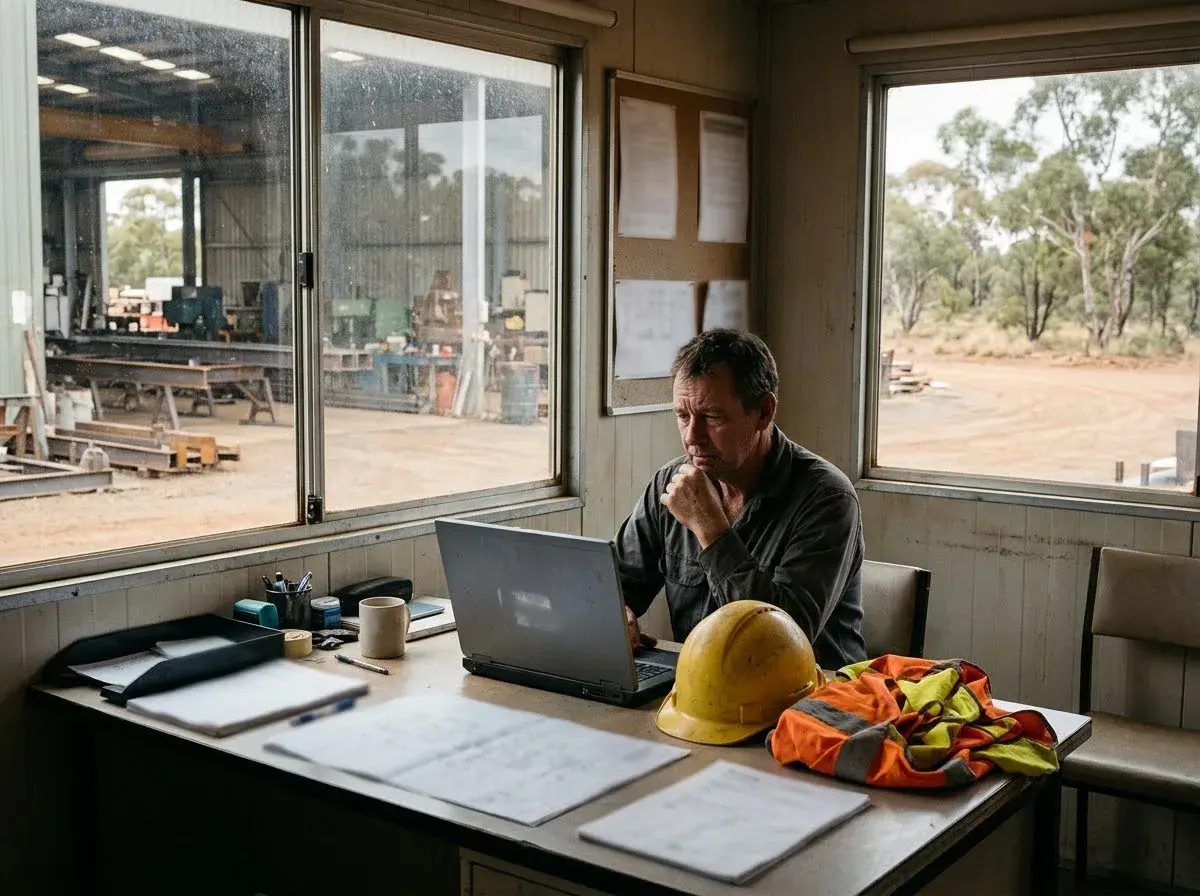
When his projects at Civmec's Henderson workshop ended, an electrical projects engineer was offered the same role, on the same pay, at the CSBP site in Kwinana. He refused it and asked to be made redundant. The Fair Work Commission found the Kwinana role was other acceptable employment and reduced his six weeks' redundancy pay to nil.
Key points
- If an employer obtains other acceptable employment for a redundant worker, the Fair Work Commission can reduce their redundancy pay, even to nil.
- Whether a job is acceptable is judged objectively, not by whether the worker personally wants it.
- The same role, pay and hours, a few extra minutes of travel and a modest change in the type of project was acceptable employment.
- Questions about a new role asked only after rejecting it carried little weight.
What happened
Mr Rizvi was an electrical projects engineer with Civmec, an engineering and construction company. He had worked for it since July 2023, based at its site on Nautical Drive in Henderson.
In early November 2025 he was told that the two manufacturing projects he worked on were ending, so his role was no longer needed at Henderson. Civmec told him the same role was available at its operations at CSBP, on Kwinana Beach Road, working on a project to increase production at an existing sodium cyanide plant.
According to Civmec's evidence, Mr Rizvi told the CSBP project manager he was comfortable where he was and would only take the Kwinana role if he was paid an extra $50,000. Civmec's HR adviser then wrote to him that the new role had the same responsibilities and remuneration, was about 15 minutes from the Henderson office, and came with a project completion bonus of 10% of his base salary.
The dispute
Mr Rizvi replied that his role had been made redundant and that he did not accept the transfer to the new project or any FIFO role, as these positions were unsuitable. He said he was not resigning and asked for written confirmation of a redundancy.
Civmec's handling of his concern about whether he had to resign was, the Commissioner said, "clumsy and at times misguided": at one point it said it would treat his absence from work as a resignation. It later accepted he had not resigned, made his role redundant, and gave him another chance to take the Kwinana job. When he did not reply, his employment ended in late November 2025.
Only then, on 1 December 2025, did Mr Rizvi send a list of questions about the new role, including its exact location, whether it was construction or manufacturing work, the site inductions required and any exposure to chemicals. Civmec answered them, and applied to the Commission to reduce his redundancy pay to nil.
The legal test
Under s 119 of the Fair Work Act 2009 (Cth), an employee is entitled to redundancy pay if the employer ends their employment because it no longer needs their job done by anyone, subject to some exceptions. The amount depends on length of service. On his length of service, Mr Rizvi was entitled to six weeks' pay, the amount for two to three years' service.
Section 120 lets an employer ask the Commission to reduce that amount, even to nil, if the employer obtains other acceptable employment for the employee. Commissioner Lim applied Full Bench authority that the test is objective. It is not decided by whether the job is acceptable to the employee personally. Earlier decisions add that the new job does not have to be identical, and that an employee is expected to engage genuinely with the employer in exploring alternatives. If the test is met, the Commission then has a broad discretion about how much to reduce the payment.
What the Commission decided
The Commissioner found the Kwinana role was other acceptable employment. On evidence Mr Rizvi did not contest, his home was about 31 minutes from Henderson and 35 minutes from CSBP. The duties of an electrical projects engineer were the same on a construction project as on a manufacturing one, and the job was in an office, so there was no change in risk or exposure to hazardous substances. Mr Rizvi did not lead evidence or make submissions explaining why the role was unsuitable.
Mr Rizvi's main complaint was that he had not been given enough information in time. The Commissioner rejected this. The HR adviser's email of 19 November 2025 had told him the project, the duties, the pay, the location and the bonus, and his response was to reject the role outright. His further questions came well after he had rejected it.
The Commission reduced his redundancy pay from six weeks to nil.
What this means for you
If your job is made redundant and your employer offers you another role, the question is not whether you would prefer to stay where you are, but whether the new role is objectively acceptable: similar work, pay, hours, status and location, judged against your own circumstances. A large travel increase, a big drop in pay or a very different job can make an offer unacceptable. A few extra minutes on the road usually will not.
If you have genuine concerns, raise them before you decide, in writing, and ask the questions you need answered. Refusing first and asking later counted against Mr Rizvi here. If you are unsure whether an offer is acceptable, it is worth getting advice before you turn it down.
For employers, the case shows that s 120 is a real option where a comparable role exists, but the offer should be clear, in writing and explained, and the process handled carefully.
The takeaway
Turning down a comparable job your employer has found for you can cost you your redundancy pay. The test is whether the role is objectively acceptable, not whether you want it.
Fair Work Commission · 24 February 2026
Application by Civmec Construction And Engineering Pty Ltd [2026] FWC 599, Commissioner Lim. Read the full decision
This is a plain-English summary of the published decision, for general information. It is not legal advice, and every case turns on its own facts.
Does this sound like your situation?
More case studies

Fair Work Commission Full Bench · 14 December 2023
Made five staff redundant, then said it couldn't afford redundancy pay
RingIR Pty Ltd v Maryanne Spiers, Lisa Linssen, Richard Hebden, Jacob Filiti, Alex Barry
A technology start-up made five employees redundant and then asked the Fair Work Commission to reduce their redundancy pay, $106,673.08 between them, to nothing, saying it could not afford it. The Commission looked at the whole financial picture, including a $110,000 pay rise for the new CEO, and refused. A Full Bench dismissed the employer's appeal.
$106,673 redundancy pay not reducedPay & contracts#redundancy#for employers
Read the case study
Fair Work Commission · 4 November 2021
Lost contract, new job, but redundancy pay still owed
Savco Vegetation Services Pty Ltd
A vegetation management company lost a major contract and made workers redundant. It helped the rival that won the contract recruit them, then asked the Fair Work Commission to cut nine workers' redundancy pay to nil. The Commission dismissed the application: the company had not obtained the new job, and the new job was not acceptable anyway.
Redundancy pay not reducedPay & contracts#redundancy#for employers#contracts
Read the case study
Federal Circuit Court of Australia · 26 August 2020
Juice bars and their manager hit with almost $277,000 in penalties
Fair Work Ombudsman v Skypac Group Pty Ltd & Ors
Two companies running juice bars in Werribee and Geelong underpaid almost thirty workers under the Fast Food Industry Award, kept false pay and time records, and made one worker hand money back. After the companies and their general manager admitted the contraventions, the Federal Circuit Court ordered penalties totalling $276,929.75.
$276,929.75 in penaltiesPay & contracts#underpayment#penalties#for employers
Read the case study