Company ignored a Fair Work order, so its director was ordered to pay
Dimkovski v Majorsite Property Group Pty Ltd [2024] FedCFamC2G 683
- Decided by
- Federal Circuit and Family Court of Australia (Division 2)
- Date
- 1 August 2024
- Outcome
- $7,016.45 ordered, director personally liable
- Result
- Employee succeeded
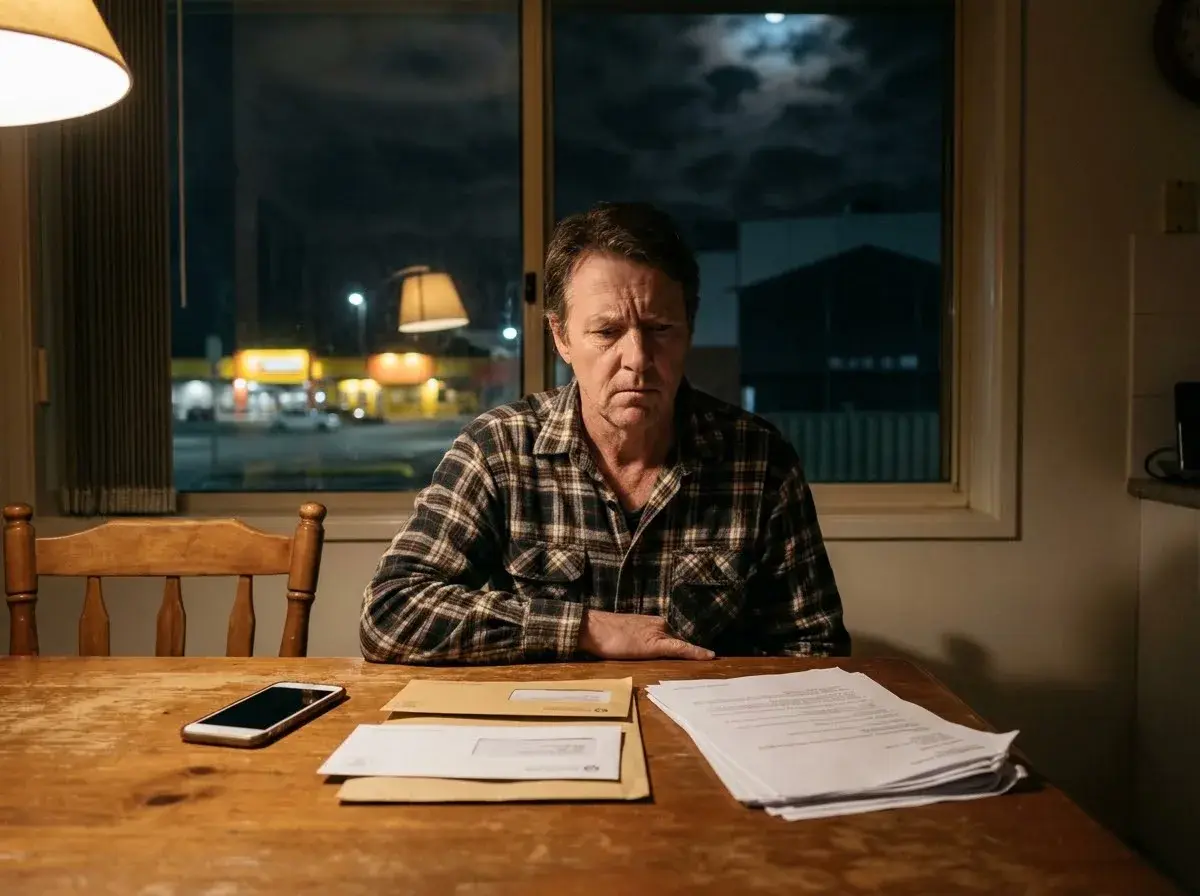
Mr Dimkovski won an unfair dismissal claim, but his former employer never paid the $3,907.24 the Fair Work Commission ordered. He had also been underpaid weekend penalty rates, annual leave, notice and superannuation. In a small claim, the court ordered the company and its sole director to pay him jointly and severally, holding the director personally liable as a person involved in the contraventions.
Key points
- Failing to pay compensation ordered by the Fair Work Commission is itself a contravention of the Fair Work Act, which a court can enforce.
- A worker can recover both unpaid entitlements and an unpaid unfair dismissal order through the court's small claims procedure.
- A company director who sets pay, controls the books and makes the decisions can be personally liable under s 550 as a person involved in the company's contraventions.
- The director does not need to know the conduct was unlawful, only the essential facts that made it a contravention.
What happened
Mr Dimkovski worked part time for Majorsite Property Group from 15 January 2022 until he was dismissed on or around 17 November 2022. His job was covered by the Cleaning Services Award 2020. The company had one director, Mr Atay, who was also its company secretary.
His evidence, which nobody contested, was that from October 2022 until 13 November 2022 he worked from 11.00 am to 2.00 pm on Saturdays and Sundays at a shopping centre in Brunswick without being paid the award's weekend penalty rates. When he was dismissed he had more than 43 hours of annual leave owing, which was not paid out, and he received no notice or pay in lieu of notice. No superannuation was paid for him at all.
He lodged an unfair dismissal claim. On 27 March 2023 the Fair Work Commission found the dismissal was unfair and ordered the company to pay him $3,907.24, less tax, before 8 April 2023. On 3 April 2023 the company was sent a letter by registered post and email reminding it of the deadline and warning that failing to comply was a criminal offence. It still had not paid by the time of the court hearing more than a year later.
The claim
Mr Dimkovski filed a small claim in the Federal Circuit and Family Court on 13 December 2023. The small claims procedure is a less formal way to recover money an employer was required to pay under the Fair Work Act 2009 (Cth) or an award.
He asked for two things: the underpaid wages and entitlements, and the unpaid unfair dismissal compensation. He also asked the court to find that Mr Atay was personally liable for both. A judicial registrar ordered the underpayments but not the Commission's compensation, so he applied for a review, which meant Judge Young heard the claim afresh. Neither the company nor Mr Atay filed anything or came to the hearing. Mr Dimkovski was represented by the United Workers Union.
What the court decided
Judge Young found that the company had breached s 44 (the National Employment Standards, which cover paying out annual leave and giving notice) and s 45 (the award) of the Fair Work Act. The judge also found that by not paying the Commission's order, the company contravened s 405, which says a person to whom an unfair dismissal order applies must not contravene it. Each of these is a civil remedy provision, so the court could order compensation for the loss.
The judge held that the unpaid order could be recovered as a small claim, because it was an amount the employer was required to pay the employee under the Act. The court then ordered the company and Mr Atay to pay, jointly and severally, $2,312.81 in wages and entitlements, $76.03 in superannuation and the $3,907.24 owed under the Commission's order, plus $720.37 in interest. Jointly and severally means Mr Dimkovski could recover the whole amount from either of them.
Why: the legal test for a director's liability
Section 550 of the Fair Work Act says that a person who is involved in a contravention is taken to have contravened the provision themselves. A person is involved if they aided or procured it, induced it, conspired to bring it about, or were knowingly concerned in it.
To be knowingly concerned, the person must have been an intentional participant who actually knew the essential facts that made up the contravention. Knowledge can be inferred from exposure to the obvious. They do not have to know the conduct was against the law. There must also be a practical connection between the person and the contravention.
On the underpayments, the judge found that the company's accountant worked under Mr Atay's instruction and direction, that Mr Atay decided where and when Mr Dimkovski worked and what he was paid, and that he made the decision to dismiss him. That was enough. On the Commission's order, Mr Atay was the company's controlling and guiding mind, and the company had been told the payment was due. The judge found he was involved in every contravention, so he was liable just as the company was.
What this means for you
If you have won an unfair dismissal order and your employer has not paid, the order does not simply lapse. Non-payment is a further contravention that a court can enforce, and the small claims procedure may be a practical way to do it. Where the employer is a small company, it is worth asking whether the person who ran it, set your pay and made the decisions can be named personally.
For employers, the lesson is that a company structure does not protect a director who controls wages. Since 1 January 2025, intentionally underpaying an employee can also be a criminal offence. Underpayment claims generally have to be brought within six years, so consider getting advice early.
The takeaway
A director who controls pay and decisions can be ordered to pay a worker's unpaid wages, and even an unpaid Fair Work Commission order, out of their own pocket.
Note: The case was decided on 1 August 2024, before the Closing Loopholes wage theft offence started on 1 January 2025. The civil liability of a person involved in a contravention under s 550 is unchanged.
Federal Circuit and Family Court of Australia (Division 2) · 1 August 2024
Dimkovski v Majorsite Property Group Pty Ltd [2024] FedCFamC2G 683, Judge Young. Read the full decision
This is a plain-English summary of the published decision, for general information. It is not legal advice, and every case turns on its own facts.
Does this sound like your situation?
More case studies

Federal Court of Australia · 2 July 2025
Paid only on commission, he won award pay, then lost it on appeal
Ord Minnett Holdings Pty Limited v Theodorou
An investment adviser paid only by commission argued that the banking award covered him, so he was owed a minimum salary and paid leave on top of his commissions. He won at trial, but the Federal Court overturned that win: his job was not a managerial role under the award, and the judge added that his commissions would have counted against any award pay in any event.
Trial win overturned, claim dismissedPay & contracts#underpayment#bonuses & commission#contracts
Read the case study
Federal Court of Australia · 23 June 2025
Paid by the hour for 14 years, but he was a permanent employee
Cropper v Energy Action (Australia) Pty Ltd (No 2)
John Cropper worked for an energy business for 14 years on an hourly rate, with tax and super deducted, but was never paid for leave or public holidays. The company said he was a contractor or, at most, a casual. The Federal Court found he was a permanent employee and ordered $130,698.60 plus interest, and later $29,925 in penalties.
$130,698.60 plus interest, and $29,925 penaltiesPay & contracts#casual work#leave#underpayment
Read the case study
Federal Court of Australia · 10 May 2024
Seven massage therapists underpaid almost $1 million
Fair Work Ombudsman v Foot & Thai Massage Pty Ltd (in liquidation) (No 8)
Seven massage therapists recruited from the Philippines on sponsored visas were underpaid $971,092.27 over almost four years, and six of them were told to hand back part of their wages in cash. The Federal Court ordered the company and its director to repay them, awarded damages for the fear they lived in, and imposed penalties on the company, the director and a supervisor. A 2026 appeal narrowed the findings against the director.
$971,092 compensation plus damages for distressPay & contracts#underpayment#penalties#compensation
Read the case study