A parting insult in the staff group chat cost a bartender their claim
Reema Saad v M.A Lisek & S.S Louth-Robins [2023] FWC 2704
- Decided by
- Fair Work Commission
- Date
- 15 November 2023
- Outcome
- Claim dismissed
- Result
- Employer succeeded
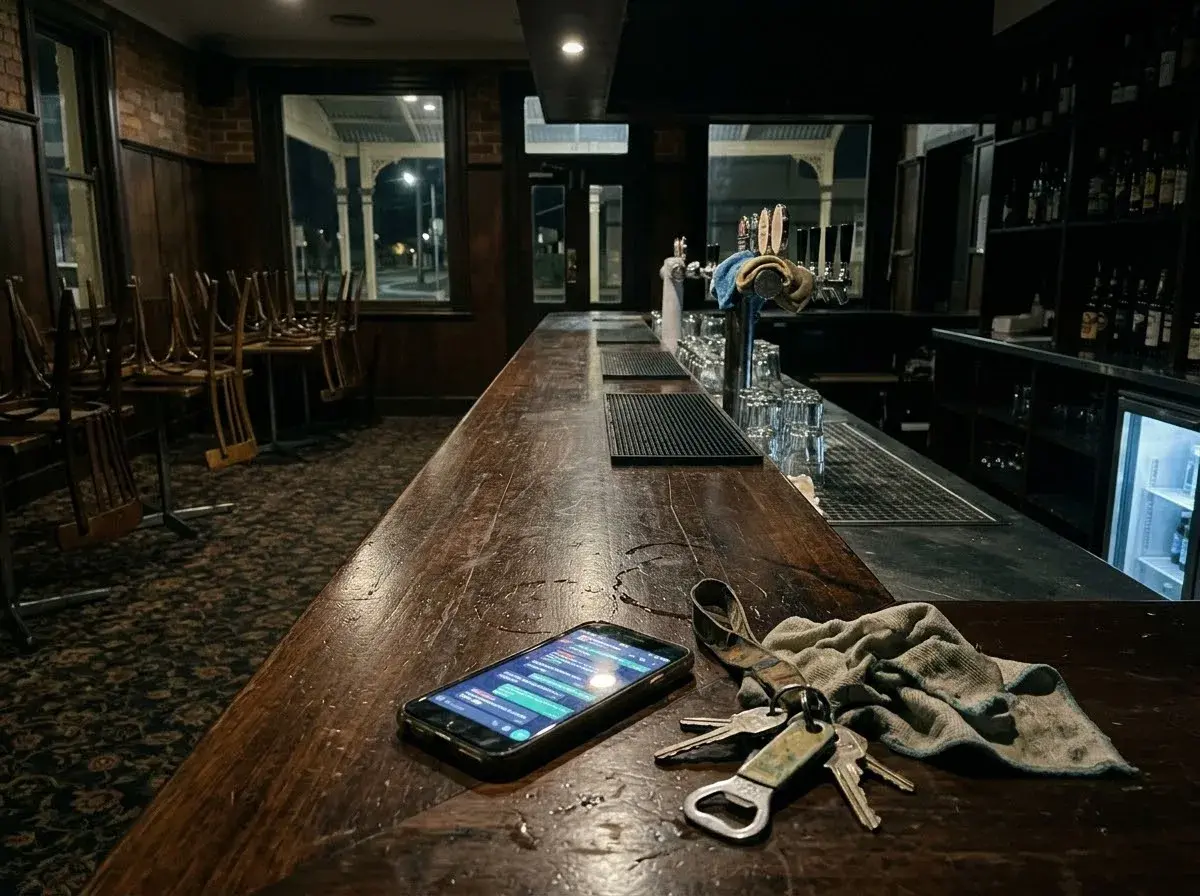
A casual bartender who had already given notice fell out with the bar's owners over shifts, then left the staff Facebook group chat with a vulgar slur aimed at the two owners and a manager. The next day the bar told them not to come in again. The Fair Work Commission found this was a dismissal, but a fair one under the Small Business Fair Dismissal Code.
Key points
- Being told not to come in for any remaining shifts was a dismissal, even though the worker had already given notice and the employer said there had been no dismissal.
- A small business employer (fewer than 15 employees) that dismisses for serious misconduct complies with the Small Business Fair Dismissal Code if it genuinely believed, on reasonable grounds, that the conduct justified immediate dismissal.
- Insulting the owners and a manager in a staff group chat that all the staff could see was serious misconduct and a valid reason for dismissal.
- The bar gave no warning and no chance to respond, but the Commission held the seriousness of the conduct outweighed those procedural gaps.
What happened
Reema Saad started working at a small bar in mid-April 2022 as a casual bartender. In 2023 they took an overseas holiday from 20 May to 2 July, and before leaving told the bar they would be quitting at the end of July. The bar manager agreed to give them one shift a week until then.
On 26 June, while Reema was still away, one of the bar's two owners sent a Facebook message suggesting there would be no work for them on their return, as shifts across the bar were drying up. The exchange quickly became heated, though a weekly shift from 9 July was eventually settled with the bar manager.
On 11 July the owners sent Reema an email headed "Formal Conditions for Notice". It raised concerns about earlier performance, including arriving late and giving away a considerable amount of free drinks, and said that because Reema had already given notice, the best solution was to let them finish their shifts under supervision. More heated emails followed. On the evening of 13 July one owner signed off with "good luck with your anger Reema".
That same day Reema posted a series of messages in the bar's staff Facebook group chat setting out their grievances with the owners. They then left the chat, thanking everyone except the two owners and one of the bar managers, whom they named and called a vulgar slur. The managers agreed this was inappropriate. On 14 July the manager rang Reema and told them not to come in for any remaining shifts, and two days later asked for their keys back.
The claim
Reema applied to the Fair Work Commission for an unfair dismissal remedy under s 394 of the Fair Work Act 2009 (Cth). Under s 385, a dismissal is unfair only if the person was dismissed, the dismissal was harsh, unjust or unreasonable, it was not consistent with the Small Business Fair Dismissal Code, and it was not a genuine redundancy.
The bar's main answer was that it never dismissed Reema at all: they had resigned. Reema, for their part, said the owner's "good luck" email on the evening of 13 July was the dismissal, so they were no longer an employee when they posted in the group chat.
Was there a dismissal?
Under s 386, a person is dismissed if (among other things) their employment is ended on the employer's initiative. Deputy President Clancy rejected both sides' versions. The "good luck" email was the owner simply closing off a heated email exchange, not a sacking.
But the phone call on 14 July was a dismissal. Telling Reema not to come in for any of the remaining shifts ended the job on the bar's initiative, and the request for the keys confirmed it. That meant Reema was still an employee when they posted the slur.
Why: the Small Business Fair Dismissal Code
Reema did not dispute that the bar was a small business employer (fewer than 15 employees). Under ss 385(c) and 388, a small business employer's dismissal is not unfair if the employer complied with the Small Business Fair Dismissal Code. Its summary dismissal part says it is fair to dismiss without notice or warning when the employer believes on reasonable grounds that the employee's conduct is serious enough to justify immediate dismissal.
Following a Full Bench decision, the Commission asked two questions. First, did the employer genuinely believe the conduct was serious enough to justify immediate dismissal? Second, was that belief, viewed objectively, based on reasonable grounds? Serious misconduct includes wilful or deliberate behaviour that is inconsistent with the employment continuing.
On the first question, the managers' decision in their own group chat to tell Reema not to come back, with both owners aware of the call, showed a genuine belief. On the second, Reema admitted the post, and the Deputy President found it was a wilful and deliberate act. The dismissal was consistent with the Code, and the claim failed for that reason alone.
Not harsh, unjust or unreasonable either
For completeness, the Deputy President also applied the s 387 factors. Slurring the owners and a manager in front of all the staff was serious misconduct and a valid reason for summary dismissal. Reema had no warning and no chance to respond before being told, and the Deputy President took that into account. But the bar was a small business with no human resources expertise, and it showed what the Commission called a glaring lack of knowledge of how to go about things procedurally.
In the end the conduct decided it. Whatever view one took of the owners as managers, the Deputy President said Reema "had a choice": as a casual they could have worked the supervised shifts or simply stopped accepting work. The slur's seriousness outweighed any procedural shortcomings, and the application was dismissed.
What this means for you
If you work for a business with fewer than 15 employees, the Small Business Fair Dismissal Code gives your employer more room. Where the employer genuinely believes, on reasonable grounds, that you committed serious misconduct, it can dismiss on the spot without notice or warning. A staff group chat is not a private place to vent: abusing the owners or managers where all the staff can see it can be serious misconduct.
Being told not to come back can be a dismissal even after you have given notice. Time limits are short: an unfair dismissal application must be lodged within 21 days of the dismissal.
The takeaway
Even a worker on the way out the door is still an employee until the job ends. Abusing the owners in a staff group chat let this small bar dismiss on the spot under the Small Business Fair Dismissal Code.
Fair Work Commission · 15 November 2023
Reema Saad v M.A Lisek & S.S Louth-Robins [2023] FWC 2704, Deputy President Clancy. Read the full decision
This is a plain-English summary of the published decision, for general information. It is not legal advice, and every case turns on its own facts.
Does this sound like your situation?
More case studies

Fair Work Commission · 9 May 2022
Barista stayed past her shifts, then kept working once sacked
Mylie Kirsten Woodland v One4All Holdings Pty Ltd t/a Espresso Garage Southbank
A casual barista at a small Brisbane café, already upset about late pay, had her hours cut when a third barista was hired. She stayed at the café after her shifts, was dismissed by text, and then came back and worked two more mornings. The Fair Work Commission found the café had complied with the Small Business Fair Dismissal Code and dismissed her unfair dismissal claim.
Claim dismissedTermination#unfair dismissal#small business#misconduct
Read the case study
Fair Work Commission · 18 January 2022
Sacked on the spot after accidentally running over the boss's galah
Blake O'Keeffe v The Trustee for Dunshea Family Trust
A young labourer at a two-person family fencing business accidentally ran over the owner's pet galah while reversing a truck, after trying to move the bird to safety. He was dismissed for negligence in a meeting that lasted no more than six minutes. The Fair Work Commission found it was an accident, not misconduct, and ordered $8,287.78 in compensation.
$8,287.78 compensationTermination#unfair dismissal#small business#misconduct
Read the case study
Fair Work Commission · 6 May 2021
Sacked over a sexual Facebook meme in a 'robust' sales office
Mr Matthew Thompson v 360 Finance Pty Ltd
A finance broker with seven years' service posted a sexual meme about a female colleague on his personal Facebook page, then a crude follow-up when people were upset. He was summarily dismissed. The Fair Work Commission rejected his argument that the office's crude culture excused it and found the dismissal was fair.
Claim dismissedTermination#unfair dismissal#social media#misconduct
Read the case study