Uber Eats driver cut off over thumbs-down ratings wins his account back
Ayyub v Portier Pacific Pty Ltd t/a Uber Eats [2026] FWCFB 81
- Decided by
- Fair Work Commission (Full Bench)
- Date
- 10 April 2026
- Outcome
- Reactivation and $40,768.87 lost pay ordered
- Result
- Employee succeeded
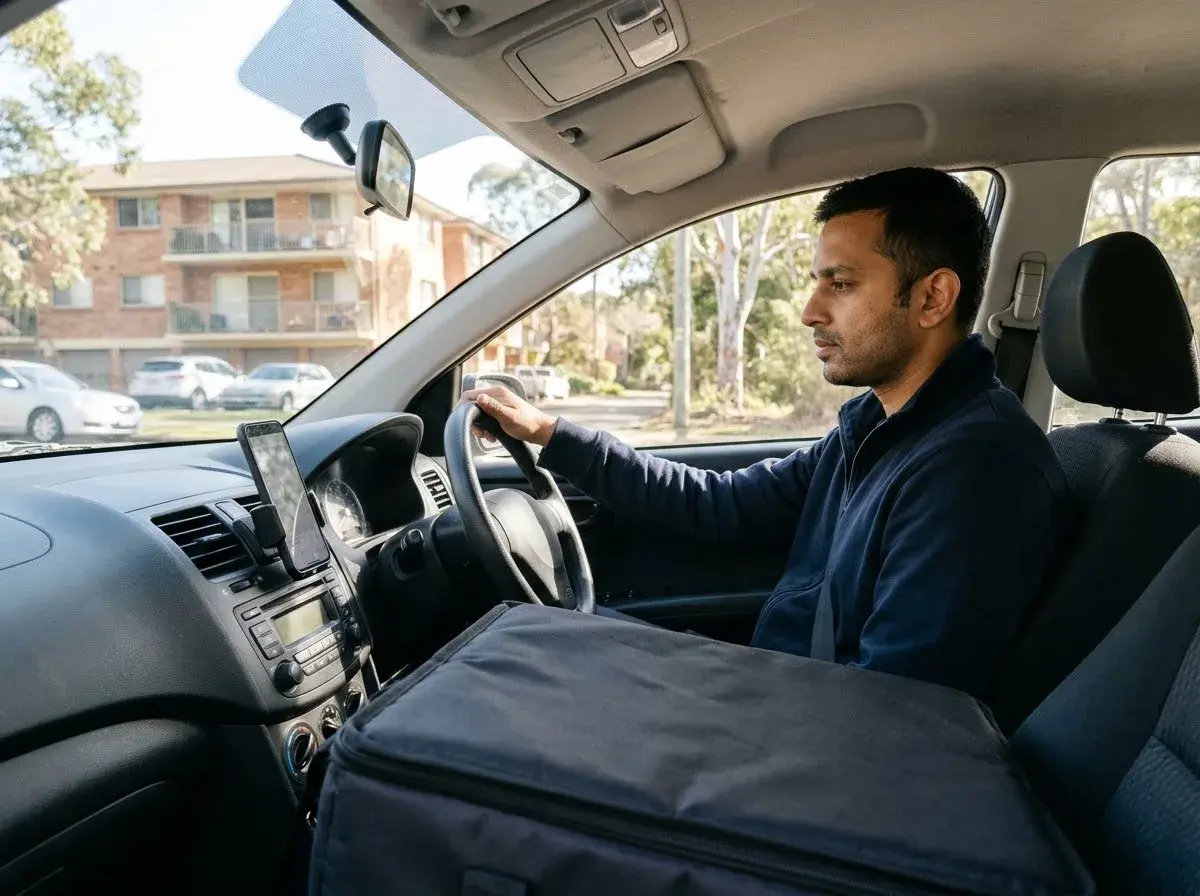
A Canberra delivery driver with more than 5,856 Uber Eats deliveries and no complaint about a defective order was cut off the app because his customer rating sat below 85 per cent. On appeal, a Full Bench of the Fair Work Commission found that Uber Eats had not followed the Digital Labour Platform Deactivation Code and that its ratings rule was not reasonable. It ordered that he be put back on the platform and, in a later decision, that Uber Eats pay him $40,768.87 for lost earnings.
Key points
- Since February 2025, an employee-like gig worker who is deactivated from a platform such as Uber Eats can apply to the Fair Work Commission within 21 days.
- A platform must follow every step of the Digital Labour Platform Deactivation Code; the Full Bench held that nothing less than full compliance will do.
- A real person must weigh up whether deactivation is justified, and must genuinely consider the worker's response; an automated process that only checks the numbers is not enough.
- A ratings threshold can be a valid reason for deactivation only if it is reasonable, and this one, built on a handful of unexplained thumbs-downs, was not.
What happened
The applicant was born in 1993 in Pakistan and came to Australia in December 2017 on a student visa to study information technology and cybersecurity. From September 2018 he worked on the Uber app with his own car, first as an UberX driver, completing over 18,000 trips with a 4.87 star rating.
After incidents with abusive passengers, he moved to Uber Eats, which he saw as safer though it paid less. His earnings supported him, his wife and family in Pakistan. By the time he was cut off he had made over 5,856 deliveries, with no evidence of a single complaint about a defective order.
Customers can rate a driver thumbs up or down. Only about 7.2 per cent of deliveries are rated, and Uber Eats does not check whether a rating has any basis.
The 85 per cent rule
On 21 February 2025 the driver was told, for the first time, that delivery people in Canberra had to keep a satisfaction rating of at least 85 per cent. His was 81 per cent. The figure had only been set in late 2024.
An automated system sent him a soft warning, a final warning and, on 30 May 2025, a preliminary deactivation notice that suspended him at once. Half an hour after the final warning, the app also told him he was 'trending well towards a positive satisfaction rating'. In the two weeks after that warning he scored 85.7 per cent, but his running rating was still 82 per cent and two thumbs-downs fell within his last 10 rated trips, which set off the notice.
He wrote in and asked for a discussion, explaining city-centre roadworks, parking, apartment deliveries and poor mobile reception. A reviewer overseas could only take into account five set matters, such as safety incidents and wrong addresses. None applied, so the decision to deactivate him was made on 3 June 2025, though he was not told until 8 July.
The law: unfair deactivation
The Closing Loopholes No. 2 changes added a protection to the Fair Work Act 2009 (Cth) for employee-like workers: contractors on a digital labour platform, such as food delivery and rideshare drivers. They cannot claim unfair dismissal, but under s 536LU they can seek a remedy if unfairly deactivated, meaning their access to the app is cut off or suspended.
Under s 536LF, the Commission must be satisfied of three things: the worker was deactivated, the deactivation was unfair, and it was not consistent with the Digital Labour Platform Deactivation Code, made by the Minister and in force from 25 February 2025. The Code sets out the steps a platform must take: a warning, a preliminary notice, a chance to respond that a human considers, and a final notice.
On fairness, the Commission must consider whether there was a valid reason related to the worker's conduct or capacity (s 536LH). Under s 19(2) of the Code, missing a platform's quality or performance standard can be one, but only if the standard is reasonable and known to the worker. The remedy is reactivation (ss 536LP and 536LQ), with an optional order to restore lost pay; s 536LP(3) bars compensation.
What the Full Bench decided
Represented by the Transport Workers' Union, the driver lost before Deputy President Dean, who accepted the 85 per cent rule as 'a legitimate threshold'. On appeal, the Full Bench said the Code demands full compliance, not something close to it, and found Uber Eats had breached it four times.
The warnings did not say that a support person could be a union delegate or employee, as s 8(2)(c) requires. No person judged whether deactivation was justified before the notice issued, as s 10(b) requires. The 'human representative' did not genuinely consider his response under s 13(7), because his reasons were not on the list. And a final notice more than five weeks after the decision was not 'as soon as reasonably practicable' under s 14(5).
Uber Eats won one point: a customer rating can relate to a worker's conduct, so the warnings gave a proper reason.
Why the ratings rule was not reasonable
The rule failed because it was not reasonable. It was applied to trips made before he knew it existed. The running rating, measured from the first notice, kept dragging him down even as he improved. The last-10-trips test turned on the chance order of ratings, which the Bench called 'illogical and arbitrary'.
The rule also ignored better evidence. Negative ratings were only 1 to 2 per cent of his trips, and of 20 thumbs-downs in his last 100 rated trips, nine gave no reason at all. The Bench departed from earlier single-member decisions that had upheld the rule, where the drivers had represented themselves.
What happened next
The Full Bench ordered his reactivation, and his access was restored on 21 April 2026. In a second decision, Ayyub v Portier Pacific Pty Ltd t/a Uber Eats [2026] FWCFB 135, it assessed his lost earnings at $53,383.19 over 46.57 weeks, less $4,126.10 from extra work on other platforms and $8,488.22 in fuel he did not spend, and ordered Uber Eats to pay him $40,768.87 within 14 days.
What this means for you
If you deliver or drive through an app and are warned over ratings, it is worth answering each notice in writing, keeping screenshots, and asking a union or adviser for support.
For platforms, an automated process alone is risky: a person needs to weigh each case, and every Code step and time frame matters. For workers, the deadline is 21 days after the deactivation takes effect.
The takeaway
Platforms can set performance standards for gig workers, but a ratings rule must be fair and the Deactivation Code must be followed to the letter, including a real person weighing up each case.
Note: The lost pay was decided by the same Full Bench on 11 June 2026 in Ayyub v Portier Pacific Pty Ltd t/a Uber Eats [2026] FWCFB 135. This decision may be under appeal.
Fair Work Commission (Full Bench) · 10 April 2026
Ayyub v Portier Pacific Pty Ltd t/a Uber Eats [2026] FWCFB 81, Justice Hatcher, President, Vice President Gibian and Commissioner Tran. Read the full decision
This is a plain-English summary of the published decision, for general information. It is not legal advice, and every case turns on its own facts.
Does this sound like your situation?
More case studies

Fair Work Commission · 19 January 2026
Hired to work from home, sacked for refusing three office days
Johnson v PaperCut Software Pty Ltd
A Melbourne software worker whose contract said he was 'permitted' to work from home refused his employer's direction to come into the office three days a week, believing his contract protected him. After months of meetings and two final warnings he was dismissed. The Fair Work Commission found the direction was lawful and reasonable, and the dismissal was not unfair.
Unfair dismissal claim dismissedProblems at work#unfair dismissal#misconduct#contracts
Read the case study
Fair Work Commission · 15 June 2026
Injured worker would not sign the medical forms, and lost her job
Takabwebwe v Amazon Commercial Services Pty Ltd
A part-time Amazon delivery station worker hurt her arm at work and spent about a year on restricted duties. When Amazon directed her to an independent medical examination, she would not sign the authorisations the doctor needed, then did not attend the show cause meeting. The Fair Work Commission found the refusal was a valid reason for dismissal, and a Full Bench refused her permission to appeal.
Claim dismissed; appeal refusedProblems at work#unfair dismissal#misconduct#procedural fairness
Read the case study
Fair Work Commission (Full Bench) · 20 November 2025
Sacked for refusing a drug and alcohol test with no clear reason
MQT Pty Ltd v Tamati
An allocator was asked to take a drug and alcohol test after what her employer said was a long lunch at the pub and an incident involving a colleague, with the reason put variously as random, post-incident and on suspicion. She asked why, did not take the test, and was summarily dismissed. The Fair Work Commission found the direction was not reasonable because the grounds for the test were never made clear, and awarded her $63,500. A Full Bench refused the employer permission to appeal.
$63,500 compensation; employer's appeal refusedProblems at work#drugs & alcohol#unfair dismissal#procedural fairness
Read the case study