Twenty years carting timber, but the truck driver was a contractor
Chiodo v Silk Contract Logistics [2023] FCA 1047
- Decided by
- Federal Court of Australia
- Date
- 6 September 2023
- Outcome
- Claim dismissed
- Result
- Employer succeeded
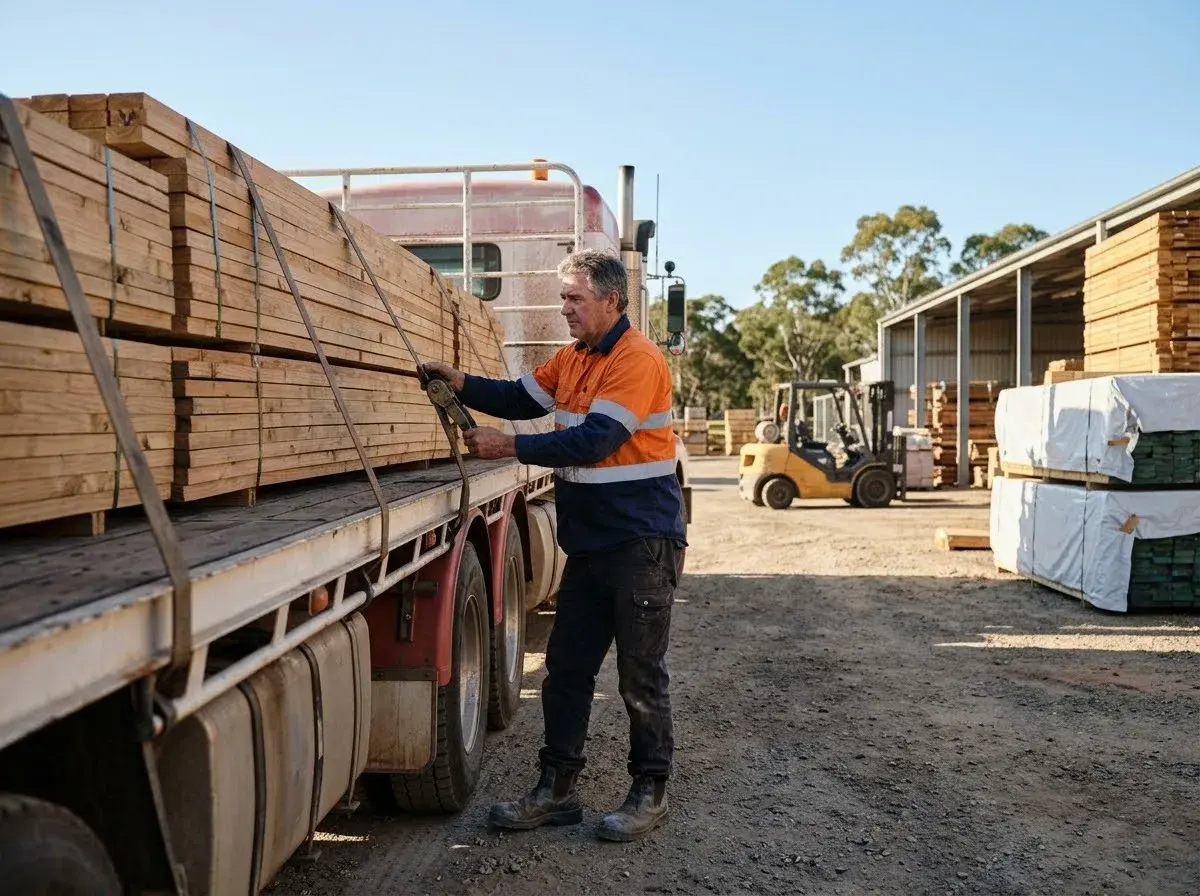
A Sydney truck driver who had delivered timber for the same business for more than 20 years sued for superannuation, annual leave and long service leave as an employee. He owned the prime mover, billed through his own companies or as a sole trader with an ABN and GST, and chose his own hours and jobs. The Federal Court found he was an independent contractor and dismissed the claim.
Key points
- Under the High Court's 2022 test, the question was what the parties' contract gave them: who had the right to control the work, and whose business it was.
- For most of the time the driver's own company, not the driver, had the contract with the transport business, which weighed heavily against employment.
- Owning and paying for the truck, charging GST and taking the tax benefits of a business pointed firmly to a contractor running his own business.
- Since 26 August 2024, s 15AA of the Fair Work Act looks at the real substance and practical reality of the relationship, but it does not change the tests in superannuation and state leave laws.
What happened
A Sydney truck driver delivered timber for the same transport business from 1999 until 2021, collecting it from the wharf and, later, from the business's yard. Silk Contract Logistics then took over that business, CTC Transport Services.
There was never a written contract. At first his own company, Bayview Transport Services, invoiced CTC for his cartage, paid by volume and later at a fixed rate per load. The company owned the truck. From around 2008 he invoiced as a sole trader, using an ABN registered to himself or to his wife, and owned, maintained and insured the prime mover himself.
In July 2019 CTC insisted he work through a company and accept an hourly rate. That rate was nearly three times what CTC paid its employee drivers, but a significant cut in his earnings. He set up a new company, Stilo Enterprises, which invoiced CTC and, from November 2019, Silk.
In March 2021 the driver told Silk's transport supervisor he would do no more work, and Silk stopped offering him jobs.
The claim
Representing himself, the driver sued Silk in the Federal Court. He asked for a declaration that he had been an employee since 1997, unpaid superannuation, annual leave and long service leave under New South Wales laws, and findings that Silk had breached the ban on sham contracting in s 357 of the Fair Work Act 2009 (Cth). He put his loss at $480,064, plus $30,000 in exemplary damages.
Almost everything turned on whether he was an employee or an independent contractor.
Why: the legal test
Justice Kennett applied the High Court's 2022 decisions in Personnel Contracting and Jamsek. Under them, the answer depends on the rights and duties the contract creates, not a review of everything the parties did, and the label they give it is rarely of help.
Two questions usually decide it: how far the business has the right to control how, when and where the work is done, and whether the worker is working in their own business or in the business they work for. With no written contract, the court works out the terms from what was said and done, but still asks what the parties were legally bound to do.
What the Court decided
For most of the period, including all his time with Silk, the driver had no contract with CTC or Silk at all; his companies did. The judge said this 'weighs heavily' against employment, which normally involves an individual who promises to perform the labour himself.
The judge preferred Silk's witnesses, finding the driver 'evasive and unforthcoming' and treating his evidence 'with great caution'.
On control, there was no evidence that CTC or Silk ever insisted on particular hours or jobs. The driver often finished early on Fridays, never asked permission for a day off, declined jobs he did not want, including wharf runs, and chose his own routes. That looked like a contract for a result, not for his labour.
On whose business it was, his companies paid him a salary and took out workers' compensation insurance. He charged GST, claimed input tax credits and claimed large business deductions, mostly for the prime mover, and agreed he 'claimed everything'. Following Jamsek, taking those benefits was 'not possible to square' with saying he was not running his own business.
The truck was a significant capital asset he financed, maintained and insured to make a profit; the gap between his rates and an employed driver's wage showed his labour was only a small part of what he was paid for. He had also refused offers to drive for wages, which would have cut his pay. He was not at any relevant time an employee of Silk.
With no employment, the sham contracting claim failed. Section 357 applies only to a person who employs, or proposes to employ, the worker, and the judge found 'no substance' in the allegation of a sham.
The superannuation claim also failed because the superannuation guarantee law imposes a charge payable to the Commonwealth; it gives a worker no right to sue for contributions. Its wider definition of employee also applies only where the individual is personally a party to the contract. The application was dismissed, and Silk did not seek costs.
The law has changed since
This case was decided in 2023 under the common law test. From 26 August 2024, s 15AA of the Fair Work Act says employee status is decided by the 'real substance, practical reality and true nature' of the relationship, looking at the whole of it, including how the contract is performed in practice. It responds to Personnel Contracting and Jamsek, and does not apply to proceedings already under way on that date or appeals from them.
A court would now look more closely at how the work was really done. But the features that sank this claim, a driver who owned his truck, worked through his own company, chose his hours and jobs and took the tax benefits of a business, are part of that practical reality too. And s 15AA applies only for Fair Work Act purposes: the superannuation guarantee law and state leave laws keep their own tests.
What this means for you
If you work through your own company or ABN, own the main equipment and charge GST, a court may well see you as running a business, even after many years with one client.
If you believe you are really an employee, consider getting advice before you agree to a new structure or pay arrangement.
The takeaway
Owning the truck, working through his own company and taking the tax benefits of a business told the Court this driver was a contractor, even after more than 20 years with one client.
Note: This decision applied the common law test before s 15AA of the Fair Work Act 2009 (Cth) commenced on 26 August 2024. Section 15AA now requires the real substance, practical reality and true nature of the relationship to be considered, including how the contract is performed in practice, but only for Fair Work Act purposes. No appeal from this decision has been found.
Federal Court of Australia · 6 September 2023
Chiodo v Silk Contract Logistics [2023] FCA 1047, Justice Kennett. Read the full decision
This is a plain-English summary of the published decision, for general information. It is not legal advice, and every case turns on its own facts.
Does this sound like your situation?
More case studies

Fair Work Commission · 25 January 2022
Paid late six times in 2021, he quit, and it counted as a dismissal
McKay v Astro Aero Pty Ltd
A draftsman at a company building a prototype freight aircraft was paid late in six months of 2021, once by 53 days. He resigned. The Fair Work Commission found the late pay left him no real choice, so his resignation counted as a dismissal and his claim could go ahead.
Found to be dismissed; employer's objection rejectedProblems at work#forced resignation#general protections#underpayment
Read the case study
Full Court of the Federal Court of Australia · 15 March 2024
Three rulings said he was an employee. The Full Court said contractor
EFEX Group Pty Ltd v Bennett
A business development manager invoiced a technology company $10,000 plus GST a month through his family trust. When the arrangement ended he claimed unfair dismissal, and a Commissioner, a Full Bench and a Federal Court judge all found he was really an employee. The Full Federal Court disagreed: on the terms he had agreed to, he was an independent contractor, so the Fair Work Commission could not hear his claim.
Unfair dismissal claim cannot proceedProblems at work#contractors#unfair dismissal#for employers
Read the case study
Fair Work Commission · 12 November 2021
Hotel worker stood down for refusing reduced hours during COVID
Shanks v Schwartz Family Co
A full-time receptionist at a Gold Coast hotel would not agree to a temporary cut in her hours during the 2021 COVID downturn, and was stood down without pay. The Fair Work Commission found the stand down was not authorised by the Fair Work Act, because the hotel was still trading. But weighing fairness to the hotel and its other staff, it refused to order the hotel to pay her for the lost time.
Stand down not authorised, but no pay orderedProblems at work#contracts#for employers
Read the case study