Twenty years at Hakea Prison, ended by a piece of cannabis cookie
Byers v Director General, Department of Justice [2023] WASCA 43
- Decided by
- Western Australian Industrial Appeal Court
- Date
- 23 February 2023
- Outcome
- Removal upheld; further appeal dismissed
- Result
- Employer succeeded
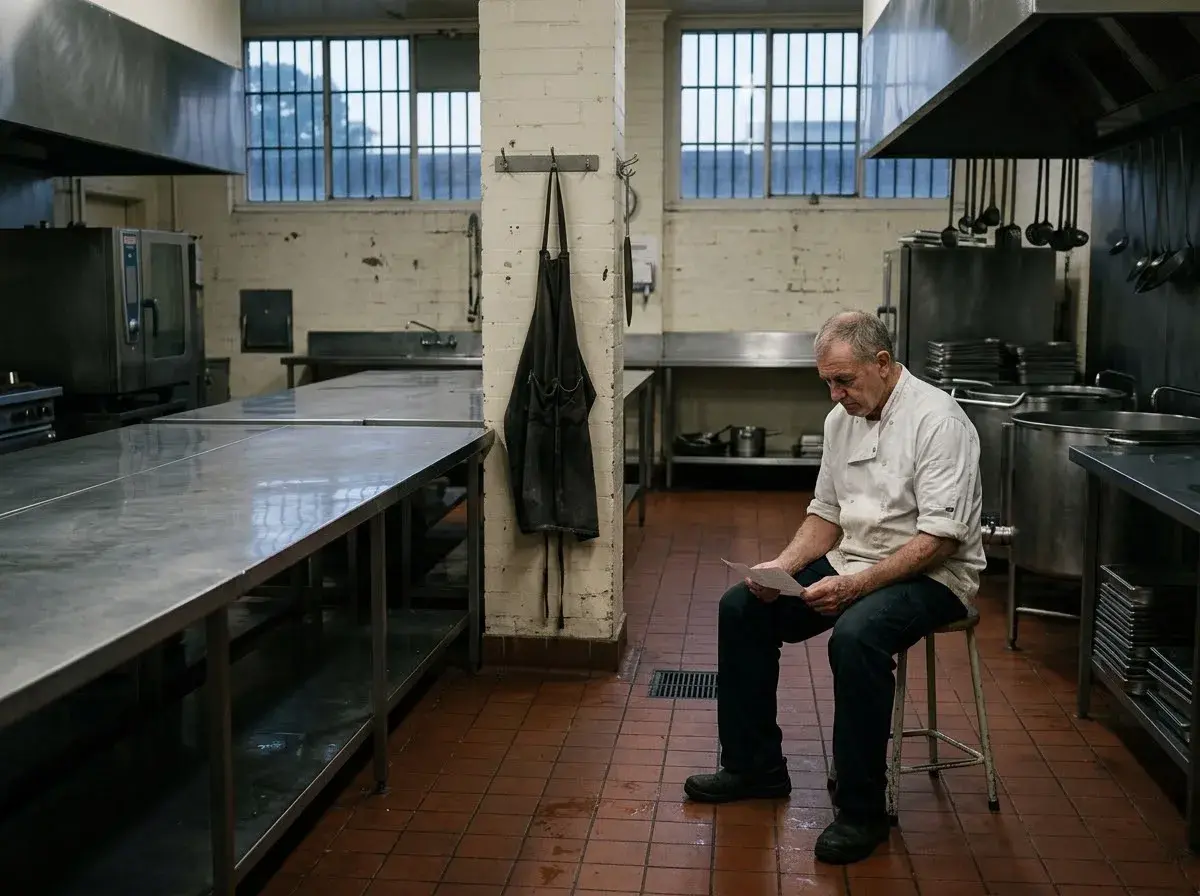
A long-serving chef instructor at Hakea Prison ate part of a cannabis cookie at home and tested positive at work two days later. He was removed for loss of confidence. The Industrial Relations Commission upheld his removal by a two-to-one majority, and the Industrial Appeal Court then held it had no power to hear his further appeal.
Key points
- WA prison officers removed for loss of confidence appeal to a bench of at least three members of the Industrial Relations Commission under the Prisons Act 1981 (WA), not through an ordinary unfair dismissal claim.
- The officer must prove the removal was harsh, oppressive or unfair, and the Commission must weigh the public interest in the integrity of prison officers.
- Two members upheld the removal despite more than 20 years of good service; one member would have reinstated him.
- A removed officer who loses before the Commission has no further appeal to the Industrial Appeal Court, even when one member dissented.
What happened
Mr Byers started with the Department of Justice in April 2000. By December 2020 he was 64 and a chef instructor in the kitchen at Hakea Prison, where he had worked for his whole career. He had no history of warnings or disciplinary action.
On 9 December 2020, after work, he visited a friend in his late sixties who had bladder cancer. Mr Byers was worried about his wife's health, and his friend gave him a piece of a cannabis cookie, saying it would calm him down. He took it home and ate it before bed. He described the piece as smaller than a 20-cent coin.
Two days later he was randomly drug tested at Hakea and returned a positive result for cannabis. The laboratory report said he was not expected to have been impaired at work. Once the test came back positive, he readily admitted what he had done.
The removal
Prison officers in Western Australia can be removed under Part X of the Prisons Act 1981 (WA) if the head of the department loses confidence in their suitability to continue, having regard to their integrity, honesty, competence, performance or conduct. This is called removal action, and it is separate from ordinary dismissal.
The drug testing regulations say that if an officer tests positive to a drug like cannabis, the department head may accept the officer's resignation or take removal action. Mr Byers was stood down on full pay and given notice of three grounds: the positive test, his admission that he had used cannabis two days before, and his admission that he socialised with people who possessed, used and supplied him with cannabis.
He responded with an apology, character references from colleagues, and letters from his psychologist and his GP. His removal took effect on 27 July 2021.
The legal test in the Commission
Mr Byers appealed to the Western Australian Industrial Relations Commission. Under s 106 of the Prisons Act, the appeal is heard by at least three commissioners, and the officer must show the removal decision was harsh, oppressive or unfair. The burden stays on the officer throughout (s 107(2)).
The Commission must also weigh the officer's interests against the public interest, which includes public confidence in the integrity and conduct of prison officers (s 107(4)). Because this is a loss of confidence removal rather than a dismissal, the question is not whether the penalty was too severe, but whether the conduct can fairly lead to the conclusion that the person is no longer suitable to be a prison officer.
A split decision
On 6 May 2022 the Commission dismissed the appeal by a majority. Chief Commissioner Kenner found the positive test and the admitted use were enough on their own to support the loss of confidence. He noted that eating the cookie 'was not a spur of the moment decision': Mr Byers had carried it home before eating it. He also found that Mr Byers had not self-reported, had used cannabis once before while a prison officer, and had given inconsistent accounts of his history.
On long service, the Chief Commissioner said the Director General 'should not be required to retain a prison officer in whom he has properly lost confidence, only because of a lengthy period of service.' Commissioner Emmanuel agreed.
Senior Commissioner Cosentino disagreed. She found the third ground was not soundly based: the evidence did not show Mr Byers was involved in drugs simply by visiting his sick friend, and expecting him to cut off the friendship was unrealistic. Weighing his good record, remorse and the low risk of it happening again, she found the removal harsh, oppressive and unfair, and would have ordered that it be treated as having always been of no effect.
The appeal that could not be heard
Representing himself, Mr Byers appealed to the Industrial Appeal Court, arguing that the majority had misread the drug testing regulations and the Prisons Act. The court dismissed the appeal at the hearing, without needing to hear from the Director General’s counsel.
Its reason was jurisdiction, meaning its legal power to hear the case at all. As applied to prison officers, an appeal to the court lies only from a Commission decision that the removal was harsh, oppressive or unfair. The court said the decision is the order that disposes of the appeal, not the reasons. Senior Commissioner Cosentino's dissent was 'simply reasons' and not a decision, so there was nothing he could appeal from. Earlier cases had reached the same result for removed police officers, whose removal scheme is substantially the same.
What this means for you
If you are a WA prison officer, a positive test for an illicit drug can lead to removal even after decades of good service, and even when you were not impaired at work. The policy expects officers to avoid illegal drugs off duty, and it treats self-reporting differently from a positive random test.
If you face a notice of loss of confidence, your written response and your appeal to the Commission matter a great deal, because there is usually no second chance if the Commission rules against you. It is worth getting advice early, before you respond to the notice, and acting quickly because the time limits for an appeal are short.
The takeaway
For removed WA prison officers, the Commission's three-member bench is effectively the last word: if it rules against you, there is no further appeal to the Industrial Appeal Court, even with a dissent in your favour.
Note: The Commission's decision on the removal is Byers v Minister for Corrective Services 2022 WAIRC 00186 (6 May 2022), in which the Commission also held that the proper respondent to such an appeal is the Director General, Department of Justice. This study describes the Prisons Act removal scheme as it applied to this case.
Western Australian Industrial Appeal Court · 23 February 2023
Byers v Director General, Department of Justice [2023] WASCA 43, Justice Buss, Justice Murphy and Justice Smith. Read the full decision
This is a plain-English summary of the published decision, for general information. It is not legal advice, and every case turns on its own facts.
Does this sound like your situation?
More case studies

Western Australian Industrial Relations Commission · 27 August 2026
A prison safety rep refused his orders. His dismissal stood
Rossiter v Minister for Corrective Services
A prison officer with more than 18 years' service, most recently at Wooroloo Prison Farm had just been elected as a health and safety representative. On a badly understaffed morning he twice refused orders to do a hospital escort, saying his safety duties came first. The WA Industrial Relations Commission found his dismissal was not unfair and dismissed his referral.
Referral dismissedWA state system#wa state system#public sector#misconduct
Read the case study
Public Service Appeal Board (Western Australian Industrial Relations Commission) · 7 November 2024
School IT officer forwarded a colleague's resignation email to herself
Karen Auzins v Department of Education
After about 17 years with the WA Department of Education, a school network support officer was dismissed for using her junior colleague's unlocked work phone to forward the colleague's confidential resignation email to herself. She denied it and produced a timesheet she said showed she had left early that day. The Public Service Appeal Board found she did forward the email, that the timesheet was fabricated, and that dismissal was not harsh, oppressive or unjust.
Dismissal upheldWA state system#wa state system#public sector#misconduct
Read the case study
Western Australian Industrial Relations Commission · 17 April 2024
Police officer removed a decade after a false medical declaration
Guy Little v Commissioner of Police
A former British police officer joined WA Police after answering on his recruitment medical form that he had never had a shoulder problem, while he was preparing a negligence claim in England over the childhood surgery he blamed for exactly that condition. When the Commissioner of Police found out years later, he lost confidence in the officer and removed him. The WA Industrial Relations Commission dismissed the officer's appeal.
Appeal against removal dismissedWA state system#wa state system#public sector#misconduct
Read the case study