She refused a flexibility deal, complained, and was sacked unlawfully
Kanata v Tyro Payments Limited (No 2) [2026] FedCFamC2G 2013
- Decided by
- Federal Circuit and Family Court of Australia (Division 2)
- Date
- 12 October 2026
- Outcome
- Dismissal found unlawful; compensation still to be decided
- Result
- Employee succeeded
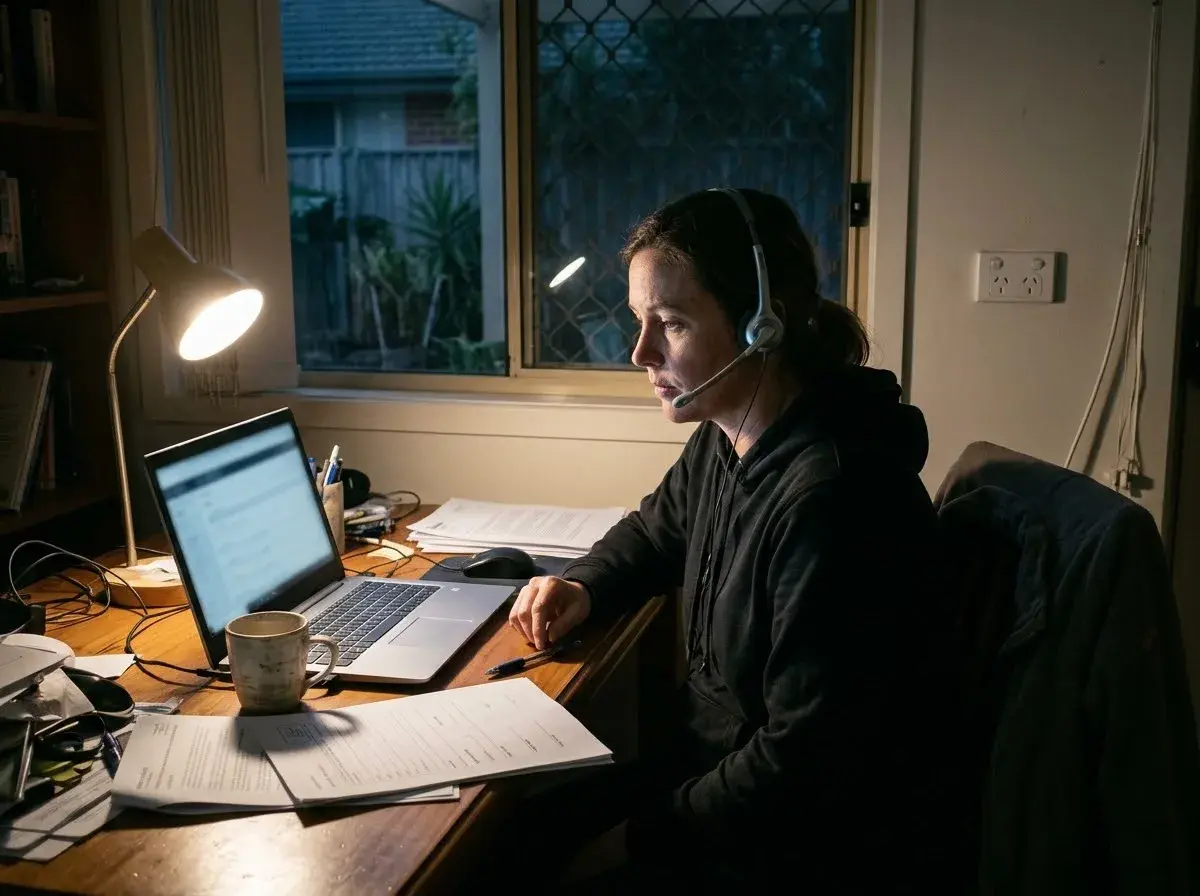
A high-performing customer support agent and single mother refused to sign an individual flexibility arrangement that would have cut her night-shift pay, and complained about how her contract had been changed. She was moved off night shift, given two warnings and dismissed. The Court found each step was unlawful adverse action under the general protections.
Key points
- Declining to sign an individual flexibility arrangement (IFA) is protected: an employer must not take adverse action against an employee because of that choice.
- Complaints and inquiries about your own employment are also protected; an employer may act on genuine conduct concerns, but not because of the complaints.
- Once the worker shows the facts, the employer must prove its real reasons; here the Court did not believe the manager who made the decisions.
- The manager who made the decisions was found personally involved in the contraventions.
What happened
Ms Kanata started on Tyro's customer support phones on 31 March 2011. Tyro supplies payment terminals to businesses. By 2019 she was, in the Court's words, “the highest paid member of the Customer Support Team by a long way”, with no evidence of any earlier concern about her work.
Her husband died in 2016, leaving her the sole carer of their young daughter with no relatives in Australia. Night shifts, worked mostly from home, let her care for her child. Her 2011 contract paid a 40% loading for overnight shifts, and in 2018–19 she earned about $14,000 above her base pay.
In 2019 Tyro moved the team to fixed shifts and placed her, as she preferred, on the permanent night roster. Then came new standard contracts with a fixed salary and no shift loadings. She asked to see the promised “pay contract” first. The Court accepted that her manager told her not signing before the company's stock exchange listing would cause a problem for her and for Tyro. She signed on 28 November 2019. The judge said Tyro's changes had “a decided quality of ‘bait and switch’”.
The flexibility deal she refused
On 10 February 2020 Tyro offered her an individual flexibility arrangement, or IFA: an agreement, allowed by s 144 of the Fair Work Act 2009 (Cth) and the award, that changes how a modern award applies to one employee. It offered $78,234.88 plus superannuation with no loadings: less than she had earned working nights only occasionally. She would not sign, and questioned the figures.
Tyro's position was plain: sign, or move to Monday to Friday day shifts. In April it formally moved her off permanent nights, and on 4 June 2020 it rostered her permanently on day shift. Meanwhile she sent many emails complaining that she had been pressured into the new contract, and said she had no choice but to involve the Fair Work Commission.
Discipline followed. A formal warning, delivered on 15 April 2020, said she had not phoned in her absences. A final warning on 2 June 2020 concerned the number and tone of her complaint emails. On 30 June 2020 she was dismissed. Tyro's letter blamed her handling of two customer calls.
The legal test
Section 340(1) of the Fair Work Act stops an employer taking adverse action against an employee because the employee has, or has not, exercised a workplace right. Adverse action (s 342) includes dismissal and changing an employee's position to their prejudice. Workplace rights include being able to take part in making an IFA (ss 341(1)(b) and 341(2)(g)), and making a complaint or inquiry about one's employment (s 341(1)(c)(ii)).
The worker must prove the action and the workplace right. Then s 361 reverses the usual burden: the action is presumed to have been taken for the reason the worker alleges unless the employer proves otherwise. The employer must show the protected reason was not a “substantial and operative” reason, usually through the decision-maker's own evidence.
What the Court decided
Judge Doust found the shift changes, both warnings and the dismissal each contravened s 340(1). The manager said the shift change was about cost. The judge rejected that: Tyro had already removed the loading from her contract and could have paid the IFA salary without her signature, so “it was simply the applicant’s refusal to enter into the IFA that was the reason”.
On the first warning, the rule about phoning in absences “was not applied in practice”. Human resources had recommended only a verbal warning; that was dropped as her complaints about the manager escalated. Of the final warning, the judge said: “The very basis for the letter was the fact that the applicant was making complaints.” The judge found she was “repetitive and dogged” but “had good reason to be aggrieved”, and had given Tyro grounds for discipline, but Tyro could not prove that the manager's reasons did not include her complaints and her IFA refusal.
After hearing the call recordings, the judge found the reasons in the dismissal letter “confected, or at least significantly exaggerated”. In one call she passed a medical practice, whose terminal had been down for three working days, to the colleague already handling it. In the other she transferred a caller at the end of her shift because she had to pick up her child. She was dismissed because of her complaints; the judge was not satisfied the IFA refusal still played a part. The manager was found personally involved in each contravention under s 550.
What she did not win
The Court held that the “better off overall” test for an IFA compares it with the award, not with an employee's better contract, so her claims that the IFA involved undue pressure or a misleading statement failed. Tyro's emails offering the choice were not threats, and there was no coercion or undue influence. She was not dismissed because of her caring responsibilities, and the claim against the head of human resources failed.
What this means for you
If you are asked to sign an IFA, saying no is a protected choice, and so is asking questions or complaining about your pay and contract. If worse shifts, warnings or dismissal follow, keep the emails, rosters and messages: here the call recordings and records were central.
For employers: the decision-maker's real reasons are what count, and a court will test them against the documents. A general protections dismissal claim must be lodged with the Fair Work Commission within 21 days of the dismissal.
The takeaway
Refusing an individual flexibility arrangement and complaining about your employment are both workplace rights. An employer that changes your shifts, warns you or dismisses you for either must prove those were not among its reasons.
Note: This decision of 12 October 2026 deals only with liability; the Court will decide compensation and penalties later, and an appeal is possible. Changes to the Fair Work Act from 7 July 2026 affect how general protections dismissal disputes begin in the Fair Work Commission, but not the s 340 test applied here.
Federal Circuit and Family Court of Australia (Division 2) · 12 October 2026
Kanata v Tyro Payments Limited (No 2) [2026] FedCFamC2G 2013, Judge Doust. Read the full decision
This is a plain-English summary of the published decision, for general information. It is not legal advice, and every case turns on its own facts.
Does this sound like your situation?
More case studies
Guide · first published April 2020
What an employment lawyer can help with, for workers and businesses
Employment law covers the whole working relationship, from the contract you sign to the way the job ends. This guide sets out the kinds of problems an employment lawyer commonly helps employees and businesses with, and the claims and deadlines that often sit behind them.
GuideTermination#unfair dismissal#general protections#contracts
Read the guide
Guide · first published March 2020
What not to do when you end someone's employment
Most dismissals that end in a claim go wrong in the same few ways: no valid reason, no warning, no chance to respond, a text message, or an unlawful reason. This guide walks through each mistake with the decisions that show what the Fair Work Commission and the courts expect.
GuideTermination#for employers#unfair dismissal#procedural fairness
Read the guideGuide · first published August 2013
When a demotion counts as a dismissal
Being moved to a lower role or a lower rate of pay can be more than a disappointment. Depending on the size of the cut and the terms of your contract, a demotion can breach your contract, count as a dismissal you can challenge as unfair, or be unlawful adverse action.
GuideTermination#unfair dismissal#general protections#forced resignation
Read the guide